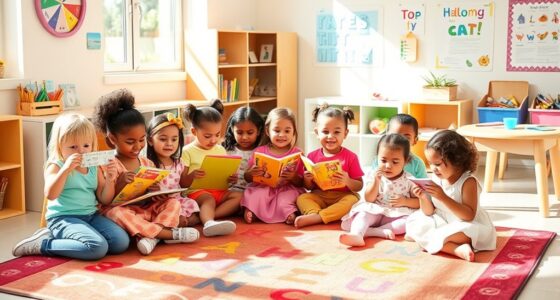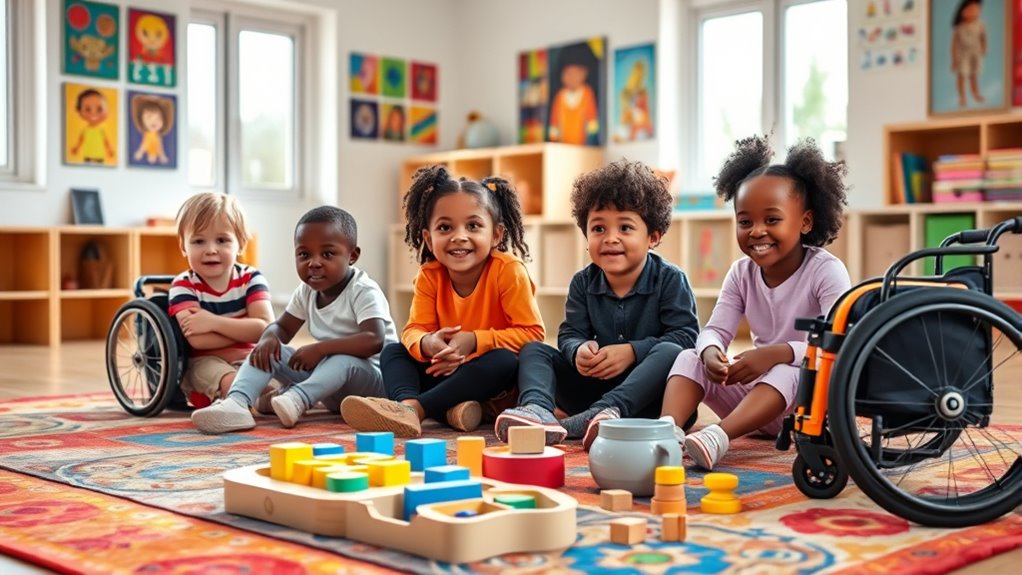

In inclusive classrooms, you embrace diversity by recognizing each child’s unique needs and strengths. You incorporate assistive technologies like speech-to-text devices and visual aids to remove barriers and boost participation. Encouraging peer collaboration fosters understanding, empathy, and friendships across differences. These strategies help create a supportive environment where every child feels valued and confident. By implementing these approaches, you’re setting the stage for a truly inclusive space—continue exploring to discover how to make this happen effectively.
Key Takeaways
- Recognize and celebrate each child’s unique needs, strengths, and backgrounds to foster an inclusive environment.
- Incorporate assistive technologies like speech-to-text and visual aids to support diverse learners.
- Promote peer collaboration and mixed-ability groups to build understanding, empathy, and friendships.
- Provide proper training for students and staff to effectively use assistive tools in classroom activities.
- Cultivate a classroom culture that values diversity, compassion, and shared success to prepare students for a collaborative future.

Have you ever wondered how classrooms can become welcoming spaces for all students? Creating an inclusive environment starts with recognizing each child’s unique needs and strengths. One powerful way to do this is by integrating assistive technology into daily lessons. Tools like speech-to-text devices, audio books, and visual aids can help students with disabilities access the curriculum more effectively. These technologies remove barriers that might otherwise hinder participation, allowing every child to engage meaningfully with the material. When assistive technology is readily available, students gain confidence and independence, fostering a sense of belonging. But technology alone isn’t enough; peer collaboration plays a pivotal role in nurturing inclusivity. Encouraging students to work together promotes understanding and empathy, breaking down stereotypes and fostering friendships across diverse backgrounds. When children collaborate, they learn to appreciate different perspectives, and neurodiverse students feel more supported and valued. As a teacher or caregiver, you can facilitate peer collaboration by creating opportunities for mixed-ability group work, where students share their skills and learn from one another. This not only enhances academic growth but also builds social skills essential for lifelong success. Incorporating assistive technology alongside peer collaboration sends a clear message: everyone’s contributions matter. It empowers students to participate actively, regardless of their abilities. For instance, pairing a student who uses a communication device with a peer partner encourages meaningful dialogue and teamwork. Such interactions help demystify differences and foster respect among classmates. Furthermore, integrating assistive technology into collaborative activities ensures that all students can contribute equally, boosting confidence and reducing frustration. It’s important to provide proper training for students and staff to use these tools effectively. When everyone understands how assistive technology works and how it can be used in group settings, it becomes a natural part of the classroom culture. Additionally, including specialized tools like visual aids or communication devices can enhance engagement for diverse learners. When everyone understands how assistive technology works and how it can be used in group settings, it becomes a natural part of the classroom culture. Remember, fostering an inclusive classroom involves more than just tools and activities; it’s about creating an environment where diversity is celebrated. By promoting peer collaboration and leveraging assistive technology, you help build a community where each student feels safe, supported, and inspired to learn. When students see their peers succeed and participate, they develop compassion and a deeper appreciation for differences. Ultimately, an inclusive classroom isn’t just about accommodating diverse learners—it’s about empowering all students to thrive together, preparing them for a future where understanding and collaboration are key.
Top picks for "inclusive classroom embrac"
Open Amazon search results for this keyword.
As an affiliate, we earn on qualifying purchases.
Frequently Asked Questions
How Can Teachers Effectively Manage Behavioral Challenges in Diverse Classrooms?
You can effectively manage behavioral challenges by establishing clear classroom routines and consistently using positive reinforcement. When students know what to expect, they feel more secure and are less likely to act out. Reinforce good behavior with praise or rewards, and maintain routines to promote stability. Address issues promptly and calmly, fostering a respectful environment where every child feels valued, encouraging positive behavior across diverse classroom settings.
What Strategies Promote Social Integration Among Children With Different Needs?
Like weaving a colorful tapestry, you foster social integration by encouraging peer interactions and organizing cooperative activities. You create a welcoming environment where children with different needs feel valued and included. Through group projects and shared play, you help kids build connections and understand diverse perspectives. This approach cultivates empathy and friendship, turning diversity into a strength that enriches everyone’s learning experience and promotes harmonious relationships in your classroom.
How Is Assessment Adapted for Students With Disabilities in Inclusive Settings?
You adapt assessments for students with disabilities by implementing assessment modifications and applying universal design principles. This means you tailor tasks to meet individual needs, such as offering alternative formats or extended time. You also design assessments that are accessible for all, ensuring flexibility and inclusivity. By doing so, you guarantee each student’s abilities are accurately measured, fostering an equitable learning environment where everyone can demonstrate their understanding effectively.
What Training Is Recommended for Educators to Support Inclusive Education?
Imagine a toolbox filled with colorful tools representing skills you need. You should pursue training in cultural competency and differentiated instruction, equipping you to meet diverse learners’ needs. This training helps you understand varied backgrounds and adapt your teaching strategies. By embracing ongoing professional development, you become a skilled gardener, nurturing every child’s growth, ensuring an inclusive environment where all students flourish.
How Do Parents Collaborate With Teachers to Support Their Child’s Inclusion?
You can support your child’s inclusion by maintaining open parent-teacher communication, sharing insights about your child’s needs and strengths. Collaborate with teachers on inclusive activity planning to ensure your child’s participation and comfort. Attend meetings actively, ask questions, and provide feedback regularly. This partnership fosters a supportive environment where your child’s diversity is embraced, helping them thrive academically and socially while promoting understanding and acceptance in the classroom.
Conclusion
By embracing diversity, you create a vibrant, welcoming classroom where every child feels valued. Instead of seeing differences as obstacles, view them as opportunities for growth and learning. You foster a community that celebrates unique perspectives, transforming challenges into strengths. While some may see diversity as complex, you recognize it as the foundation for empathy and understanding. In this way, your inclusive approach shapes not just better students, but compassionate, confident individuals ready to thrive beyond the classroom.