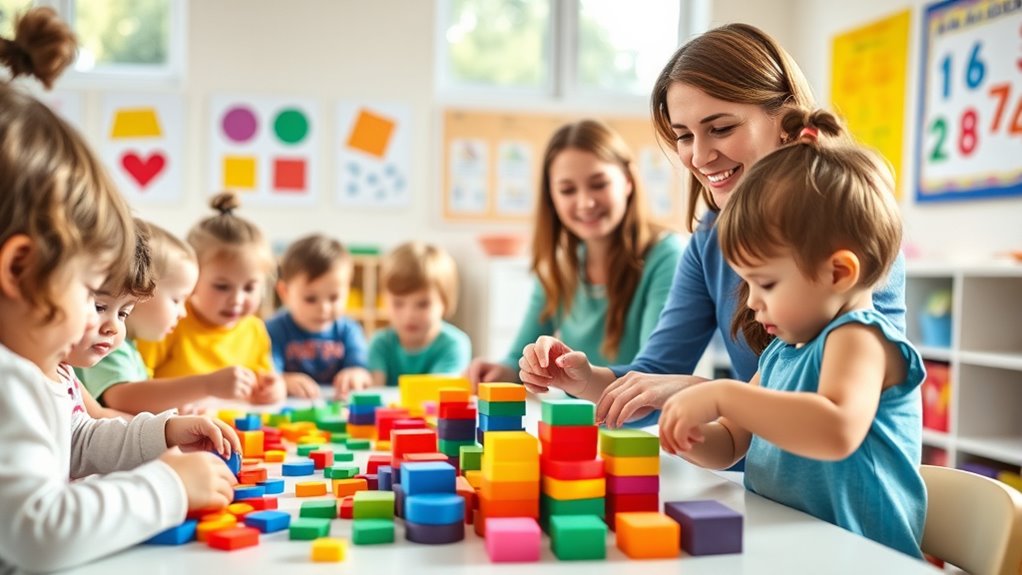

To build early math foundations for your pre-K child, focus on engaging activities like using colorful flashcards, puzzles, and everyday objects to help them recognize numbers. Incorporate pattern creation with colorful beads or blocks and encourage them to extend or make their own sequences. Reinforce skills through routines such as sorting and counting in daily life, which boosts confidence and understanding. Keep exploring more fun ideas to help your child develop strong early math skills.

Get the little things that make your day delivered free with Prime
- Fast, free delivery on millions of items
- Prime Video, Amazon Music and more included
- Member-only deals all year
Key Takeaways
- Incorporate number recognition through colorful flashcards, puzzles, and daily routines to build familiarity and confidence.
- Use pattern creation activities with beads, blocks, or stickers to develop sequencing and critical thinking skills.
- Engage children in counting objects like toys or snack items during everyday activities for natural learning.
- Include pattern recognition games and movement activities like clapping or dancing to enhance visual and auditory discrimination.
- Reinforce early math skills by integrating numbers and patterns into routines, fostering problem-solving and cognitive development.
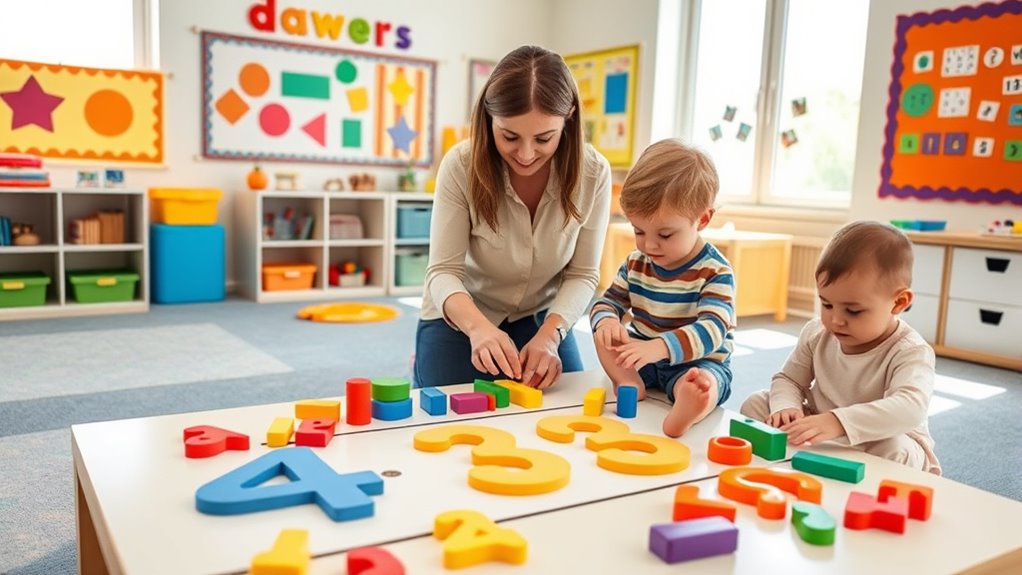
Are you looking for fun ways to introduce young children to numbers and basic math skills? Engaging your preschoolers in activities that focus on number recognition and pattern creation is a great way to build their early math foundations. At this age, children are naturally curious, and you can harness that curiosity through playful, hands-on experiences that make learning both enjoyable and meaningful.
Start by helping your little one recognize and identify numbers in everyday settings. Use colorful flashcards, number puzzles, or number-themed books to capture their interest. As they begin to associate symbols with quantities, encourage them to point out and name numbers during daily routines—whether counting apples at the grocery store or recognizing house numbers on a walk. Repetition is key, so incorporate number recognition into your daily schedule, making it a natural part of their environment. This reinforces their understanding and boosts confidence as they master each numeral.
Help your child recognize numbers daily with flashcards, puzzles, and routines to build confidence and understanding.
Once your child becomes comfortable with recognizing numbers, you can introduce pattern creation activities to deepen their understanding of order and relationships. Pattern creation involves identifying and extending sequences based on colors, shapes, or sizes, which helps children grasp the concept of order and predictability—fundamental to early math learning. Use colorful beads, blocks, or stickers to create simple patterns like red-blue-red-blue or big-small-big-small. Encourage your child to continue the pattern or create their own, fostering critical thinking and problem-solving skills. You can also integrate pattern recognition into daily routines, such as sorting their clothes by color or size, which naturally reinforces their understanding of sequence and categorization.
Playing pattern-matching games is another effective way to develop these skills. For example, give your child a set of objects and ask them to group or arrange items based on specific features. As they progress, challenge them to recognize more complex patterns, like alternating colors or shapes. These activities not only support pattern creation but also enhance their attention to detail and visual discrimination skills. Incorporating music and movement can also make pattern recognition fun—clapping or dancing to rhythmic patterns can deepen their grasp of sequences and order. Additionally, understanding the importance of early math skills helps in designing activities that lay a strong foundation for future learning and problem-solving.
colorful number flashcards for preschool
As an affiliate, we earn on qualifying purchases.
As an affiliate, we earn on qualifying purchases.
Frequently Asked Questions
How Can Parents Incorporate Numeracy Activities at Home?
You can incorporate numeracy activities at home through play-based learning and everyday routines. Engage your child with counting games using toys or snacks, and include numbers during activities like shopping or cooking. Make math fun by singing number songs or playing simple board games. These activities help your child see math as part of daily life, boosting their confidence and early math skills in a natural, enjoyable way.
What Are Age-Appropriate Numeracy Milestones for Pre-Kindergarten Children?
Think of your child’s math journey like climbing a ladder—each step builds on the last. By age 4, they typically recognize numbers up to 10 and can count objects accurately. Around age 5, they should master number recognition and counting skills up to 20. You might notice them pointing out numbers in books or counting snacks—these milestones show they’re on the right track to developing strong early math skills.
How Can Teachers Assess Early Math Understanding Effectively?
You can assess early math understanding effectively by using assessment strategies like observations, checklists, and informal questions during activities. Incorporate formative evaluation by regularly monitoring children’s responses and adjusting your teaching accordingly. Engage them in hands-on tasks, ask open-ended questions, and note their problem-solving skills. This approach helps you identify their strengths and areas needing support, ensuring they build a solid math foundation while staying motivated and confident.
Are There Digital Tools Recommended for Pre-K Numeracy Activities?
Yes, you should explore digital apps and interactive games designed for pre-K learners. These tools make math activities engaging and fun, helping children develop early numeracy skills like counting, shapes, and patterns. Look for apps that are age-appropriate, interactive, and visually appealing to keep your students motivated. Incorporating these digital resources into your lessons can enhance understanding and provide a dynamic way to reinforce math concepts.
How Do Numeracy Activities Support Overall Cognitive Development?
Did you know that early numeracy activities can boost cognitive growth by up to 25%? You support this by engaging children in problem-solving tasks, which strengthen their critical thinking and reasoning abilities. These activities help children develop foundational math skills while enhancing their overall cognitive development. When you incorporate fun, hands-on numeracy exercises, you’re nurturing their ability to analyze, compare, and solve problems, setting a strong foundation for future learning.
early math pattern blocks for kids
As an affiliate, we earn on qualifying purchases.
As an affiliate, we earn on qualifying purchases.
Conclusion
By weaving these numeracy activities into your pre-k classroom, you’re planting seeds in young minds that will blossom into a garden of understanding. Each activity acts as a stepping stone across a bubbling brook of curiosity, guiding children toward confident math skills. Remember, you’re lighting tiny sparks that will ignite a lifelong love for learning—transforming abstract numbers into familiar friends on their journey of discovery. Keep nurturing their curiosity; the future is a canvas waiting for their colorful strokes.
kids number puzzles for preschoolers
As an affiliate, we earn on qualifying purchases.
As an affiliate, we earn on qualifying purchases.
Montessori pattern creation toys
As an affiliate, we earn on qualifying purchases.
As an affiliate, we earn on qualifying purchases.
NFL season / tailgating Picks
team gear
As an affiliate, we earn on qualifying purchases.