
Calming zones are safe, sensory-rich spaces you create to help children manage stress and regulate emotions. In these areas, kids can engage in mindfulness activities, use sensory toys, or enjoy gentle lights and soothing scents. These elements help children feel secure, reduce their anxiety, and develop self-regulation skills. By designing calming zones thoughtfully, you’re supporting emotional resilience and confidence—discover more ways to create effective calming spaces that truly help children feel calm and in control.
Key Takeaways
- Calming zones provide a safe, quiet space for children to regulate their emotions during stress.
- Incorporating sensory play and calming elements helps children process feelings and reduce overwhelm.
- Mindfulness activities in calming zones promote self-awareness and emotional regulation skills.
- Regular use of calming spaces builds resilience and confidence in managing challenging situations.
- These zones support emotional development by offering a personalized, soothing environment for relaxation.
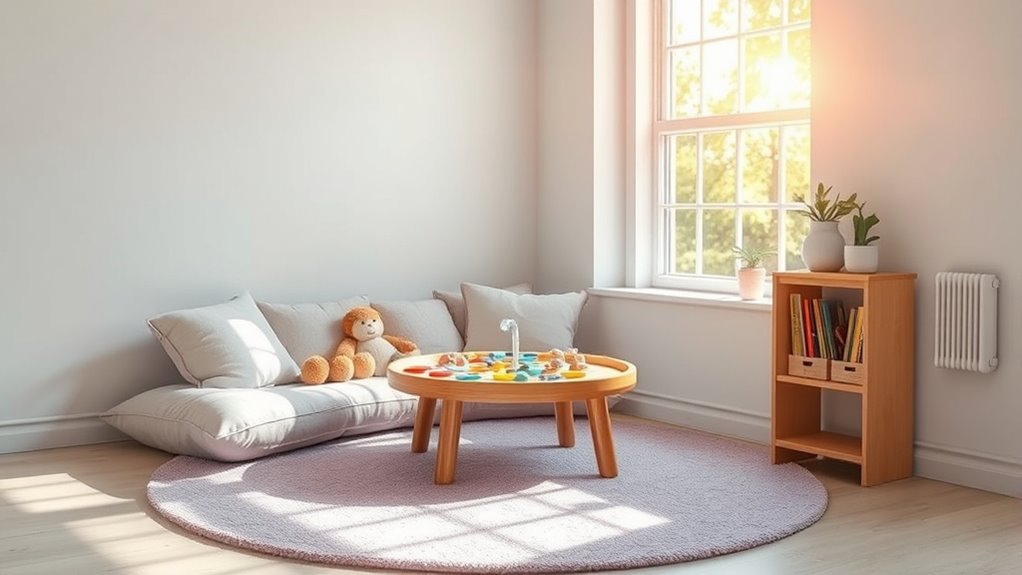
Have you ever noticed how children sometimes become overwhelmed or upset in busy environments? When the world around them feels loud, chaotic, or overstimulating, their natural response might be to shut down or act out. Creating calming zones can be a powerful way to help kids regain their composure and feel safe. These spaces are designed to give children a quiet retreat where they can regulate their emotions and reduce stress. Incorporating activities like mindfulness exercises and sensory play into these zones makes a big difference. Mindfulness activities, such as deep breathing or guided imagery, teach children how to focus on the present moment, helping them to calm their minds and bodies. Sensory play, on the other hand, offers a hands-on way for children to engage their senses and process overwhelming feelings. Think of adding soft textures, calming scents, or gentle lights to the space—these elements serve as anchors that help children soothe themselves.
When you set up a calming zone, consider placing items that encourage mindfulness activities, like simple breathing tools or visual aids for guided meditation. These tools can help a child learn to slow down and center themselves when they’re feeling stressed. Sensory play items, such as stress balls, textured fabrics, or calming sensory bottles filled with glitter and water, can also be included. These objects provide tactile stimulation and distraction, making it easier for children to shift their focus away from overwhelming stimuli. The goal is to create an environment that feels safe and inviting, where children can explore their feelings at their own pace. It’s important to observe what kinds of sensory inputs and mindfulness activities resonate most with each child, as individual preferences can vary widely. Some children may find comfort in soft, plush materials, while others might prefer visual stimuli like gentle, flickering lights.
Encouraging children to use the calming zone during moments of distress helps them develop self-regulation skills that will benefit them long-term. When children learn to use mindfulness activities and sensory play as tools for calming down, they gain a sense of control over their emotions. This not only eases immediate stress but also builds resilience over time. As you incorporate these elements into the calming zone, remember that patience and consistency are key. The more children experience the space as a safe refuge, the more likely they are to turn to it when they need a break. Incorporating elements that support Self-Understanding can further enhance their emotional development. Over time, these zones become an essential part of their emotional toolkit, helping them navigate challenging situations with confidence and calmness.
Top picks for "calm help children"
Open Amazon search results for this keyword.
As an affiliate, we earn on qualifying purchases.
Frequently Asked Questions
How Can Parents Create Calming Zones at Home Effectively?
You can create calming zones at home by using creative decor that makes the space inviting and soothing. Incorporate sensory-friendly materials like soft blankets, textured pillows, and calming lighting to help your child relax. Keep the area clutter-free and personalized with their favorite calming objects or pictures. This inviting space encourages your child to unwind whenever they feel overwhelmed, making it easier for them to manage stress effectively.
Are Calming Zones Suitable for Children With Sensory Processing Disorders?
Certainly, calming zones can be tailored into sensory-friendly environments that suit children with sensory processing differences. You, as a caregiver, can customize these calming zones with gentle textures, soft lighting, and noise control to create a soothing space. By personalizing calming zone customization, you guarantee it’s comfortable and effective, helping your child feel safe and supported. These spaces can be valuable tools for managing sensory sensitivities and promoting calmness.
What Activities Are Best to Include in a Calming Zone?
You should include sensory activities like textured toys, soft lighting, and calming visuals in a calming zone. Incorporate relaxation exercises such as deep breathing and guided imagery to help children unwind. These activities engage their senses and promote calmness, making it easier for children to self-regulate. By combining sensory activities and relaxation exercises, you create a safe space where children can effectively manage their stress and feel more secure.
How Long Should a Child Spend in a Calming Zone Daily?
Think of a calming zone as a gentle breeze for a child’s mind. You should aim for about 10-15 minutes daily, following suitable duration guidelines. Incorporate activity frequency that encourages consistent use without overwhelming them. This routine helps children manage stress effectively, so keep sessions short and engaging, and gradually increase as needed. Remember, regular calm moments foster emotional resilience and well-being.
Can Calming Zones Help Children With Anxiety or Behavioral Issues?
Yes, calming zones can markedly help children with anxiety or behavioral issues by promoting stress reduction and emotional regulation. When you guide children to use calming zones, you give them a safe space to soothe themselves, which can reduce anxiety and improve their emotional control. This consistent practice helps children develop healthier coping skills over time, making it easier for them to manage difficult emotions and behavior in various settings.
Conclusion
Now that you know how calming zones can help children manage stress, imagine the difference it could make in their daily lives. But what if there’s more to discover—ways to make these zones even more effective? The journey to understanding and supporting your child’s emotional well-being isn’t over yet. Stay curious, keep exploring, and watch as those calming zones transform chaos into calm—just when they need it most. The next step might surprise you.