To foster early literacy at home, engage your child with fun phonics activities like matching sounds to letters and playing online games. Establish consistent routines, such as designated times for reading, to create a positive and predictable environment. Choose books that match your child’s interests and encourage discussions to boost vocabulary. Incorporate these strategies regularly, and you’ll build a strong foundation for lifelong learning. Keep exploring more tips to support their literacy journey.
Key Takeaways
- Incorporate regular, enjoyable phonics games to strengthen letter-sound recognition and decoding skills.
- Establish consistent reading routines with engaging books aligned to your child’s interests and level.
- Create a positive, predictable reading environment to foster enthusiasm and comfort during literacy activities.
- Use interactive discussions and questions to enhance vocabulary, comprehension, and active engagement during reading.
- Integrate phonics practice into daily routines to build foundational reading skills and boost confidence at home.
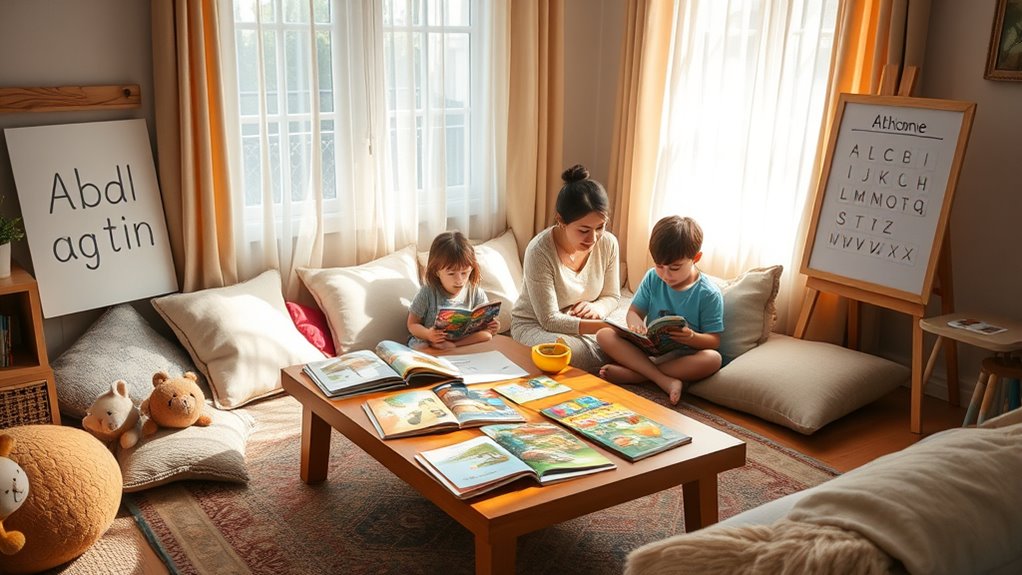
Are you wondering how to give your child a strong start in reading and writing? The good news is that you can support their literacy development right at home by establishing engaging and effective strategies. One way to do this is through phonics games, which turn learning letter sounds and decoding skills into fun activities. Phonics games help your child recognize the relationship between sounds and symbols, making it easier for them to sound out words. These games can be simple—using flashcards, matching activities, or online interactive apps—and they encourage repeated practice in a playful way. By regularly incorporating phonics games into your child’s routine, you help build their confidence and fluency, setting a solid foundation for reading success.
Alongside phonics games, establishing consistent reading routines is essential. A reading routine creates a predictable, comfortable environment where your child associates certain times and activities with reading. Whether it’s a bedtime story, a morning cuddle with picture books, or a quiet afternoon session, routines help your child develop a positive attitude toward reading. When these routines become part of your daily schedule, your child begins to see reading as a natural and enjoyable part of life, not just an academic task. Consistency is key—by dedicating a specific time each day, you reinforce the importance of literacy and foster a love for books. Over time, your child will start to anticipate and look forward to these moments, which enhances their engagement and comprehension.
To make these routines effective, choose books that match your child’s interests and reading level. Incorporate discussion about the stories, ask questions, and encourage them to express their ideas. This interaction boosts vocabulary and comprehension, making reading a dynamic experience rather than a passive activity. Pair reading routines with phonics games by, for example, playing a game where your child sounds out words from the book or identifies similar sounds in different words. This integration reinforces their decoding skills while also making reading a fun, interactive experience.

THE BAMBINO TREE Phonics Flash Cards – Learn to Read in 20 Phonic Stages – Education for Kids Ages 4-8 Kindergarten 1st 2nd Grade
Master Their Phonics, Sound Out Words And Vastly Improve Their Reading Skills: 62 flashcards; 4 sorting rings; 480…
As an affiliate, we earn on qualifying purchases.
As an affiliate, we earn on qualifying purchases.
Frequently Asked Questions
How Can I Incorporate Technology to Support Early Literacy?
You can incorporate technology by using educational apps that make learning fun and engaging. Choose apps that promote letter recognition, phonics, and vocabulary building. Additionally, explore interactive stories that allow your child to participate actively, enhancing comprehension and love for reading. Set aside regular tech time for these activities, ensuring a balanced approach. This way, your child develops early literacy skills while enjoying the benefits of technology.
What Are Some Activities for Non-Verbal or Bilingual Children?
Like silent symphonies, non-verbal and bilingual children communicate through signs and stories. You can practice sign language together, turning it into fun, expressive activities. Bilingual storytelling, using picture books in both languages, helps build understanding and cultural connection. Encourage them to express emotions through gestures and visuals. These activities foster early literacy by strengthening their language skills, confidence, and cultural identity, all while respecting their unique ways of communicating and learning.
How Do I Balance Screen Time With Traditional Reading?
To balance screen time with traditional reading, set clear limits to reduce digital distractions. Encourage outdoor reading sessions where your child can enjoy books in natural light, making reading more engaging. Create a daily routine that includes designated times for screen use and offline activities. By prioritizing outdoor reading and establishing boundaries, you help your child develop strong literacy skills while managing screen exposure effectively.
What Signs Indicate My Child Is Ready for Formal Reading Instruction?
Ever wonder if your child is ready for formal reading instruction? Look for signs of readiness like recognizing common sight words, showing interest in books, and understanding basic letter sounds. Developmental milestones such as improved focus, following simple instructions, and holding a book correctly also indicate they’re prepared. When your child begins to connect letters with sounds and demonstrates curiosity about reading, it’s a clear sign they’re ready to start structured learning.
How Can I Motivate Reluctant or Disinterested Young Readers?
You can motivate reluctant readers by making stories engaging through storytelling techniques like expressive voices and interactive questions. Celebrate their efforts with positive reinforcement, praising their progress and effort rather than just the results. Create a cozy reading environment, choose topics they love, and involve them in selecting books. These strategies help build their confidence, making reading enjoyable and encouraging a lifelong love of learning.

First Little Readers Parent Pack: Guided Reading Level A: 25 Irresistible Books That Are Just the Right Level for Beginning Readers
As an affiliate, we earn on qualifying purchases.
As an affiliate, we earn on qualifying purchases.
Conclusion
By incorporating these strategies into your daily routine, you become the gardener nurturing your child’s love for reading. Each shared story and word you explore together plants seeds of confidence and curiosity that will grow into a lifelong passion for learning. Remember, you’re not just teaching them letters; you’re building a bridge to endless worlds and possibilities. With patience and enthusiasm, you hold the key to opening their early literacy journey—watch them flourish like a blossoming garden.
First Little Readers Parent Pack: Guided Reading Level A: 25 Irresistible Books That Are Just the Right Level for Beginning Readers
As an affiliate, we earn on qualifying purchases.
As an affiliate, we earn on qualifying purchases.
Letter Recognition Games for Kindergarten with Alphabet Mazes and Letter Tracing: Alphabet Workbook for Preschoolers
As an affiliate, we earn on qualifying purchases.
As an affiliate, we earn on qualifying purchases.