TL;DR

Get the little things that make your day delivered free with Prime
- Fast, free delivery on millions of items
- Prime Video, Amazon Music and more included
- Member-only deals all year
The Good Trade published a guide titled “99 Random Acts Of Kindness To Spread Some Joy,” offering practical suggestions for helping people at home, among friends and neighbors, and in the wider community. The supplied source includes examples from the first two categories but does not provide the full list or evidence measuring the effects of the ideas.
The Good Trade has published a guide called “99 Random Acts Of Kindness To Spread Some Joy,” a list of everyday gestures intended to help people support relatives, neighbors and their wider communities. The article offers ideas ranging from preparing a meal or sharing household tasks to thanking local workers and contacting elected representatives.
The guide organizes its suggestions around settings and relationships. In the home, examples include refilling a water pitcher, making dinner and handling cleanup, offering to take a walk together, repairing a loved one’s clothing and making a cup of tea or coffee the way a housemate prefers. It also suggests practical help, such as adding a depleted ingredient to the grocery list or tidying a home workspace without discarding anything important.
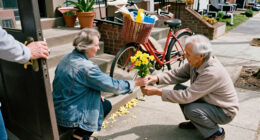
For friends and neighbors, the supplied portion recommends sharing extra baked goods, leaving flowers, remembering significant dates and offering to reschedule when someone seems overwhelmed. Other ideas focus on community life: starting a small neighborhood library, supporting a local shop, contacting a councilperson about a local concern or thanking a representative for work that benefits the community.
The article also frames kindness as something that can be adapted to a person’s capacity. It says people who do not have the bandwidth to help someone else can choose an act of kindness for themselves. Its examples are suggestions, not evidence that any one gesture will produce a particular result for the recipient.
Small Gestures, Everyday Support
The guide’s practical focus makes kindness less abstract: many of its suggestions involve noticing a specific need and taking a manageable action, such as doing a shared chore or checking in with a friend. That emphasis may help readers identify ways to contribute without assuming that support must involve a large donation or a major commitment.
Several ideas also point beyond one-to-one interactions. Supporting a nearby business, raising a neighborhood issue with local officials or creating a shared book collection are ways to connect individual gestures with local relationships and community concerns. The source presents these as options rather than claiming they resolve broader problems.
The advice to choose self-kindness when helping others is not practical acknowledges that people have different levels of time and energy. It avoids treating generosity as an obligation and leaves readers free to choose an action that fits their circumstances.
As an affiliate, we earn on qualifying purchases.
From Home to Neighborhood
The Good Trade introduces the list by describing small gestures—such as having dinner prepared or receiving a compliment—as actions that can make a difficult day feel easier. It says people may not know how much a gesture means to someone else, and encourages readers to consider what they can do for people close to them and in their community.
The supplied source includes examples under headings for acts of kindness at home and acts of kindness for friends and neighbors. It also refers to actions in the wider world. The text provided for this report ends partway through the neighbor section, so it does not show all 99 entries or establish the complete structure of the published list.
““You never know what the person next to you might be going through, and a small gesture of kindness can go a long way.””
— The Good Trade
As an affiliate, we earn on qualifying purchases.
What the Source Does Not Establish
The supplied material does not state when the guide was published, whether the list has been updated, or how the 99 suggestions were selected. It also does not include research or outcome data showing how often these actions are taken or what effects they have.
Because the provided text stops partway through the section on friends and neighbors, the remaining entries and any additional categories cannot be confirmed from this material. The guide should be read as a set of ideas, not as a verified assessment of the effects of kindness or a requirement that readers perform all 99 acts.
As an affiliate, we earn on qualifying purchases.
Choosing an Action That Fits
The article invites readers to choose a gesture suited to their relationships, resources and available energy. Examples in the supplied portion range from brief actions, such as sending a message of appreciation, to more involved offers of practical help. Readers can also choose an act directed toward themselves if they are not able to support someone else at the time.
No follow-up announcement, scheduled update or further milestone is included in the source material. The next step for readers is simply to select an idea they can carry out respectfully and safely; the source does not report a formal program or a way to track participation.
As an affiliate, we earn on qualifying purchases.
Key Questions
What is “99 Random Acts Of Kindness To Spread Some Joy”?
It is a guide published by The Good Trade that offers everyday ideas for showing kindness at home, among friends and neighbors, and in the wider community.
What are some examples from the guide?
Examples in the supplied text include making dinner and cleaning up, repairing a loved one’s clothing, sharing baked goods, leaving flowers for a friend and starting a small neighborhood library.
Does the article say people must complete all 99 acts?
No. The source presents the acts as suggestions. It also says readers who do not have the capacity to help someone else can choose an act of kindness for themselves.
Does the source show that these actions produce specific results?
No outcome data is included in the supplied material. The guide offers ideas and describes why small gestures may matter, but it does not establish measured effects.
Is the full list available in the material provided?
No. The supplied text ends partway through the section about friends and neighbors, so the remaining entries in the 99-item guide cannot be confirmed from this source excerpt.
Source: rss
Halloween Picks
halloween
As an affiliate, we earn on qualifying purchases.