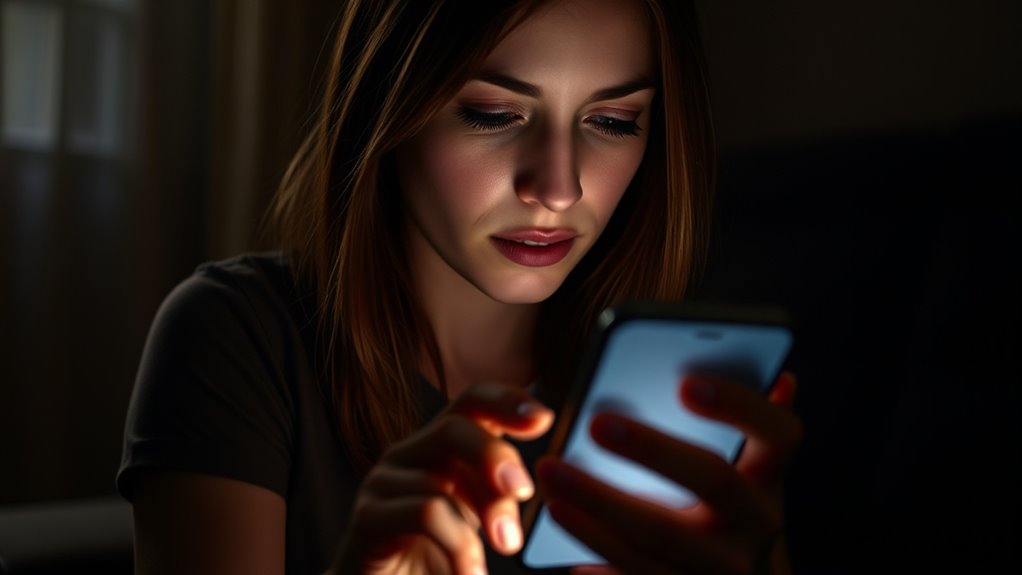

Social media can be both a friend and a foe to your mental health. It helps you stay connected and share experiences, but overuse or seeking validation online can lead to anxiety, low self-esteem, and mood swings. Constant engagement might cause stress or disappointment, especially if you compare yourself to curated content. However, setting boundaries and being mindful of your habits can turn social media into a positive tool. If you keep exploring, you’ll discover ways to protect your well-being while engaging online.
Key Takeaways
- Social media can boost connection and support, but excessive use may lead to anxiety, depression, and lowered self-esteem.
- Digital detoxes help individuals assess the impact of social media on their mental health and promote healthier habits.
- Validation-seeking behaviors online can cause mood swings and contribute to a cycle of stress and dissatisfaction.
- Setting boundaries and engaging in real-world activities foster better mental well-being and reduce dependency on online validation.
- Awareness of content’s storytelling and visual language helps users recognize emotional influences and manage reactions effectively.
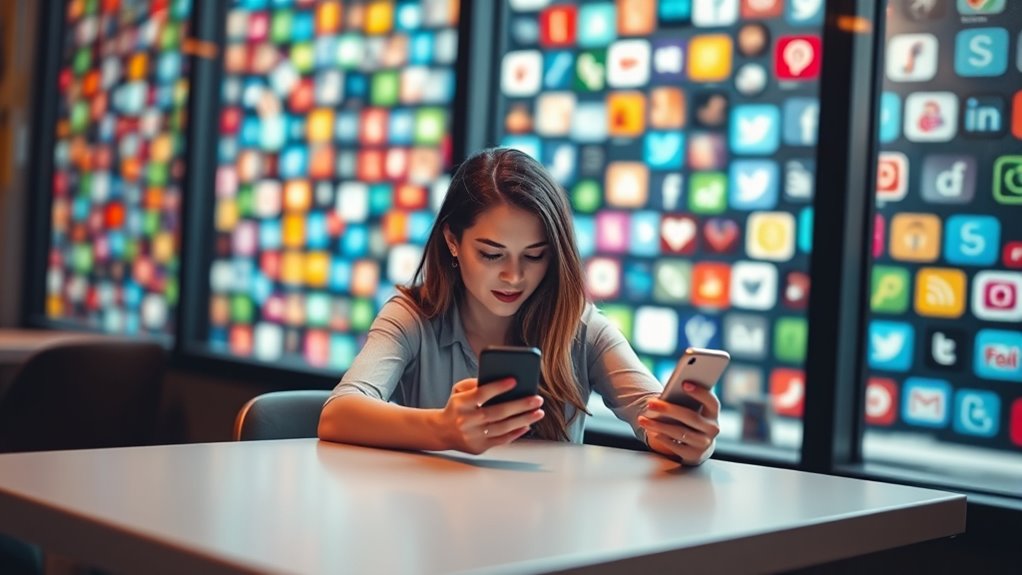
Have you ever wondered how your social media habits impact your mental health? It’s easy to get caught up in the endless scroll, seeking online validation with every like, comment, and share. But this constant pursuit can take a toll on your emotional well-being. When you rely heavily on social media for validation, you may start equating your worth with online approval, which can lead to feelings of inadequacy and anxiety. Taking a step back for a digital detox can help you regain perspective. A digital detox isn’t about quitting social media altogether but about intentionally disconnecting for a period to reset your mind. During this time, you give yourself space to focus on real‑world connections, hobbies, and self‑reflection, rather than seeking validation through virtual interactions. This break can reduce the compulsive urge to check your notifications and help you develop healthier habits around social media use. Engaging in a digital detox allows you to recognize how much of your self-esteem depends on online responses. When you’re constantly craving likes or comments, it’s easy to become trapped in a cycle of validation seeking that never truly satisfies you. You might notice that your mood fluctuates based on your social media activity—feeling elated after a positive comment, then disappointed when your post doesn’t get the engagement you expected. This rollercoaster can contribute to stress and lowered self-esteem over time. By stepping away, you give yourself the opportunity to reconnect with your authentic self, outside the curated personas presented online. It’s a chance to evaluate whether your social media habits serve your mental health or whether they are perpetuating unnecessary stress. Recognizing the influence of social media on mental health can be easier when you understand the role of visual language and storytelling in online content, which often impacts emotional responses more deeply than we realize. You don’t have to completely abandon social media, but setting boundaries can make a huge difference. Limit your usage, turn off notifications, and dedicate specific times for online activity. When you’re less dependent on instant validation, you’ll likely find that your self-worth becomes less tied to virtual praise. Instead, focus on building meaningful, face-to-face relationships and engaging in activities that genuinely bring you joy. Remember, social media can be a double‑edged sword—helpful when used mindfully but potentially harmful if it becomes a source of stress or comparison. Regularly practicing a digital detox and being conscious of your need for online validation can help you foster a healthier relationship with social media, ultimately safeguarding your mental health.

The Screen Time Sidekick Journal by Habit Nest. Fully Guided 66 Day Journey to Take Back Control of your Screen Time. Turn Motivation to Results in 66 days with Habit Nest. Digital Detox
Comes with daily practical guidance for breaking poor screen time habits and implementing new intentional habits in their…
As an affiliate, we earn on qualifying purchases.
As an affiliate, we earn on qualifying purchases.
Frequently Asked Questions
How Does Social Media Affect Teenagers Differently Than Adults?
You notice that social media impacts teenagers differently than adults because teens are more vulnerable to peer pressure and its influence on self-esteem. As a teen, you might compare yourself to others and feel pressured to conform, which can hurt your confidence. Adults tend to be more resilient and aware of social media’s pitfalls, so their self-esteem isn’t as easily affected. This makes social media’s effects more intense for teenagers.
Can Social Media Use Improve Mental Health When Used Responsibly?
Yes, social media can improve your mental health when you practice responsible use. By taking regular digital detoxes, you give yourself a break from constant online stimuli, reducing stress. Engaging in positive interactions instead of negative ones helps boost your mood and self-esteem. Focus on meaningful connections and limit your screen time, so social media becomes a tool for support and inspiration rather than a source of anxiety.
What Are Signs of Social Media Addiction Impacting Mental Well-Being?
Did you know that excessive social media use can increase depression risk by 27%? Signs of social media addiction impacting your mental well-being include constant scrolling, neglecting sleep, and feeling anxious or irritable when offline. You might compare yourself more on platforms like Instagram or TikTok, which worsens self-esteem. The impact of social media on sleep can cause fatigue, worsening mood and mental health. Recognizing these signs helps you regain control and protect your well-being.
How Do Privacy Concerns Influence Mental Health on Social Platforms?
Privacy concerns can considerably impact your mental health on social platforms. When you worry about privacy breaches or data security, it creates anxiety and stress, making you feel vulnerable. These fears may lead to decreased trust in social media, causing you to withdraw or limit your online interactions. Staying aware of privacy settings and data security measures can help you feel more in control, reducing anxiety and protecting your mental well-being.
Are There Specific Social Media Features Linked to Increased Anxiety?
Ever wonder if certain social media features make you more anxious? You might notice that features like instant notifications, likes, and comments can heighten anxiety, especially when cyberbullying triggers or social comparison take hold. These tools can make you feel pressured to keep up or seek validation, amplifying stress. Are you aware of how these features subtly influence your mental health? Recognizing this helps you manage your social media use better.

Boundaries Updated and Expanded Edition: When to Say Yes, How to Say No To Take Control of Your Life
As an affiliate, we earn on qualifying purchases.
As an affiliate, we earn on qualifying purchases.
Conclusion
Ultimately, social media can be both a friend and a foe. By balancing your browsing and boundaries, you can boost your well-being while avoiding the pitfalls of comparison and cyberbullying. Remember, moderation matters—manage your media, monitor your mind, and maintain your mental health. When you wield social media wisely, it becomes a tool for connection, comfort, and confidence—not a cause of chaos. Choose connection over comparison, and let your digital life elevate your emotional well-being.

App Riches: Meditation Boom 2026: Subscription Dynamics in Digital Wellness Markets
As an affiliate, we earn on qualifying purchases.
As an affiliate, we earn on qualifying purchases.

Self-Esteem: A Proven Program of Cognitive Techniques for Assessing, Improving, and Maintaining Your Self-Esteem
As an affiliate, we earn on qualifying purchases.
As an affiliate, we earn on qualifying purchases.