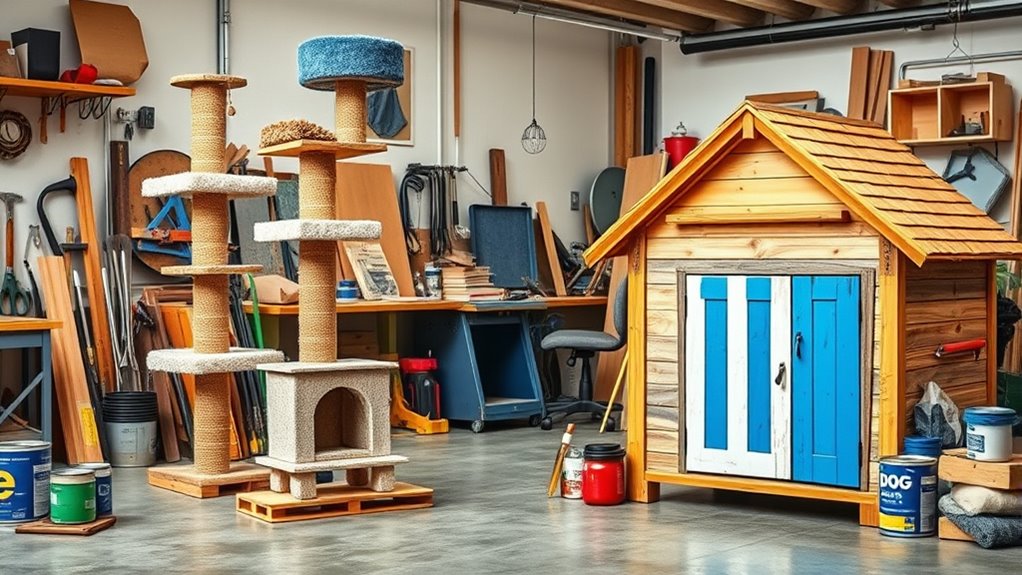

Building DIY pet projects like cat trees and dog houses is a fun, affordable way to give your pets personalized, safe spaces. By choosing sturdy, non-toxic materials and adding features like scratching posts or insulation, you can create comfortable environments tailored to your pet’s needs. Regular maintenance guarantees their safety and longevity of the structures. Want to discover tips on designing the perfect pet haven and ensuring it lasts? Keep exploring for more ideas!

Get the little things that make your day delivered free with Prime
- Fast, free delivery on millions of items
- Prime Video, Amazon Music and more included
- Member-only deals all year
Key Takeaways
- Use durable, non-toxic materials like wood or repurposed furniture for safe, long-lasting structures.
- Incorporate multiple platforms, scratching posts, and hideouts to meet your pet’s needs.
- Ensure structures are stable, secure, and free of sharp edges to prevent injuries.
- Customize size and features based on your pet’s breed, activity level, and space.
- Regularly inspect and maintain DIY projects for safety, stability, and cleanliness.
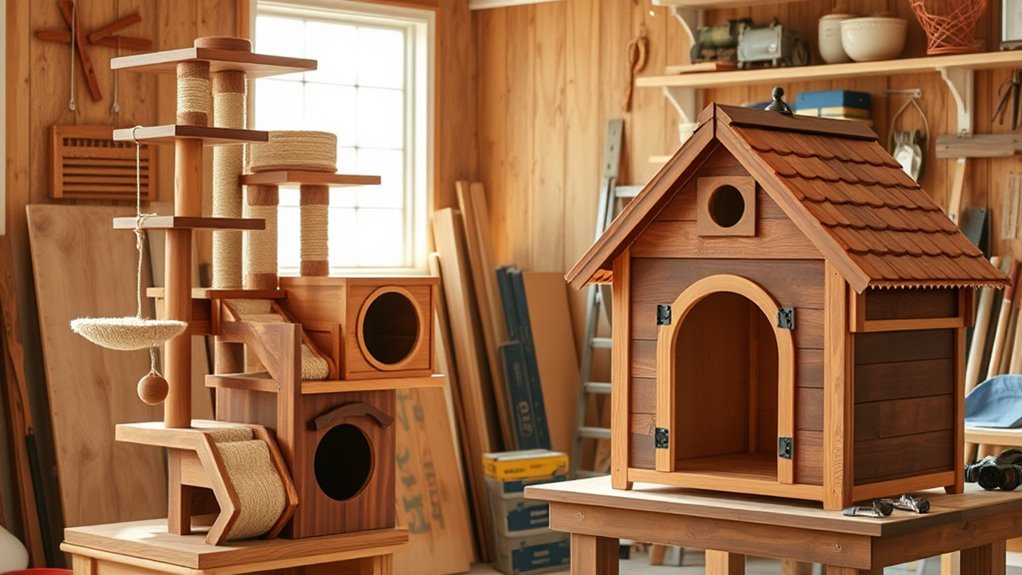
Ever wondered how to spoil your pet with personalized touches while saving money? One great way is by creating custom pet projects that not only show your love but also keep costs down. Building a DIY cat tree or a dog house allows you to tailor the design to your pet’s needs and your space, all while giving you a satisfying sense of accomplishment. Plus, it’s a smart move in the long run, since well-designed pet furniture can last for years and save you from constant replacements. When you’re crafting these projects, it’s essential to keep pet safety in mind, especially concerning pet grooming and veterinary care. Making sure your creations are sturdy, non-toxic, and safe for your pet is crucial.
For a cat tree, start with basic materials like wood or even repurposed furniture. Measure your cat’s size and activity level so you can build enough platforms, scratching posts, and cozy hideouts. Incorporate sisal rope for scratching areas, which saves your furniture from claw marks and encourages healthy scratching habits. Remember, cats love vertical space, so create a structure that allows them to climb and perch comfortably. When assembling, avoid sharp edges or loose parts that could harm your feline friend. Regular pet grooming is vital to keep your cat’s coat healthy and reduce shedding, which also minimizes mess around your DIY project. Also, schedule veterinary care to make sure your cat stays in good health and any potential issues are caught early. This way, your pet can enjoy the new environment safely.
Building a dog house is equally rewarding. Use weather-resistant materials like cedar or treated wood to withstand outdoor elements. Make sure the entrance is appropriately sized for your dog’s breed and size, and add insulation if you live in a colder climate. To prevent injuries, sand down rough edges and use non-toxic paint or sealant. A well-built dog house provides a cozy retreat, especially if your pet spends a lot of time outside. Regular pet grooming keeps your dog’s coat clean and mats at bay, which helps maintain comfort inside the house. Veterinary care remains essential for monitoring your dog’s health, especially when they’re exposed to outdoor elements. Incorporate ventilation to promote airflow, and consider adding a small porch or shaded area for extra comfort.
Involving yourself in building pet furniture not only saves you money but also offers the chance to customize items specifically for your pet’s preferences and needs. Always prioritize safety, pet grooming, and veterinary care to make sure your DIY projects are beneficial and long-lasting. With a little effort, you’ll create a cozy, safe space that your pet will love — all while showing how much you care.
As an affiliate, we earn on qualifying purchases.
Frequently Asked Questions
What Tools Are Essential for Building Pet Furniture?
To build pet furniture, you’ll need essential tools like a saw, drill, screwdriver, measuring tape, and scissors. These tools help you cut and assemble pieces efficiently. Don’t forget to add decorative finishes for a polished look and consider space-saving designs to maximize your area. With these tools, you can create sturdy, stylish furniture tailored to your pet’s needs while enhancing your home’s decor.
How Do I Choose the Right Materials for My Pet?
You should choose materials based on your pet’s comfort, safety, and durability needs. Focus on fabric selection that’s soft, non-toxic, and easy to clean. Consider sustainability considerations by opting for eco-friendly, recycled, or natural materials to reduce environmental impact. Make sure the materials are sturdy enough to withstand your pet’s activity level, and avoid anything with sharp edges or toxic chemicals. This way, your pet stays safe and comfortable.
What Safety Precautions Should I Take During Construction?
Prioritize pet safety by preventing potential problems during construction. Protect yourself from hazards like splinters, sharp tools, and falling objects by wearing safety gear—gloves, goggles, and masks. Keep the workspace clean, clear, and well-lit to avoid accidents. Double-check measurements and secure all parts tightly. Staying cautious with dangerous tools and materials guarantees safe construction, safeguarding your pets from hazards and creating a cozy, secure space for your furry friends.
How Can I Personalize the Design for My Pet’s Preferences?
You can personalize your pet’s space by choosing custom color schemes that match your home decor or your pet’s favorite colors. Add personalized accessories like name tags, cozy cushions, or toys that your pet loves. Think about their preferences—if they enjoy climbing, include multiple levels or scratching posts. Incorporating these elements makes the design uniquely theirs, ensuring they feel comfortable and loved in their new space.
What Is the Average Cost to Build a DIY Pet Project?
Imagine a knight’s purse—building a DIY pet project costs around $50 to $150 on average. Your cost analysis depends on materials and design complexity, making budget planning essential. Basic setups with repurposed furniture save money, while custom builds with premium supplies cost more. You can tailor your project to fit your budget, ensuring your pet gets a cozy space without breaking the bank.
outdoor dog house with insulation
As an affiliate, we earn on qualifying purchases.
As an affiliate, we earn on qualifying purchases.
Conclusion
Building your own cat tree or dog house isn’t just a fun project—it’s a way to create a cozy, personalized space for your pets. When you invest time and effort, you’re not only saving money but also strengthening your bond. Plus, DIY projects boost your confidence and skills. So go ahead, experiment and enjoy the process. Your furry friends will thank you with happy purrs and wagging tails, proving that homemade pet comforts truly make a difference.
sisal rope scratching post for cats
As an affiliate, we earn on qualifying purchases.
As an affiliate, we earn on qualifying purchases.
weather-resistant wooden dog house
As an affiliate, we earn on qualifying purchases.
As an affiliate, we earn on qualifying purchases.
NFL season / tailgating Picks
team gear
As an affiliate, we earn on qualifying purchases.