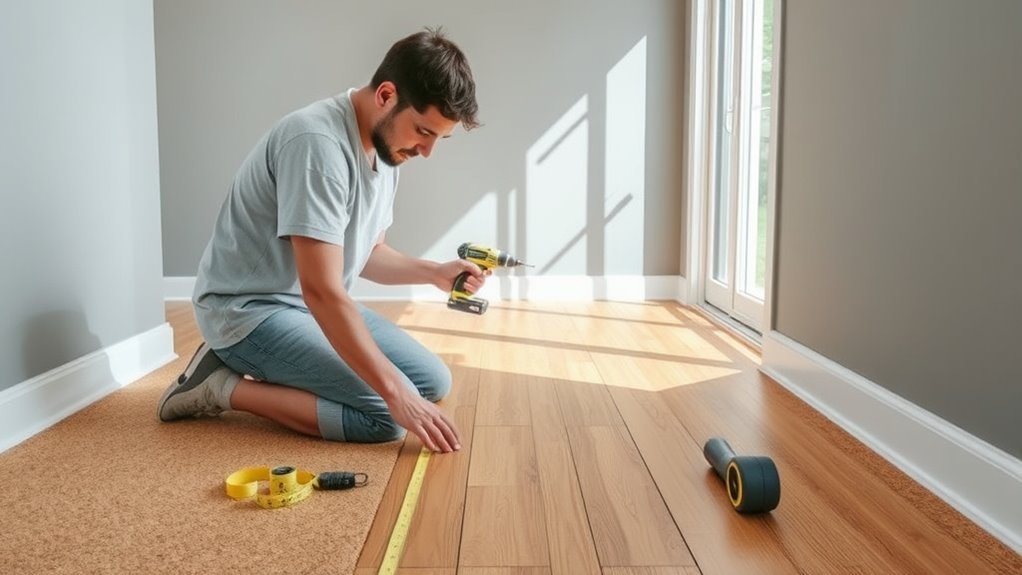
For sustainable flooring options with DIY installation, choose recycled materials like reclaimed wood, recycled cork, or rubber. Use eco-friendly finishes with low or zero VOCs to improve indoor air quality. Select environmentally safe adhesives and plan carefully to minimize waste. Recycling leftover pieces and packaging helps reduce waste, and proper tool use enhances installation efficiency. By taking these steps, you’ll create a healthier space while supporting sustainability—continue exploring to discover the best choices for your project.
Listen free for 30 days with Audible
Thousands of audiobooks and originals — cancel anytime.
As an affiliate, we earn on qualifying purchases.
Key Takeaways
- Choose recycled materials like reclaimed wood, recycled cork, or rubber for eco-friendly flooring options.
- Use low-VOC or zero-VOC finishes with natural oils and water-based binders to improve indoor air quality.
- Select adhesives made from recycled or sustainably sourced ingredients to ensure eco-conscious installation.
- Practice precise measuring and planning to minimize waste and efficiently utilize materials during DIY installation.
- Recycle packaging, reuse leftover flooring pieces, and donate surplus materials to support waste reduction and circular economy.
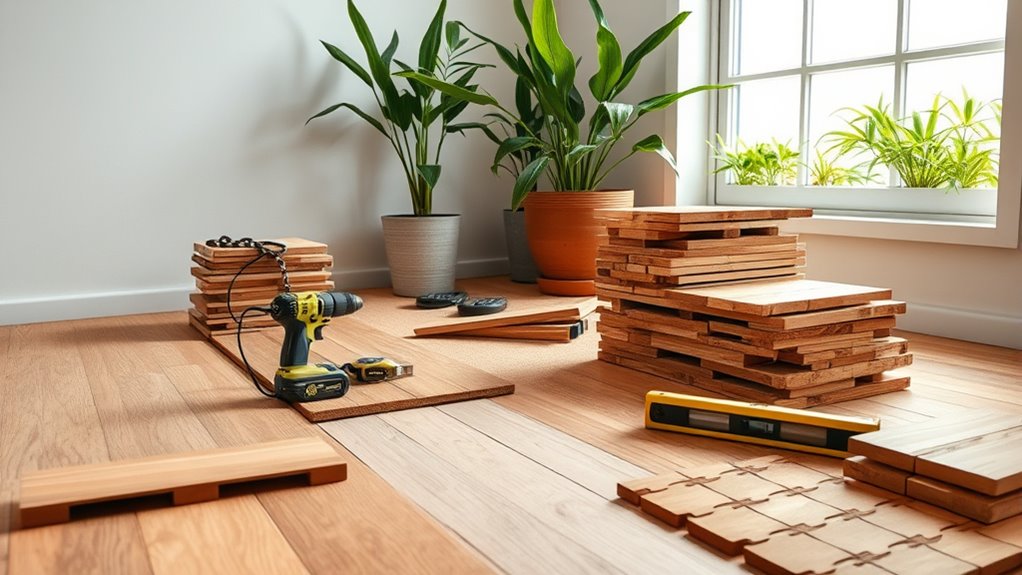
Choosing sustainable flooring options allows you to reduce your environmental impact while enhancing your home’s aesthetics. When you’re considering DIY installation, it’s vital to focus on eco-friendly materials and methods that promote sustainability. One way to do this is by selecting flooring that utilizes innovative recycling methods. Many manufacturers now incorporate recycled content, such as reclaimed wood, recycled cork, or recycled rubber, into their products. These materials not only minimize waste but also reduce the demand for virgin resources. By opting for flooring made through recycling methods, you contribute to a circular economy and help divert materials from landfills.
When installing sustainable flooring yourself, pay attention to the finishes you use. Eco friendly finishes are essential because they can markedly influence the overall sustainability of your project. Traditional finishes often contain volatile organic compounds (VOCs) that can harm indoor air quality. Instead, look for low-VOC or zero-VOC finishes that are formulated with natural oils, water-based binders, or other environmentally safe ingredients. Applying eco friendly finishes can preserve the integrity of your flooring while ensuring your indoor environment stays healthy for you and your family. Many of these finishes also offer durability and water resistance comparable to conventional options, making them suitable for various areas in your home.
Before you start installing, prepare your workspace by ensuring all your tools and materials are eco-conscious. Use recycled or sustainably sourced adhesives, and avoid products with harmful chemicals. When laying down your flooring, follow the manufacturer’s instructions carefully to minimize waste and avoid mistakes that could lead to unnecessary material disposal. Proper planning and measurement are key, especially since some sustainable flooring options, like cork or bamboo, require precise cuts to maximize material use and reduce scraps. Additionally, selecting flooring options that are compatible with DIY installation techniques can make the process smoother and more successful.
Throughout the installation process, consider your recycling methods for packaging and leftover materials. Keep cardboard, plastic, and any packaging from your supplies separate for recycling. If you have leftover flooring pieces, think about repurposing them for small projects or donating them to community initiatives that reuse building materials. This mindful approach ensures you’re actively reducing waste and extending the life cycle of your materials.
Ultimately, installing sustainable flooring yourself offers a rewarding way to make your home more eco-friendly. By choosing materials that incorporate recycling methods and applying eco friendly finishes, you minimize your environmental footprint while creating a beautiful, healthy space. With careful planning and attention to sustainable practices, your DIY project can make a meaningful difference for both your home and the planet.

Livelynine Reclaimed Wood Vinyl Flooring Roll Waterproof Vinyl Plank Flooring Peel and Stick Wood Planks for Walls Kitchen Bathroom Floor Desk Countertop Covers Accent Wall Stick on Shiplap 15.8×78.8
- Size and Coverage: 15.8×78.8 inches, 8.65 sq.ft.
- Material and Thickness: Durable vinyl, 0.015 inches thick
- Waterproof and Removable: Waterproof peel and stick vinyl
As an affiliate, we earn on qualifying purchases.
As an affiliate, we earn on qualifying purchases.
Frequently Asked Questions
Can I Install Sustainable Flooring Over Existing Flooring?
Yes, you can install sustainable flooring over existing flooring if you handle flooring removal and subfloor preparation properly. First, remove the old flooring to create a smooth surface. Then, guarantee the subfloor is clean, level, and sturdy. This preparation helps your new sustainable flooring adhere properly and last longer. Always check the manufacturer’s guidelines for specific installation instructions to ensure a successful DIY project.
What Are the Best Tools for DIY Sustainable Flooring Installation?
You’ll want to gather essential sustainable flooring tools like a tape measure, utility knife, spacers, and a rubber mallet. Using eco-friendly adhesives is key for a green install. Make sure to have a straightedge and a tapping block for precise placement. These sustainable flooring tools help guarantee your DIY project is efficient and eco-conscious, making installation smoother while minimizing environmental impact.
How Long Does Sustainable Flooring Typically Last?
Think of sustainable flooring like a wise old oak, standing strong through storms. Generally, it lasts 10 to 30 years, depending on durability factors and how well you maintain it. Longevity considerations include material quality, installation precision, and foot traffic. If you choose wisely and care for it properly, your sustainable flooring can stay beautiful and functional for decades, offering both eco-friendliness and lasting value in your home.
Are There Eco-Friendly Adhesives Suitable for DIY Projects?
Yes, there are eco-friendly adhesives suitable for DIY projects. You can find non-toxic glues and eco-friendly adhesives that work well with sustainable flooring. Look for products labeled as low-VOC or formaldehyde-free to guarantee they’re safe and environmentally friendly. These adhesives are easy to apply and provide strong bonds, making your installation safer for your home and better for the planet. Always read the instructions for maximum results.
What Maintenance Is Required for Sustainable Flooring?
You’ll need to perform regular maintenance to keep your sustainable flooring in great shape. Use eco-friendly cleaning products to avoid damaging the material and prevent buildup of dirt and grime. Preventative care, like placing mats in high-traffic areas and avoiding excessive moisture, helps extend the lifespan. Regular sweeping, gentle mopping, and prompt spill cleanup also protect your flooring, ensuring it remains durable and eco-friendly for years to come.

Eco Cork Foam Floor Underlayment – Floor Padding for Vinyl Plank Flooring, LVP Flooring, Hardwood Flooring, Insulation Roll for Flooring Planks – 250Sq Ft
- Waterproof Vapor Barrier: Built-in 6 mil vapor barrier for durability
- Sound Insulation: Reduces noise for quieter spaces
- Easy Installation: Self-sealing tape and overlap design
As an affiliate, we earn on qualifying purchases.
As an affiliate, we earn on qualifying purchases.
Conclusion
By choosing sustainable flooring and doing it yourself, you’re not just updating your space—you’re transforming your home into a green fortress for the planet. Imagine stepping onto a floor so eco-friendly, it practically breathes life back into Earth with every step you take. Your DIY project becomes a heroic act, saving forests, reducing waste, and creating a future so bright, even the sun envies your eco-conscious glow. Go ahead—make your home a hero’s haven!

Miracle Sealants Matte Finish Sealer for Tile & Stone, Water-Based, Gallon
- Enhances natural tile and stone color: Enhances the natural color of interior surfaces
- Low VOC, odorless formula: Water-based, odorless, low VOC sealer
- High coverage and quick drying: Covers 800 sq. ft. per gallon, dries in 1-5 hours
As an affiliate, we earn on qualifying purchases.
As an affiliate, we earn on qualifying purchases.

ROMAN PRO-690 Pressure Sensitive Flooring Adhesive – 1-Gallon
- Designed for Resilient Flooring: Suitable for LVT, LVP, VCT, rubber, cork
- Flexible Install Options: Permanent or releasable bonding methods
- High Initial Tack: Fast, secure placement with easy application
As an affiliate, we earn on qualifying purchases.
As an affiliate, we earn on qualifying purchases.
Grilling season Picks
grills
As an affiliate, we earn on qualifying purchases.