
To stay ahead in subscription box packaging, focus on eco-friendly materials like recycled cardboard and biodegradable fillers combined with minimalist designs featuring clean lines and limited colors. This creates an elegant, modern look that highlights your brand’s commitment to sustainability and simplicity. Such packaging enhances unboxing experiences, builds trust, and reinforces your brand story. Keep exploring these trends, and you’ll discover how to create memorable, sustainable packaging that resonates with your customers.
Key Takeaways
- Increasing use of eco-friendly, recycled, and biodegradable materials to enhance sustainability.
- Adoption of minimalist designs featuring clean lines and limited color palettes for modern appeal.
- Combining eco-conscious materials with minimalist aesthetics to strengthen brand identity and customer trust.
- Packaging as a storytelling element that reflects responsibility, elegance, and enhances customer experience.
- Emphasis on creating memorable unboxing experiences that reinforce brand values and foster emotional engagement.
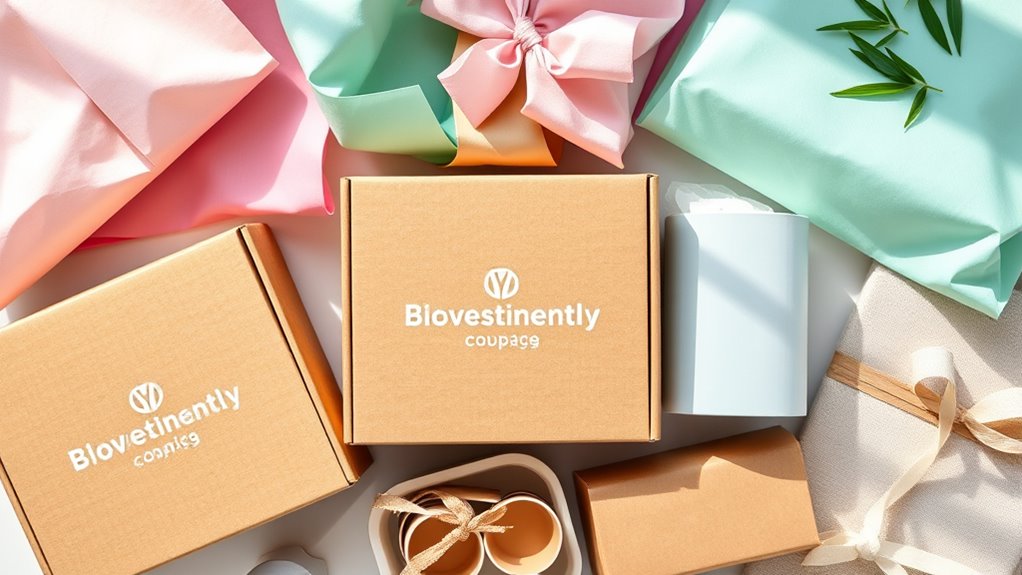
As subscription box services continue to grow in popularity, packaging has become a key factor in creating memorable customer experiences. You want your boxes to stand out, not just for what’s inside but for how they make customers feel. One of the biggest trends right now is the emphasis on sustainable materials. Customers are increasingly conscious of their environmental impact, and they appreciate brands that take responsibility. Using eco-friendly packaging options like recycled cardboard, biodegradable fillers, and plant-based inks shows your commitment to sustainability. These materials not only reduce waste but also communicate your values, helping you build trust and loyalty. When your packaging aligns with eco-conscious principles, it becomes part of the story you tell your customers, making their unboxing experience more meaningful. Incorporating affiliate disclosures transparently in your packaging or branding can also enhance your credibility and build trust with consumers. Alongside sustainability, minimalist design continues to gain traction. You recognize that simplicity speaks volumes—clean lines, limited color palettes, and uncluttered layouts create an elegant, modern look. Minimalist packaging directs the focus toward the contents, emphasizing quality over excess. It also makes your brand appear sophisticated and thoughtful, which appeals to a broad audience. When designing your boxes, opt for sleek, streamlined shapes and avoid overly busy graphics. Using a single, bold logo or a subtle pattern can create a visual impact without overwhelming the senses. Minimalist design isn’t just about aesthetics; it’s about efficiency and clarity, making your packaging easier to produce, recycle, and store.
Eco-friendly packaging builds trust and enhances unboxing by aligning with customers’ sustainability values.
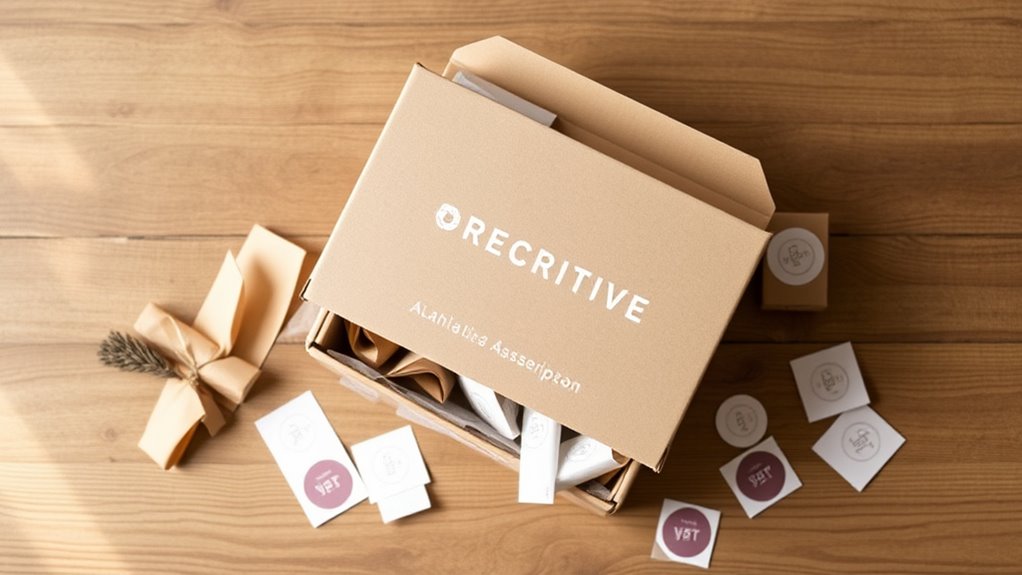
You’ll find that combining sustainable materials with minimalist design enhances your brand’s image. Customers notice when you’re committed to reducing waste and simplifying their experience. Minimalist packaging also lends itself well to customization, allowing you to add small, personalized touches without cluttering the overall look. For instance, a simple, kraft-colored box with a single logo or a minimal sticker can feel both premium and eco-friendly. This approach not only reduces production costs but also streamlines your supply chain, making it easier to scale sustainably.
Ultimately, these packaging trends help you create a cohesive brand story—one that values environmental responsibility and aesthetic elegance. Your customers will appreciate the effort you put into choosing sustainable materials and designing with purpose. As they unbox your subscription, they’ll remember the thoughtful presentation and feel more connected to your brand. By staying ahead with these trends, you ensure that your packaging isn’t just a container but an integral part of delivering a memorable, impactful customer experience.
Frequently Asked Questions
How Does Packaging Impact Subscription Box Customer Retention?
You can boost customer retention by focusing on packaging. When you offer customization options, customers feel special and valued, encouraging repeat business. Durable packaging guarantees the contents stay intact, building trust and satisfaction. Combining these elements shows you care about their experience, making them more likely to stay loyal. In short, thoughtful packaging with customization and durability directly influences how often customers return to your subscription box service.
What Sustainable Packaging Options Are Most Cost-Effective?
You should consider using recyclable materials and biodegradable options, as they’re both cost-effective and eco-friendly. Recyclable materials like cardboard and paperboard are widely available and affordable, reducing your packaging costs. Biodegradable options, such as plant-based plastics or compostable fillers, not only cut waste but also appeal to environmentally conscious customers. By choosing these sustainable packaging options, you can lower expenses while demonstrating your commitment to sustainability.
How Do Packaging Trends Vary Across Different Product Categories?
Ever wondered how packaging varies by product category? You’ll find eco-friendly materials and customization options are tailored to suit different needs. For fragile products, sturdy, padded packaging is key, while eco-conscious brands often choose biodegradable or recycled materials across categories. Cosmetics might lean toward sleek, branded designs, whereas food boxes prioritize freshness and safety. By adapting these trends, you enhance customer experience and boost brand loyalty.
What Role Does Packaging Play in Brand Storytelling?
Packaging plays a vital role in your brand storytelling by showcasing visual branding and cultural symbolism. When you design packaging that reflects your brand’s identity, it creates an emotional connection with your customers. Incorporate cultural symbols to resonate deeply and make your product memorable. This visual storytelling transforms packaging from mere protection into a powerful communication tool, helping you differentiate your brand and foster loyalty through meaningful, eye-catching design.
How Can Packaging Innovations Improve Unboxing Experiences?
Packaging innovations can substantially elevate your unboxing experience through creative design and personalization techniques. By using unique, eye-catching visuals and tailored touches, you make each box feel special and memorable. Incorporate interactive elements or sustainable materials to surprise and delight your customers. These innovations not only enhance excitement but also reinforce your brand identity, encouraging social sharing and fostering loyalty, ultimately turning unboxing into a delightful, engaging moment.
Conclusion
As you embrace these packaging trends, remember you’re crafting more than just a box—you’re opening a gateway to excitement and loyalty. Think of your packaging as a welcoming handshake or a treasure chest awaiting discovery. Every detail symbolizes your brand’s promise, turning unboxing into a journey of anticipation. By weaving meaningful symbols into your design, you transform each package into a memorable experience that keeps customers coming back, keen for the next reveal.