To reduce packaging waste in supply chains, focus on designing packaging that uses minimal material while still protecting products. Use eco-friendly, biodegradable, or recycled materials whenever possible. Optimize packaging size and shape to fit products snugly and remove unnecessary layers or fillers. Incorporate reusable solutions and leverage technology like 3D modeling and data analytics to identify waste reduction opportunities. Collaborating with suppliers and educating your team enhances sustainability efforts—discover more ways to make your supply chain eco-friendlier.
Key Takeaways
- Optimize packaging design to use minimal materials while ensuring product protection.
- Switch to eco-friendly, biodegradable, or recycled materials to reduce long-term waste.
- Implement reusable packaging solutions like containers and crates to cut single-use waste.
- Utilize technology such as 3D modeling and data analytics to identify waste reduction opportunities.
- Educate supply chain partners and align sustainability goals to foster collective waste reduction efforts.
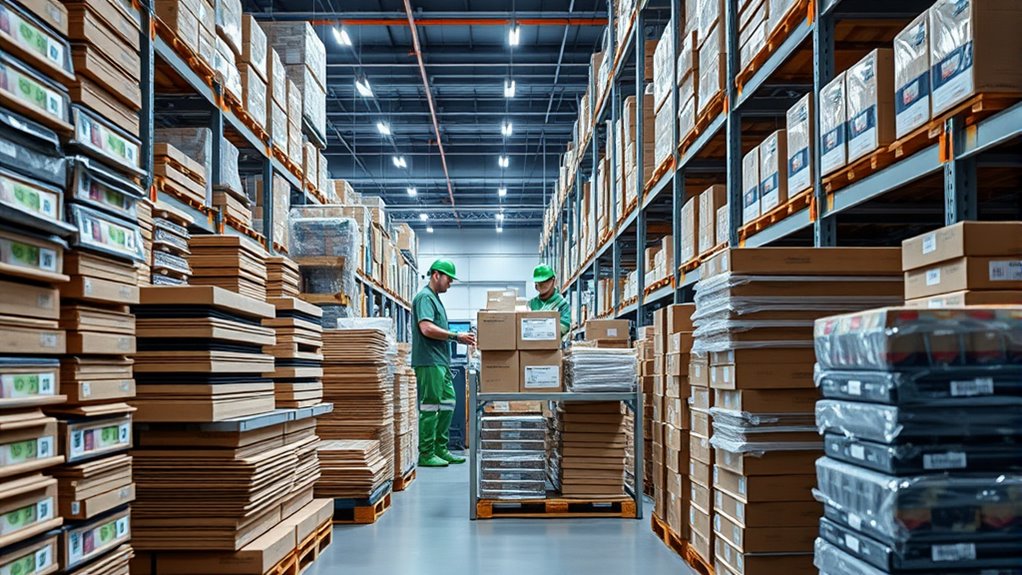
Have you ever contemplated how much packaging waste you generate daily? It’s easy to overlook, but every package you handle or discard contributes to a larger environmental issue. Reducing packaging waste isn’t just about minimizing clutter; it’s about making smarter choices that benefit the planet. One effective way to do this is by prioritizing eco friendly materials. These materials, such as biodegradable plastics, recycled paper, and plant-based alternatives, are designed to break down more quickly and safely in the environment. Switching to eco friendly options can considerably cut down on non-biodegradable waste that lingers in landfills for decades. But choosing the right materials alone isn’t enough—you also need to focus on packaging optimization. This means designing packaging that uses the least amount of material necessary while still protecting the product. By streamlining packaging design, you reduce not only waste but also shipping costs and carbon emissions associated with transportation. Implementing packaging optimization involves evaluating the size and shape of your packaging, ensuring it fits products snugly without excess space, and eliminating unnecessary layers or fillers. It’s about being precise and thoughtful in your approach, so you’re not overpacking or using more material than needed. This process often involves working closely with suppliers to source innovative, lightweight materials that maintain strength and durability. Additionally, adopting modular or standardized packaging can help streamline production and distribution, further reducing waste. You can also consider reusable packaging solutions—like containers or crates that can be returned and reused multiple times—further decreasing single-use waste. Embracing technology can assist in this effort, too; 3D modeling and data analytics enable you to simulate packaging designs and identify opportunities for reduction before manufacturing begins. This proactive approach guarantees that waste is minimized from the outset. Education on sustainable practices, supported by industry standards, can help your team adopt more environmentally responsible packaging methods. Educating your team about the importance of eco friendly materials and packaging optimization is crucial. When everyone understands the environmental impact and the benefits of smarter packaging choices, they’re more likely to implement sustainable practices consistently. Moreover, collaborating with your supply chain partners to align on sustainability goals can amplify your impact. When all stakeholders prioritize eco-friendly materials and efficient packaging, it creates a ripple effect that leads to substantial waste reduction. Ultimately, reducing packaging waste requires a combination of innovative material choices, thoughtful design, and collaborative effort. It’s about making conscious decisions at every step—whether selecting eco friendly materials or optimizing packaging design—to foster a more sustainable supply chain. By doing so, you not only help protect the environment but also potentially lower costs and improve your company’s reputation as a responsible, forward-thinking business.
Top picks for "reduc packag waste"
Open Amazon search results for this keyword.
As an affiliate, we earn on qualifying purchases.
Frequently Asked Questions
How Can Small Businesses Implement Sustainable Packaging Practices?
You can implement sustainable packaging practices by choosing eco-friendly sourcing options for your materials and redesigning your packaging to minimize waste. Look for suppliers that prioritize biodegradable or recycled materials, and consider packaging redesigns that use less material while maintaining protection. Educate your team on sustainable practices and communicate your efforts to customers. Small changes make a big difference in reducing your environmental impact and boosting your brand’s sustainability.
What Are the Cost Implications of Reducing Packaging Waste?
Think of reducing packaging waste as planting a seed that grows into cost savings. You’ll likely face initial investments, but over time, you’ll see supply chain efficiency improve, lowering expenses. Less packaging means reduced material costs and shipping fees, which benefits your bottom line. While there might be upfront costs for sustainable materials or new processes, the long-term savings and positive environmental impact make it a worthwhile investment.
How Do Regulations Vary Across Different Regions Regarding Packaging Waste?
Regulations on packaging waste vary widely across regions, with some enforcing strict standards on recyclable materials, while others have more lenient rules. You’ll face compliance challenges as regional standards differ, requiring you to adapt packaging practices to meet local laws. Staying updated on these regulations is crucial, so you can avoid penalties and ensure your supply chain remains compliant and environmentally responsible across all regions you operate in.
What Innovative Materials Are Available for Eco-Friendly Packaging?
Imagine wrapping your products in a leaf’s gentle embrace. You can do this with innovative materials like biodegradable polymers and plant-based materials, which break down naturally and leave no trail of harm. These eco-friendly options are revolutionizing packaging, transforming waste into nourishment for the earth. By choosing such materials, you’re planting seeds of change, turning your supply chain into a blossoming garden of sustainability and care for future generations.
How Can Supply Chain Partners Collaborate to Minimize Packaging Waste?
You can collaborate with supply chain partners by sharing innovative recycling initiatives and best practices in packaging design. Work together to develop standardized, minimalistic packaging that’s easier to recycle. Regular communication helps identify waste reduction opportunities, while joint efforts in testing eco-friendly materials bolster sustainability. By aligning your goals, you ensure a more efficient, eco-conscious supply chain, ultimately reducing packaging waste and contributing to environmental preservation.
Conclusion
By adopting smarter packaging practices, you can markedly cut waste without sacrificing protection or efficiency. Some might think it’s too costly or complicated, but the long-term savings and environmental benefits outweigh the initial effort. Small changes, like choosing eco-friendly materials or optimizing package size, make a big difference. So, don’t let doubts hold you back—embrace sustainable supply chains today and show your commitment to a healthier planet.