
Environmental impact labeling helps you make informed choices by providing clear details about a product’s ecological footprint, including carbon emissions and recyclability. It encourages you to select eco-friendly options, reduces waste, and promotes sustainable practices. These labels motivate companies to improve their environmental efforts and raise awareness about the benefits of greener products. If you want to understand how these labels influence your decisions and the market, there’s more to discover ahead.
Key Takeaways
- Environmental impact labels provide transparent information about a product’s carbon footprint and overall ecological effects.
- They help consumers compare products based on sustainability metrics, encouraging eco-friendly purchasing decisions.
- Labels promote awareness of recycling practices and resource conservation, supporting waste reduction efforts.
- They influence industry trends by motivating brands to adopt greener manufacturing and transparent reporting.
- Such labels connect everyday choices to broader environmental and health sustainability goals.
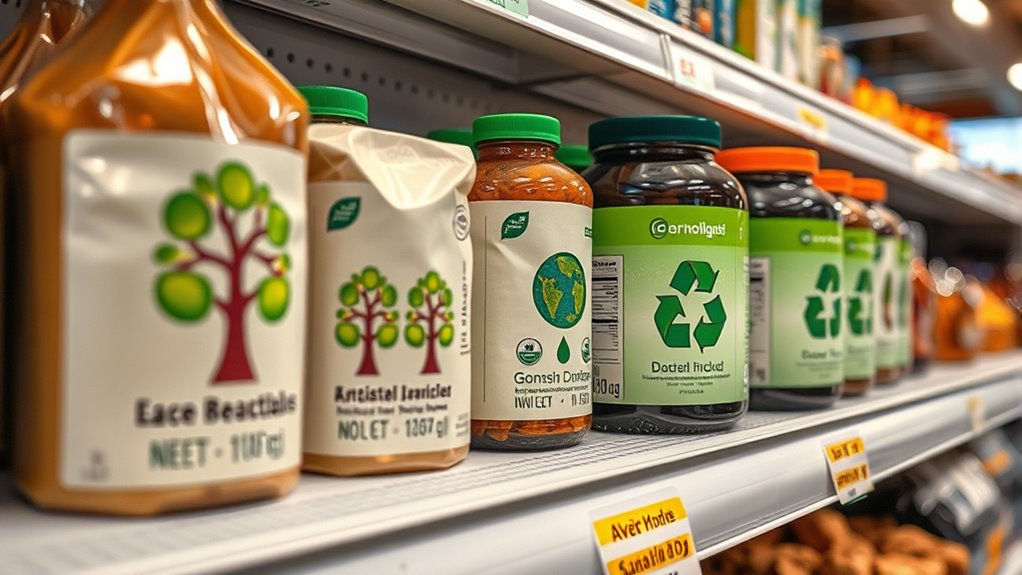
Environmental impact labeling is gaining popularity as consumers increasingly seek to make eco-conscious choices. When you see these labels on products, they provide clear information about the environmental effects of manufacturing and disposal processes. This helps you evaluate the sustainability of what you buy and encourages companies to improve their practices. One key aspect these labels often highlight is recycling practices. They inform you whether a product is made from recycled materials or if it’s recyclable after use. Knowing this, you can choose items that support waste reduction and reduce landfill overflow. It makes you more aware of how your purchasing decisions influence waste management, encouraging you to opt for products that are easier to recycle or are made from recycled content. This, in turn, helps promote a circular economy where materials are reused rather than discarded.
Additionally, environmental impact labels often include information about a product’s carbon footprint. Your carbon footprint measures the greenhouse gases emitted during production, transportation, and disposal. When you understand a product’s carbon footprint, you can compare options and select those with lower emissions, directly reducing your contribution to climate change. These labels serve as a pivotal guide, making you more conscious of the environmental cost behind everyday items. By prioritizing products with smaller carbon footprints, you support companies that implement greener manufacturing practices, such as renewable energy use or reduced emissions during transportation. This knowledge empowers you to make choices aligned with your environmental values, creating a ripple effect that encourages brands to lessen their overall impact.
The presence of environmental impact labels also motivates you to be more mindful of your overall consumption habits. As you become more informed about recycling practices and carbon footprints, you tend to favor products with transparent, eco-friendly credentials. This awareness fosters a shift toward sustainable living, where you consider the lifecycle and environmental impact of your purchases. It’s not just about buying greener products but also about changing your behavior—reducing unnecessary consumption, properly recycling items, and supporting companies committed to environmental responsibility. Additionally, understanding the importance of nutrient retention from raw foods can inspire you to choose products that preserve vital nutrients, further aligning your choices with health and sustainability goals. The labels act as a bridge, connecting your everyday choices to larger environmental goals. They make it easier for you to contribute to reducing waste, lowering greenhouse gas emissions, and conserving resources. Overall, environmental impact labeling equips you with the knowledge needed to make smarter, more sustainable decisions that benefit both the planet and your community.
Top picks for "environmental impact label"
Open Amazon search results for this keyword.
As an affiliate, we earn on qualifying purchases.
Frequently Asked Questions
How Do Environmental Labels Influence Consumer Purchasing Decisions?
Environmental labels influence your purchasing decisions by highlighting recycling benefits and eco-friendly packaging, making it easier for you to choose sustainable options. When you see these labels, you’re more likely to support products that reduce environmental impact. They guide you toward items that promote recycling benefits and use eco-friendly packaging, helping you make responsible choices effortlessly. As a result, these labels empower you to contribute positively to the environment with every purchase.
What Standards Govern Environmental Impact Labeling Across Countries?
Think of global standards as the lighthouse guiding your choices. International agreements like the Paris Agreement and certification standards such as FSC or LEED set the course for environmental impact labeling. These standards guarantee consistency and credibility across countries, helping you navigate eco-friendly options with confidence. By following these guidelines, manufacturers and governments work together to make sustainable products transparent and trustworthy, so you can make informed, responsible decisions effortlessly.
Are Eco-Labels Reliable Indicators of a Product’s True Sustainability?
Eco-labels can be reliable indicators of a product’s sustainability if they meet strict eco certification standards. You should look for labels that clearly disclose a product’s carbon footprint and are backed by reputable organizations. However, not all labels are equally trustworthy, so it’s wise to research the certification process behind them. When you choose products with verified eco labels, you’re more likely to support genuinely sustainable practices.
How Do Companies Develop and Verify Environmental Impact Labels?
You develop and verify environmental impact labels by ensuring supply chain transparency and following strict certification processes. You gather detailed data on your product’s environmental footprint, including sourcing, manufacturing, and distribution. Then, you work with accredited third-party organizations to verify this information through rigorous audits and certifications. This process guarantees that your labels accurately reflect your product’s sustainability, building trust with consumers and demonstrating your commitment to environmental responsibility.
What Challenges Exist in Implementing Global Environmental Labeling Systems?
Imagine trying to implement a unified eco-label across countries, but standardization hurdles delay progress. You’ll face challenges like differing regulations, cultural perceptions, and varying consumer awareness levels. These issues make it difficult for companies to adopt consistent labeling systems globally. Without clear standards and increased consumer understanding, the effectiveness of environmental labels diminishes, slowing progress toward sustainable consumption. Addressing these challenges requires international cooperation and education efforts.
Conclusion
By paying attention to environmental impact labels, you can make smarter choices—after all, studies show that 70% of consumers consider sustainability when shopping. When you understand what these labels mean, you help reduce pollution and conserve resources. Every small decision adds up, influencing companies to adopt greener practices. So, next time you see an eco-label, remember your power to create change, one purchase at a time. Your choices truly make a difference for the planet.