Portable espresso makers split into two camps: self-heating electric machines that brew from cold water in minutes, and manual pressure brewers that need hot water but never run out of battery. The OutIn Nano earns the top spot for balancing genuine 20-bar extraction, fast heating and a genuinely packable body. If battery life matters more than anything, the CERA+ PCM03S with its large 13500mAh cell is a strong alternative, while the Wacaco Minipresso GR2 remains the pick for purists who want zero reliance on charging. Below, I break down all twelve options by brew quality, portability, and real-world tradeoffs so you can match the right machine to your travel style. Keep reading for the full comparison.

Get the little things that make your day delivered free — and shop member deals
- Fast, free delivery on millions of items
- Access to Prime Big Deal Days deals on October 6–7
- Prime Video, Amazon Music and more included
Complete the kit


Key Takeaways
- Self-heating electric models dominated the top of this comparison because brewing from cold water anywhere is the single biggest convenience upgrade in the category — the OutIn Nano did this best while staying compact.
- Manual options like the Wacaco Minipresso GR and GR2 can’t heat water, but they never die on day three of a camping trip — making them the reliability champions of this lineup.
- Battery capacity varied more than any other spec: the 13500mAh units (CERA+ PCM03S and one 20-bar competitor) brewed 4-5 cups per charge, while smaller cells managed only 2-3.
- Several machines in this list share near-identical 20-bar internals (Loezora, the 3-in-1, the Fanttik Cafein 11), so size, cleaning ease and accessories — not pressure numbers — are what actually separate them.
- Capsule-versus-ground compatibility became a hidden cost factor: machines locked into one input type limit you on the road, which is why the multi-format picks ranked higher despite similar brew quality.
| OutIn Nano Portable Electric Espresso Machine |  | Best Overall | Weight: 670 grams | Material: Food-grade stainless steel | Pressure: 20 bar | VIEW LATEST PRICE | See Our Full Breakdown |
| Portable Espresso Maker – 13500mAh Self-Heating Electric Espresso Machine |  | Best Battery Life | Weight: 906 grams | Battery Capacity: 13,500mAh | Output Pressure: 20 bar | VIEW LATEST PRICE | See Our Full Breakdown |
| Wacaco Minipresso GR Portable Espresso Machine |  | Best Value, No Battery Needed | Power Source: Manual operation, no battery or electricity | Coffee Input: Ground coffee only | Brew Capacity: Up to 50ml espresso per cycle | VIEW LATEST PRICE | See Our Full Breakdown |
| Loezora Portable Espresso Machine |  | Best for Capsule Lovers | Pressure: 20 bar | Wattage: 140 watts | Battery: 7500mAh rechargeable | VIEW LATEST PRICE | See Our Full Breakdown |
| OutIn Mino Portable Electric Espresso Machine |  | Best Rugged Pick for Outdoors | Dimensions: 2.64in x 7.68in | Weight: 685 grams | Battery: 3000mAh 3S cells | VIEW LATEST PRICE | See Our Full Breakdown |
| CERA+ PCM03S Portable Espresso Machine with 13500mAh Self-Heating Battery |  | Best Battery Life | Battery: 3x4500mAh (13500mAh) rechargeable | Cups per Charge: Up to 8 hot cups (cold water) or 500+ shots (preheated water) | Charging: 30W Type-C fast charging, ~1.5 hours full | VIEW LATEST PRICE | See Our Full Breakdown |
| OutIn Nano Portable Electric Espresso Machine, Travel Coffee Maker |  | Best for Frequent Flyers | Weight: 670 grams | Material: Food-grade stainless steel | Pressure: 20 bar | VIEW LATEST PRICE | See Our Full Breakdown |
| Portable 3-in-1 Espresso Coffee Maker, 20-Bar Travel Machine with 7500mAh Battery |  | Best for Pod People | Pressure: 20 bar | Battery: 7500mAh | Cups per Charge: 4 cups cold water, 50+ cups pre-heated water | VIEW LATEST PRICE | See Our Full Breakdown |
| Fanttik Cafein 11 Portable Espresso Maker, 20 Bar Coffee machine with USB-C |  | Best Premium Features | Pressure: 20 bar | Weight: 825g | Heating Time: 135 seconds to 198°F | VIEW LATEST PRICE | See Our Full Breakdown |
| WACACO Minipresso GR2 Portable Espresso Maker for Ground Coffee, Gray Olive |  | Best Ultra-Light Manual Pick | Operation: Manual (no electricity or battery) | Max Pressure: 18 bar | Water Tank: 80ml | VIEW LATEST PRICE | See Our Full Breakdown |
| OutIn Nano Portable Electric Espresso Machine, Travel Coffee Maker |  | Best Lightweight Pick | Weight: 670 grams | Material: Food-grade stainless steel | Heating: 1.7oz water from 77°F to 198°F in 200 seconds | VIEW LATEST PRICE | See Our Full Breakdown |
| AMZCHEF Portable Coffee Maker – Rechargeable 2-in-1 Single Serve Espresso Brewer |  | Best Battery Life | Heating Time: Approximately 200 seconds (2.7 oz, 77°F to 198°F) | Water Capacity: 2.7 oz | Brew Modes: Ground coffee and NS capsules | VIEW LATEST PRICE | See Our Full Breakdown |
| portable espresso maker | Weight | Pressure | Battery | Charging |
|---|---|---|---|---|
| OutIn Nano Portable Electric E | 670 grams | 20 bar | 2500mAh 3S lithium | USB-C, 10-15W compatible |
| Portable Espresso Maker | 906 grams | — | — | USB-C rechargeable |
| Wacaco Minipresso GR Portable | — | — | — | — |
| Loezora Portable Espresso Mach | — | 20 bar | 7500mAh rechargeable | — |
| OutIn Mino Portable Electric E | 685 grams | — | 3000mAh 3S cells | USB-C, 20-80% in 45 minutes, full in 90 minutes |
| CERA+ PCM03S Portable Espresso | — | 20 bar pump | 3x4500mAh (13500mAh) rechargeable | 30W Type-C fast charging, ~1.5 hours full |
| OutIn Nano Portable Electric E | 670 grams | 20 bar | 2500mAh 3s lithium | USB-C, 10-15 watts |
| Portable 3-in-1 Espresso Coffe | 700g | 20 bar | 7500mAh | USB-C, 12V car adapter support |
| Fanttik Cafein 11 Portable Esp | 825g | 20 bar | — | 30W Type-C fast charging |
| WACACO Minipresso GR2 Portable | 285g | — | — | — |
| OutIn Nano Portable Electric E | 670 grams | 20 bar | 2500mAh 3s lithium | — |
| AMZCHEF Portable Coffee Maker | — | 20-bar pump | 3x 3000mAh (9000mAh total), rechargeable | USB-C, compatible with power banks and car adapters |
More Details on Our Top Picks
OutIn Nano Portable Electric Espresso Machine
The OutIn Nano earns the top spot because it balances weight, speed, and versatility better than anything else here. At 670 grams, it is lighter than the 13500mAh self-heating model (906g) and nearly as compact as its sibling, the OutIn Mino, while still heating 1.7oz of room-temperature water to 198°F in about 200 seconds. The 20-bar pump produces crema that rivals plug-in machines, and the dual ground/capsule support means it adapts to whatever coffee you packed. Compared with the Wacaco Minipresso GR, you get full self-heating and no manual pumping — but you trade away the Minipresso’s unlimited, battery-free operation. The Nano’s five hot shots per charge is respectable, though less than the Loezora’s 6-8.
Pros:- Lightest self-heating option in this lineup at 670 grams
- Heats room-temperature water to 198°F in about 200 seconds
- Works with both ground coffee and capsules for flexible brewing
- USB-C charging with up to 5 hot shots per charge
Cons:- Small 1.7oz brewing capacity limits you to single shots
- Cannot be used or stowed in checked luggage — carry-on only
Best for: Frequent travelers and campers who want genuine self-heating espresso with minimal pack weight and USB-C convenience
Not ideal for: Multi-day off-grid trips where five shots per charge won’t stretch far and no power bank is guaranteed
- Weight:670 grams
- Material:Food-grade stainless steel
- Pressure:20 bar
- Heating:1.7oz from 77°F to 198°F in 200 seconds
- Battery:2500mAh 3S lithium
- Charging:USB-C, 10-15W compatible
- Capacity:Up to 5 hot shots per charge (200+ with hot water)
- Compatibility:Ground coffee and capsules
Our verdict“If you want one portable espresso maker that does everything reasonably well at the lowest weight, this is the one to buy.”
Portable Espresso Maker – 13500mAh Self-Heating Electric Espresso Machine
This model’s defining advantage is its 13,500mAh battery — nearly double the capacity of the Loezora’s 7500mAh cell. That translates to roughly 8 shots from cold water per charge, versus 5 on the OutIn Nano and 6 on the OutIn Mino, which matters a lot on a weekend trip without a charger. Like the Nano, it heats 1.7oz of water in under three minutes and brews at 20 bar for proper crema. The tradeoff is weight: at 906 grams it is the heaviest electric option here, so ounce-counting backpackers will notice it in the pack. Fully automatic operation with auto shut-off keeps things simple compared with the manual pumping of the Wacaco Minipresso GR, though you are still capped at a small 1.7oz brew per cycle.
Pros:- Largest battery in the lineup at 13,500mAh for roughly 8 cold-water shots
- Self-heating design removes the need to carry a separate kettle
- Compatible with both ground coffee and NS capsules
- Fully automatic operation with auto shut-off
Cons:- Heaviest electric pick at 906 grams
- Only about 8 shots per charge from room-temperature water despite the big battery
Best for: Campers and road-trippers who brew for a group or want multiple shots across a weekend without recharging
Not ideal for: Ultralight hikers and anyone who prioritizes minimal pack weight over battery endurance
- Weight:906 grams
- Battery Capacity:13,500mAh
- Output Pressure:20 bar
- Wattage:150 watts
- Heating:1.7oz from 77°F to 198°F in under 3 minutes
- Coffee Input:Ground coffee, NS capsules
- Charging:USB-C rechargeable
- Material:Aluminum, stainless steel
Our verdict“Choose this when shot count per charge matters more than every gram in your bag.”
Wacaco Minipresso GR Portable Espresso Machine
The Wacaco Minipresso GR takes the opposite approach from every electric pick here: no battery, no heating element, no charging cable. You supply boiling water, pump the integrated piston by hand, and get up to 50ml of espresso with generous crema. That simplicity is its superpower — unlike the OutIn Nano or the 13500mAh model, it will never run out of charge, making it genuinely reliable for off-grid trips spanning weeks. It is also typically the most affordable path to real portable espresso. The catches are real, though: you need a heat source for water, the manual pumping takes effort first thing in the morning, and useful accessories like a larger tank are sold separately rather than included.
Pros:- No battery or electricity required — never runs out of power
- Works with any coffee bean or roast for maximum flavor flexibility
- Simple piston operation produces authentic espresso with crema
- Compact and lightweight with an integrated scoop
Cons:- Requires a separate source of boiling water
- Manual pumping demands effort and consistency
- Accessories for longer brews and protection are sold separately
Best for: Budget-minded campers and hikers who already boil water and want a charge-free, nearly indestructible espresso tool
Not ideal for: Travelers without access to hot water or anyone who wants push-button brewing with no physical effort
- Power Source:Manual operation, no battery or electricity
- Coffee Input:Ground coffee only
- Brew Capacity:Up to 50ml espresso per cycle
- Extraction:Hand-pumped piston pressure
- Use Cases:Camping, hiking, office, travel
- Accessories:Sold separately
Our verdict“For zero-dependability-on-batteries brewing at the lowest cost of entry, this manual workhorse is hard to beat.”
Loezora Portable Espresso Machine
Where every other electric pick here handles one capsule standard at most, the Loezora accepts Nespresso Original capsules, Dolce Gusto capsules, and ground coffee — a genuine rarity that makes it the pick for households already stocked with either capsule type. Its full 304 stainless steel brewing path with zero plastic contact gives it a taste-quality edge over the plastic-lined OutIn Mino. The 7500mAh battery delivers 6-8 shots per charge with USB-C fast charging in about three hours, sitting between the Nano’s 5 and the 13500mAh model’s 8. Its IPX4 splash-proofing and car-cup-holder fit make it road-trip friendly, though its 140-watt heater is modest and the 2-3 minute heat-up will feel slow if you are used to a countertop machine.
Pros:- 3-in-1 compatibility with Nespresso Original, Dolce Gusto, and ground coffee
- Full 304 stainless steel construction with zero plastic contact
- 6-8 shots per charge with 3-hour USB-C fast charging
- Leakproof and IPX4 splash-proof, sized for car cup holders
Cons:- 2-3 minute heating is slower than countertop machines and some rivals
- Lower 140-watt power limits brewing performance versus desktop units
Best for: Nespresso or Dolce Gusto capsule owners who want one travel machine that uses the pods already in their kitchen
Not ideal for: Buyers who only brew ground coffee and want lighter weight or faster heat-up than this offers
- Pressure:20 bar
- Wattage:140 watts
- Battery:7500mAh rechargeable
- Shots Per Charge:6-8
- Heating Time:2-3 minutes
- Material:304 stainless steel, food-grade ABS
- Coffee Input:Nespresso Original, Dolce Gusto capsules, ground coffee
- Water Resistance:IPX4 splash-proof
Our verdict“If your coffee life runs on capsules, this is the most flexible — and best-tasting — travel option in the group.”
OutIn Mino Portable Electric Espresso Machine
The OutIn Mino is the machine built for genuinely nasty weather. Its IP67 waterproof and dustproof rating outclasses the Loezora’s mere IPX4 splash resistance, and it keeps extracting reliably from 5°F to 113°F — a range that covers winter campsites and desert trails alike. At 2.64in x 7.68in and 685 grams, it is close to the OutIn Nano in portability, but its 3000mAh battery squeezes out up to 6 cups from cold water versus the Nano’s 5, and its 20%-to-80% charge in 45 minutes is the fastest top-up here. The tradeoffs: the body leans on food-grade plastic where the Loezora is all steel, its 32.4Wh output is modest, and the semi-automatic operation asks slightly more of you than one-button rivals.
Pros:- IP67 waterproof and dustproof rating for true all-weather use
- Operates reliably in temperatures from 5°F to 113°F
- Fast USB-C charging: 20% to 80% in 45 minutes
- Pocket-sized at 2.64in x 7.68in with 6 cups per charge from cold water
Cons:- Food-grade plastic construction rather than a full steel brewing path
- Semi-automatic operation requires more user involvement than one-button rivals
Best for: Backpackers and adventure travelers who brew in rain, dust, or freezing conditions and need weatherproof reliability
Not ideal for: Coffee drinkers bothered by plastic in the brewing path or who want the simplest fully automatic operation
- Dimensions:2.64in x 7.68in
- Weight:685 grams
- Battery:3000mAh 3S cells
- Capacity:Up to 6 cups (50ml) from cold water; 500 with hot water
- Charging:USB-C, 20-80% in 45 minutes, full in 90 minutes
- Water Resistance:IP67 waterproof and dustproof
- Operating Range:5°F to 113°F
- Coffee Input:Ground coffee, NS capsules (adapter)
- Materials:Stainless steel portafilter, BPA-free Tritan cup
Our verdict“When the forecast looks rough and the espresso still has to happen, this is the pick that will survive the trip.”
CERA+ PCM03S Portable Espresso Machine with 13500mAh Self-Heating Battery
Among the self-heating options in this lineup, the CERA+ PCM03S stands apart for raw endurance. Its 13500mAh battery brews up to 8 cups from cold water per charge — more than the OutIn Nano’s 5 shots and double the 7500mAh 3-in-1 model’s 4 cups — which changes what a portable espresso maker can actually do on a multi-day trip. Heating cold water to 198°F in 140 seconds also beats the ~5-minute wait of the 3-in-1 unit, and 30W Type-C charging means less time tethered to an outlet. The pods-or-grounds flexibility gives it genuine versatility too. The tradeoff is shot size: 1.7oz of water per brew means single espressos only, and a battery this large is a long-term durability question no reviewer can fully answer yet.
Pros:- Largest battery in the category: up to 8 hot cups from cold water per charge
- Fast 140-second self-heating without any external power
- Brews both NS-compatible pods and ground coffee
- 30W Type-C charging reaches full charge in about 1.5 hours
Cons:- 1.7oz water capacity limits every brew to a single shot
- Long-term battery durability is unproven with heavy daily use
Best for: Campers and road-trippers who need multiple hot shots per day with no access to power for days at a time
Not ideal for: Anyone wanting larger drinks — the 1.7oz water capacity rules out doubles and Americanos without re-brewing
- Battery:3x4500mAh (13500mAh) rechargeable
- Cups per Charge:Up to 8 hot cups (cold water) or 500+ shots (preheated water)
- Charging:30W Type-C fast charging, ~1.5 hours full
- Heating Time:140 seconds (77°F to 198°F)
- Water Capacity:1.7oz (50ml)
- Pressure:20 bar pump
- Brewing Options:NS-compatible pods or ground coffee
- Connectivity:None (no app required)
Our verdict“If your trips outlast everyone else’s battery, this is the self-heating pick that keeps brewing longest between charges.”
OutIn Nano Portable Electric Espresso Machine, Travel Coffee Maker
The OutIn Nano earns its place as the travel-first pick, and not just because it weighs only 670 grams. Compared with the CERA+ PCM03S, it trades battery capacity — 5 hot shots per charge instead of 8 — for a slimmer, all-stainless body that disappears into a backpack the way a travel thermos does. The 200-second heat-up is slightly slower than the CERA+, but you still get true 20-bar extraction and real crema from either capsules or grounds with one-button operation. The stainless construction also feels more durable than the ABS-and-steel hybrid on the 3-in-1 model below. Its honest limitation is range: cold-water brewing drains the battery fast, so multi-day off-grid users should look at the CERA+ instead. And note the airline rule — battery-powered brewers must ride in carry-on luggage only.
Pros:- Featherweight 670g all-stainless build that packs like a water bottle
- Self-heats to 198°F in under 200 seconds with 20-bar pressure
- Brews both ground coffee and capsules
- Dead-simple one-button operation
Cons:- Battery supports only about 5 hot shots from cold water per charge
- Airline rules require carry-on-only transport of the lithium battery
- 1.7oz capacity limits output to single shots
Best for: Frequent travelers and hotel-hoppers who brew one or two shots a day and value packability over battery endurance
Not ideal for: Off-grid campers needing many shots per charge — 5 cold-water brews won’t cover a weekend without recharging
- Weight:670 grams
- Material:Food-grade stainless steel
- Pressure:20 bar
- Heating Time:200 seconds to 198°F
- Water Capacity:1.7 oz
- Battery:2500mAh 3s lithium
- Charging:USB-C, 10-15 watts
- Shots Per Charge:Up to 5 hot (cold water) or 200+ (hot water)
- Warranty:12 months
Our verdict“The most packable self-heating option here — ideal for travelers who prioritize weight and build over shots per charge.”
Portable 3-in-1 Espresso Coffee Maker, 20-Bar Travel Machine with 7500mAh Battery
This 3-in-1 model is the flexibility pick: it accepts ground coffee, Nespresso-style capsules, and Dolce Gusto-style pods, which neither the CERA+ PCM03S nor the OutIn Nano can match. For households or campsite groups where everyone has a different coffee habit, that three-format compatibility is the whole point. Its 7500mAh battery sits between the OutIn Nano and the CERA+ at 4 cold-water cups per charge, and the included 12V car adapter is a genuinely practical touch the other two lack — it effectively removes the battery ceiling on road trips. The cost is patience: cold-water heating takes roughly 5 minutes, versus 140-200 seconds on the OutIn and CERA+. At 700g it’s no lighter than the Nano either, so it’s best understood as the car-camping and RV choice rather than a backpacking one.
Pros:- Brews grounds, Nespresso-style capsules, and Dolce Gusto-style pods
- 12V car adapter support means unlimited brewing on road trips
- Lightweight 700g body fits a car cup holder
- Includes cup, scoop, and three brewing accessories out of the box
Cons:- Cold-water brewing takes about 5 minutes per use
- Pod support limited to Nespresso- and Dolce Gusto-style formats only
- 4 cups per cold-water charge trails the CERA+’s 8
Best for: RV owners, car campers, and households with mixed coffee preferences who want one machine that brews every format
Not ideal for: Impatient brewers and backpackers — the 5-minute cold-water heat-up and 700g weight work against quick, light use
- Pressure:20 bar
- Battery:7500mAh
- Cups per Charge:4 cups cold water, 50+ cups pre-heated water
- Heating Time:~5 minutes
- Weight:700g
- Compatibility:Ground coffee, Nespresso-style capsules, Dolce Gusto-style pods
- Charging:USB-C, 12V car adapter support
- Materials:Food-grade ABS, stainless steel
Our verdict“The most format-flexible pick here, best for people who brew from the car rather than the trail.”
Fanttik Cafein 11 Portable Espresso Maker, 20 Bar Coffee machine with USB-C
The Fanttik Cafein 11 is the most feature-rich self-heater in this group. Match the CERA+ PCM03S on the numbers that matter — ~8 shots per charge from room-temperature water, 30W Type-C charging, 135-second heat-up — and it pulls ahead on brewing refinement. An 8-second pre-soak wets the grounds before extraction, which improves uniformity in a way the CERA+ and OutIn Nano don’t attempt, and the sealed pressure-sensitive touch switch adds dust and moisture resistance for genuine outdoor confidence. The bundled grounds blower ejects the spent puck cleanly, solving one of the messiest parts of portable espresso. It’s also the heaviest electric option at 825g, and capsule support stops at Nespresso Original — Dolce Gusto users need the 3-in-1 model instead. This pick makes the most sense for buyers who want the closest thing to a full machine’s extraction quality.
Pros:- 8-second pre-soak improves extraction uniformity and crema
- 135-second heating with 30W fast charging and brew-while-charging support
- Sealed touch switch protects against dust and moisture outdoors
- Grounds blower ejects used pucks cleanly
Cons:- Heaviest electric option in the lineup at 825g
- Capsule compatibility limited to Nespresso Original only
Best for: Coffee enthusiasts who want pre-soak extraction, fast charging, and can charge while brewing for group trips
Not ideal for: Weight-conscious backpackers — at 825g it’s nearly three times the WACACO Minipresso GR2 and heavier than every electric rival here
- Pressure:20 bar
- Weight:825g
- Heating Time:135 seconds to 198°F
- Shots Per Charge:~8 shots (77°F water) or up to 500 (preheated water)
- Charging:30W Type-C fast charging
- Pre-Soak:8 seconds
- Compatibility:Ground coffee, Nespresso Original capsules
- Material:Food-grade stainless steel
Our verdict“The most technically sophisticated portable espresso here, for buyers who’d rather carry a little more weight than drink a less refined shot.”
WACACO Minipresso GR2 Portable Espresso Maker for Ground Coffee, Gray Olive
Every other product in this roundup depends on a battery; the WACACO Minipresso GR2 doesn’t, and that changes the calculus entirely. At 285 grams it weighs less than half the OutIn Nano and roughly a third of the Fanttik Cafein 11, it never needs charging, and it can’t die mid-trip. You supply the pressure by hand — up to 18 bar, slightly below the electrics’ 20 — and the adjustable 8-12g basket lets you tune shot strength, something no pod-based rival offers. The 80ml tank and 60ml yield also out-pour the electrics’ fixed 1.7oz shots. The honest tradeoff: you must carry hot water separately, so it pairs with a kettle or thermos, and it brews grounds only. Compared with the original Minipresso GR, the GR2’s shorter 12.5cm frame and wheat-biomass shell refine an already proven formula.
Pros:- No battery or electricity means zero charging and no dead-battery risk
- Featherweight 285g and 12.5cm length pack smaller than anything else here
- Adjustable 8-12g basket lets you dial in brew strength
- Eco-friendly shell with 20% wheat-biomass polymers
Cons:- Requires pre-heated water from a separate source
- Manual pumping takes effort and limits output to single espressos
Best for: Backpackers, thru-hikers, and ounce-counters who already carry a stove or thermos of hot water
Not ideal for: Anyone who wants push-button convenience from cold water — this requires muscle power and a separate heat source
- Operation:Manual (no electricity or battery)
- Max Pressure:18 bar
- Water Tank:80ml
- Espresso Yield:Up to 60ml (single espresso)
- Basket Capacity:8-12g
- Length:12.5cm
- Weight:285g
- Coffee Type:Freshly ground or pre-ground
Our verdict“The lightest, most dependable option for weight-obsessed travelers willing to trade push-button ease for true independence from power.”
OutIn Nano Portable Electric Espresso Machine, Travel Coffee Maker
At 670 grams, this is one of the lightest self-heating espresso machines you can buy, and that alone sets it apart from heavier battery-powered rivals like the AMZCHEF 2-in-1 or the 13500mAh self-heating models in this roundup. For backpackers and anyone counting grams, the tradeoff is straightforward: the smaller 2500mAh battery means roughly five cold-water shots per charge, versus six or more from bulkier competitors. Still, preheated water stretches that to over 200 extractions, so the limitation mostly bites on multi-day trips away from power. The one-button operation and dual support for ground coffee and capsules make it forgiving for beginners compared with manual options like the Wacaco Minipresso GR, which requires hand pumping. The 1.7oz heating capacity is modest, but for a single espresso on the trail, that is usually enough.
Pros:- Featherweight at 670 grams — noticeably lighter than most self-heating rivals
- Heats cold water to 198°F in 200 seconds with 20-bar crema
- Brews both ground coffee and capsules for flexibility
- USB-C charging works with power banks and car adapters
Cons:- Only 1.7oz water capacity limits larger drinks
- Battery covers roughly five cold-water shots per charge
Best for: Hikers, backpackers, and minimalist travelers who prioritize weight above everything else
Not ideal for: Multi-day campers far from USB power who need more than five cold-water shots per charge
- Weight:670 grams
- Material:Food-grade stainless steel
- Heating:1.7oz water from 77°F to 198°F in 200 seconds
- Pressure:20 bar
- Battery:2500mAh 3s lithium
- Brews Per Charge:Up to 5 hot shots (cold water) or 200+ (hot water)
- Compatibility:Ground coffee and capsules
- Warranty:12 months
Our verdict“Buy this if pack weight is your deciding factor and you only need a few hot shots between charges; skip it if you brew all day off-grid.”
AMZCHEF Portable Coffee Maker – Rechargeable 2-in-1 Single Serve Espresso Brewer
Where the OutIn Nano trims grams, the AMZCHEF doubles down on endurance with a 9000mAh battery that delivers six or more self-heated brews per charge — the standout figure here for anyone brewing for two or spending a full day away from outlets. It matches the Nano’s 200-second heat-up and 20-bar pressure, but adds a larger 2.7oz water tank and an LCD display showing battery level and water temperature, something none of the simpler one-button rivals offer. Compared with the manual Wacaco Minipresso GR2, you trade a genuinely pocket-sized form factor for real convenience: no hand pumping and no separate kettle. The drawbacks are honest ones — the brew size tops out at 1.35oz, and that three-plus-minute wait for cold water feels long when you just want caffeine.
Pros:- 9000mAh battery supports 6+ self-heated brews per charge
- LCD screen shows battery level and water temperature at a glance
- 2-in-1 design handles both ground coffee and NS capsules
- Self-standing shape fits cup holders and backpack pockets
Cons:- 2.7oz water capacity limits brew size to a single 1.35oz shot
- About 200 seconds of waiting for cold-water heating
- Not suitable for households with children under 12
Best for: Commuters, campers, and road-trippers who brew several shots a day and want battery headroom plus temperature visibility
Not ideal for: Espresso drinkers who want larger servings or fast morning brews — the small tank and slow heating will frustrate them
- Heating Time:Approximately 200 seconds (2.7 oz, 77°F to 198°F)
- Water Capacity:2.7 oz
- Brew Modes:Ground coffee and NS capsules
- Battery:3x 3000mAh (9000mAh total), rechargeable
- Brews Per Charge:6+ self-heated brews or 200+ extractions with preheated water
- Charging:USB-C, compatible with power banks and car adapters
- Pressure:20-bar pump
- Display:LCD showing battery level and water temperature
Our verdict“This pick makes the most sense for buyers who value battery capacity and clear feedback over ultralight portability and need multiple hot brews between charges.”
How We Picked
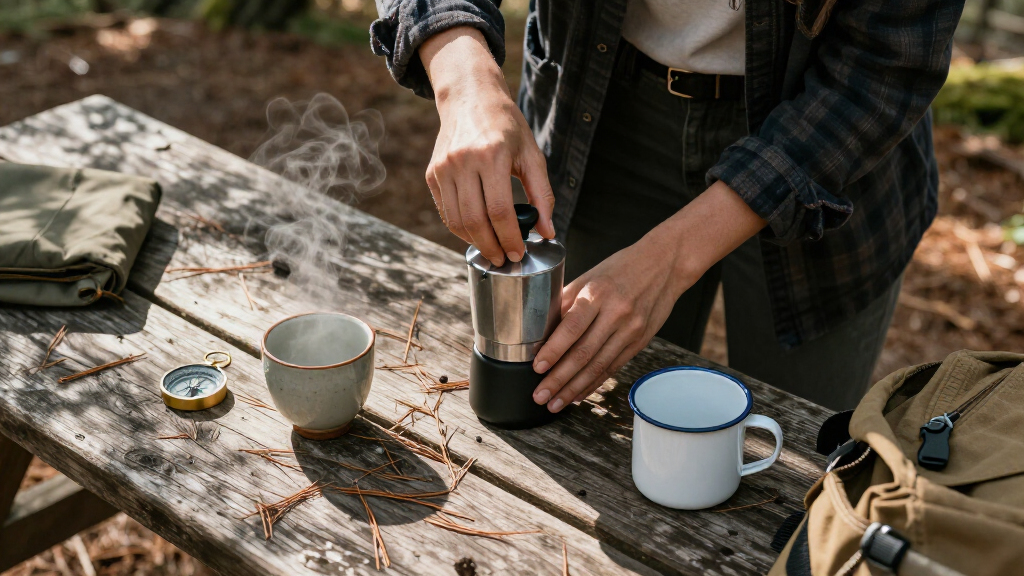
My ranking logic starts with one question: does this machine make drinkable espresso away from a kitchen? That meant weighing extraction quality (real crema, adequate pressure, stable temperature) above marketing specs, since “20 bar” appears on nearly every box here yet produces very different results. Next came heating performance and battery endurance — how many cups per charge, how long from cold water to first sip, and whether USB-C charging is supported.
Portability was judged on packed size and weight, not just listed dimensions — a machine that fits a bike bag beats one that merely fits a suitcase. I also factored in cleaning hassle, since a brewer that takes five minutes to rinse in a hotel sink gets used less. Finally, versatility mattered: machines accepting both ground coffee and capsules, or offering hot-water mode for tea, scored higher than single-purpose units at the same tier.
Factors to Consider When Choosing Portable Espresso Makers
Before picking a specific model, it helps to understand what actually drives satisfaction with portable espresso makers — and where buyers most often go wrong.Self-Heating Electric vs. Manual Pressure
This is the single biggest fork in the road. Self-heating machines like the OutIn Nano or CERA+ PCM03S let you pour cold water and get espresso anywhere, but they add weight, cost and battery anxiety. Manual machines like the Wacaco Minipresso line require pre-heated water from a kettle, thermos or camp stove, but they weigh less and work indefinitely. A common mistake is buying electric for occasional car camping where a stove is already available — you’re paying for heating you don’t need. Conversely, frequent flyers and desk-to-desk commuters almost always regret manual units because finding hot water mid-airport is harder than finding an outlet. Match the power source to your actual routine, not the fantasy version of it.
Battery Capacity and Cups Per Charge
Battery specs are where expectations crash into reality. A 13500mAh cell typically yields four to five heated brews, while smaller 7500mAh packs manage two to three before needing a top-up. What listings rarely mention is that heating cold water drains far more power than just pumping it — so winter trips with ice-cold bottles will cut those numbers further. If you brew once a day, almost any battery works; if you’re making coffee for two people over a weekend, a bigger cell or a power bank compatibility becomes the difference between convenience and disappointment. USB-C charging is now the standard to demand — proprietary cables are a quiet dealbreaker for travel.
Ground Coffee, Capsules, or Both
Input compatibility shapes your ongoing experience more than most buyers expect. Ground-only machines give you better flavor and zero recurring cost, but you need to carry a grinder or pre-dose your coffee. Capsule-compatible machines are messier-free and consistent, though you become dependent on carrying capsules and generate waste. The 3-in-1 style units that accept both formats — plus loose grounds baskets — trade a little compactness for flexibility, which is why multi-format models ranked well here. A frequent mistake is choosing capsules for convenience, then discovering you can’t buy your preferred brand abroad. Think about where you’ll actually source coffee before committing to one format.
Packed Size and Weight Limits
Manufacturer dimensions can mislead because they ignore accessories — the water tank, grounds basket, and cable all add bulk. The real question is whether the fully assembled kit fits your bag’s actual free space, whether that’s a backpack side pocket, a pannier, or a carry-on alongside clothes. Machines in the 450-700g range feel trivial in a car but noticeable on a full-day hike. Manual pump-style brewers generally win the weight contest at the cost of heating. If you’re a minimalist traveler, prioritize telescoping or nested designs; if you travel by car or train, weight barely matters and you can favor bigger water tanks and easier cleaning instead.
Cleaning and Maintenance on the Road
The most abandoned portable espresso makers aren’t the ones that brew badly — they’re the ones that are annoying to clean. Models with removable, rinseable brewing chambers take seconds; designs with narrow internal channels or integrated seals trap grounds and grow grim fast without a brush. Check whether the unit disassembles without tools and whether all wetted parts dry quickly in a bag. Drying matters more than people expect: a damp, sealed machine develops odors that transfer to your next shot. For multi-day trips, bring a small brush and skip machines that require full disassembly after every single brew.
When to Pay More (and When Not To)
Premium portable espresso makers justify their price through faster heating, better temperature stability and sturdier build — differences you’ll notice daily if you brew year-round. But if you’re an occasional camper making coffee three times a summer, a well-built manual press at a lower tier will produce a drink you enjoy nearly as much. The genuinely bad zone is the middle: cheap self-heating units with undersized batteries often deliver slow heating and weak extraction, combining the drawbacks of both categories. My advice: either commit to a proper electric machine, or embrace a fully manual one, and avoid underpowered hybrids unless portability at any cost is your priority.
Frequently Asked Questions
Can a portable espresso maker really match a home espresso machine?
Honestly, no — but the gap has narrowed enough that most casual drinkers won’t care. Portable units can’t maintain the precise 92-96°C brewing temperature stability of a plumbed machine, and their crema tends to be thinner and shorter-lived. What the better models here (the OutIn Nano and Fanttik Cafein 11) achieve is a concentrated, flavorful shot that sits well above typical drip or instant coffee. If your reference point is a specialty café, temper expectations; if it’s hotel coffee or trail-side instant, these machines are a genuine upgrade. The manual Wacaco units get closest to traditional flavor when fed freshly ground, well-dosed coffee.
Do I need 20 bar of pressure for good espresso?
Not really, and the number is one of the most oversold specs in this category. Genuine espresso needs roughly 9 bar at the puck, so a machine advertising 20 bar is describing its pump’s maximum, not what your coffee experiences. Because nearly every model in this roundup claims 20 bar, the differentiator is actually pressure consistency and water distribution — how evenly the water passes through the grounds. Units with better basket design and stable pumps produce richer shots regardless of the headline figure. Judge by brew results and reviews of extraction quality, not the bar number on the box.
How many cups can I brew on one battery charge?
It depends mostly on battery size and starting water temperature. With the 13500mAh machines like the CERA+ PCM03S, expect four to five full heated brews from cold water; smaller 7500mAh units typically manage two to three. Using pre-warmed or room-temperature water stretches each charge further, since heating from ice-cold is the biggest drain. Most models also let you pump espresso with hot water even at 0% battery, so a dead cell doesn’t always mean no coffee. For multi-day trips without power, either carry a power bank, choose a big-cell machine, or go manual.
Are capsule or ground coffee portable espresso makers better for travel?
Ground coffee wins on flavor, cost and flexibility — you can buy beans anywhere and dial in your dose — but it demands more prep and cleanup. Capsules are faster and cleaner on the go, with consistent results and no measuring, but you must carry them, they’re harder to find in some countries, and they create waste. Frequent short trips favor capsules for their simplicity; longer or remote travel favors grounds because availability beats convenience when you’re far from stores. If you genuinely can’t decide, the 3-in-1 style machines in this lineup accept both, at the cost of slightly more bulk. Just verify which capsule system a machine uses before buying, since compatibility varies.
Is a manual espresso maker worth it if I already own an electric one?
For many buyers, yes — as a backup rather than a replacement. Manual units like the Wacaco Minipresso GR2 shine precisely where electrics fail: multi-day camping without outlets, airline travel where batteries deplete, and emergency kits at home. They’re also lighter and cheaper, so keeping one in a car glovebox or travel bag costs little. The catch is that you need a source of hot water, which means pairing them with a thermos or camp stove — so they complement rather than replace your routine. If your electric machine already covers 90% of your brewing, a manual adds resilience rather than redundancy.
Conclusion
The right choice comes down to where you’ll brew and how often. For best overall, the OutIn Nano stands out for combining self-heating, compact size and dependable extraction — the most balanced package in this lineup. The CERA+ PCM03S takes best for battery endurance, with the largest cell here and enough cups per charge for a full weekend. Budget-conscious buyers get the strongest value from the Wacaco Minipresso GR or GR2, which deliver honest espresso with no charging requirements at all — the GR2 being the refined, lighter update.
For beginners, the Loezora and the 3-in-1 multi-format machines make forgiving first steps thanks to simple operation and flexible coffee inputs, while the premium pick is the Fanttik Cafein 11, which pairs USB-C charging with the most polished build among the electrics. Occasional brewers and minimalists should skip electrics entirely and go manual; daily commuters and van-lifers should invest in a big-battery self-heating model. Whatever your pick, the models ranked lowest here share one trait — underpowered batteries or fussy cleaning — so avoid those traps and you’ll be happy with your morning shot wherever you wake up.
NFL season / tailgating Picks
team gear
As an affiliate, we earn on qualifying purchases.