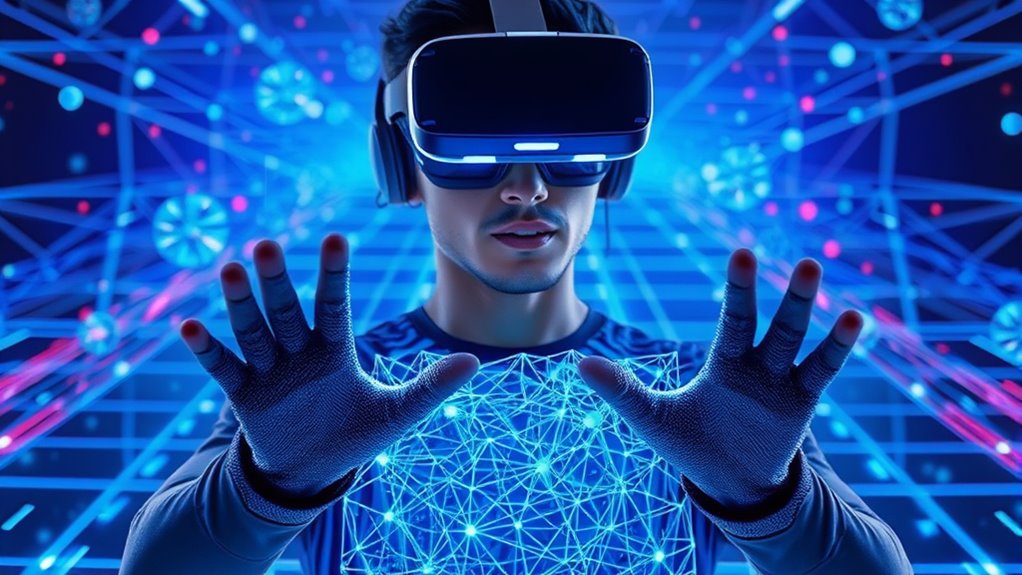

Advanced haptics in AR and VR let you experience virtual objects as if they’re real by providing tactile feedback like vibrations, resistance, and textures. This technology bridges the gap between sight, sound, and touch, making immersive worlds feel genuine and engaging. It boosts your sense of presence and allows you to interact naturally with digital environments. To discover how these innovations are transforming experiences across gaming, healthcare, and beyond, stay tuned for more insights.
Key Takeaways
- Advanced haptics enhance AR/VR by providing realistic tactile feedback, increasing immersion and sensory realism.
- Multisensory integration with haptics deepens user engagement and creates a seamless virtual experience.
- Applications span gaming, training, healthcare, and remote collaboration, improving realism and skill development.
- Future innovations aim to improve feedback fidelity, making virtual interactions indistinguishable from real-world sensations.
- Reliable, advanced haptics are key to unlocking the full potential of immersive AR/VR environments.
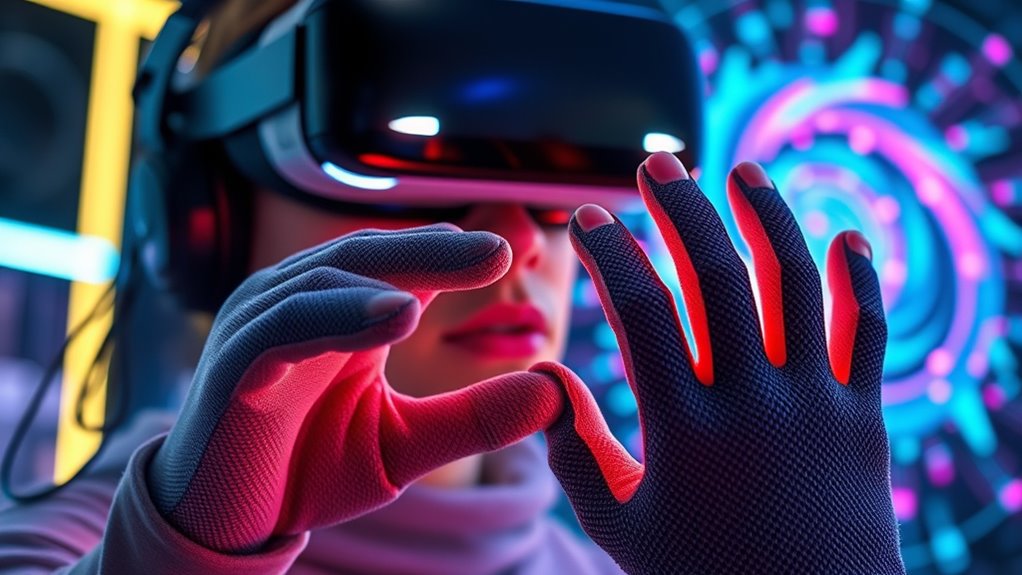
Augmented reality (AR) and virtual reality (VR) are transforming how we experience digital environments, but their full potential depends on realistic tactile feedback. As you step into these immersive worlds, the sensation of touch becomes essential to truly feel connected. That’s where advanced haptic feedback comes into play, bridging the gap between visual and tactile experiences. With sophisticated haptic technology, you’ll sense textures, resistance, and vibrations that mimic real-world interactions, making virtual objects feel tangible. This tactile layer enhances sensory immersion, allowing you to not just see and hear, but also feel what’s happening around you.
Imagine reaching out and grabbing a virtual tool or pressing a button, and feeling the click or resistance as if it’s real. This isn’t just about adding realism; it’s about creating a seamless integration where your brain perceives digital interactions as genuine. Advanced haptics utilize precise vibrations, force feedback, and even temperature changes to engage multiple senses simultaneously. The result is a richer, more convincing experience that keeps you engaged longer and with greater emotional investment. When your sense of touch aligns with your visual input, the boundary between the digital and physical worlds blurs, heightening the feeling of presence.
Advanced haptics create seamless virtual interactions by mimicking real-world touch, enhancing immersion and emotional engagement.
For gaming, this means more intense, physically responsive gameplay where actions feel authentic. In training simulations, realistic tactile feedback enhances skill development by mimicking real-world resistance and textures, reducing the gap between practice and reality. In healthcare, advanced haptics help professionals feel subtle differences in tissue textures or resistance, improving diagnostic accuracy. Even in remote collaboration, haptic devices enable users to feel as though they’re working side-by-side, despite physical separation. The incorporation of vetted haptic devices ensures reliability and quality in these immersive systems.
Your experience becomes more natural and intuitive when sensory immersion is prioritized through advanced haptics. Instead of merely observing virtual environments, you actively participate, feeling the weight of objects, the roughness of surfaces, or the tension of virtual ropes. This tactile input complements visual and auditory cues, creating a multisensory tapestry that draws you deeper into the experience. As technology continues to evolve, the fidelity of haptic feedback will improve, making virtual interactions indistinguishable from real-world encounters.
Ultimately, the key to accessing the full potential of AR and VR lies in how convincingly you can feel what you see. Advanced haptic feedback is the vital element that turns digital dreams into tangible realities, forging a new level of sensory immersion that transforms the way you learn, play, work, and connect.
Frequently Asked Questions
How Do Advanced Haptics Improve User Immersion in Ar/Vr?
Advanced haptics improve your immersion in AR/VR by enhancing sensory integration, making virtual interactions feel more real. When you touch or manipulate objects, realistic feedback mimics actual sensations, increasing the sense of presence. This realism enhancement helps you feel more connected to the virtual environment, reducing disorientation and boosting engagement. As a result, your experience becomes more convincing, making virtual worlds feel genuinely lifelike and immersive.
What Are the Current Limitations of Haptic Feedback Technology?
You might find that current haptic feedback technology faces sensor limitations, making it hard to accurately replicate complex textures and sensations. Additionally, cost barriers prevent widespread adoption, as advanced haptic devices can be expensive and not yet affordable for everyday users. These challenges restrict the realism and accessibility of immersive experiences, but ongoing research aims to overcome these hurdles and improve how you experience virtual environments.
How Safe Is Extended Use of Immersive Ar/Vr Devices?
Extended use of immersive AR/VR devices is generally safe, but you should stay aware of cybersecurity risks like data breaches or hacking. Prolonged exposure might also influence your long-term health, causing eye strain, headaches, or motion sickness. To stay safe, take regular breaks, adjust device settings, and confirm your software is secure. Always follow manufacturer guidelines to minimize risks and protect your overall well-being.
Can Haptic Technology Be Customized for Individual Preferences?
Sure, haptic technology can be tailored to your individual preferences—who knew that your fingertips could become a personal sensory playground? With advanced personalization options, developers can adjust feedback intensity and patterns, accommodating sensory adaptation and unique user needs. So, whether you crave gentle whispers or firm pushes, you get a customized experience that feels just right, proving that even virtual touch can be as personal as a handwritten note.
What Future Developments Are Expected in Ar/Vr Haptic Systems?
Future AR/VR haptic systems will see breakthroughs through haptic material innovation and neural interface integration. You can expect more realistic, customizable sensations that respond directly to your neural signals, making virtual experiences feel incredibly immersive. These advancements will enable seamless interaction between your brain and digital environments, enhancing realism and personalization. As technology progresses, you’ll enjoy more intuitive, tactile feedback that bridges the gap between virtual and physical worlds effortlessly.
Conclusion
As you step deeper into this immersive world, imagine the touch of reality itself, like Da Vinci’s brushstroke or Icarus’s wings, now within your grasp. Advanced haptics turn digital dreams into tangible sensations, blurring the line between fiction and fact. Soon, you’ll feel every whisper of virtual winds and every weight of unseen objects—transforming your experience into a symphony of sensation. The future is here, waiting for you to reach out and touch it.