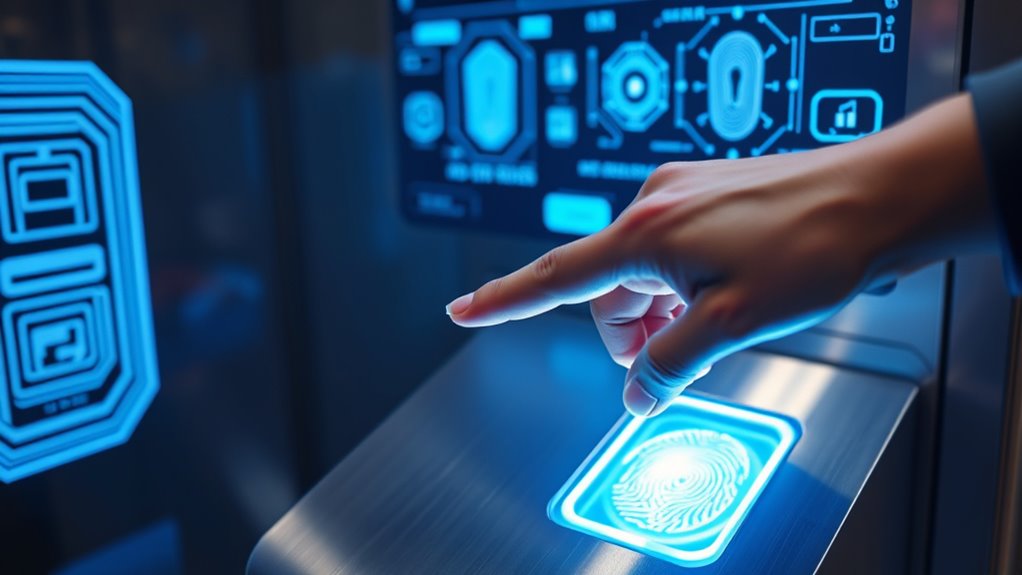

Biometric security protects your identity by using your unique physical features, like fingerprints or facial structures, to authenticate access. Instead of relying on passwords that can be guessed or stolen, your biometric traits are difficult to replicate and are securely stored on your device. This method offers a quick, reliable way to safeguard sensitive information. Keep exploring to discover how these advanced techniques keep your digital world safe and secure.
Key Takeaways
- Biometric security uses unique physical traits like facial features and fingerprints for reliable identity verification.
- It creates secure digital templates stored locally or encrypted, reducing the risk of theft or hacking.
- Biometric methods provide quick, seamless access without passwords, enhancing user convenience and security.
- Advanced technology ensures fast, accurate recognition, though environmental factors can affect performance.
- Combining biometric systems with other security measures strengthens overall protection of personal and sensitive data.

Have you ever wondered how your fingerprint or face can access your phone? It’s fascinating how biometric security uses unique physical features to protect your personal information. Today, biometric systems like Facial Recognition and Fingerprint Scanning have become common ways to secure devices and sensitive data. These methods rely on the idea that no two individuals have identical biometric traits, making them highly reliable for identity verification. When you set up your device with facial recognition, your phone captures your face’s unique features—such as the distance between your eyes, the shape of your jawline, or the contour of your nose. It then creates a digital map, or template, stored securely within the device. Each time you attempt to access your phone, the system compares your current facial features with the stored template. If they match, access is granted instantly. Similarly, fingerprint scanning involves capturing the intricate patterns of ridges and valleys on your fingertip. When you place your finger on the scanner, the device’s sensors read these patterns and match them against the stored fingerprint data. Because your fingerprint is unique to you, it offers a quick and secure way to verify your identity without the need for passwords or PINs.
These biometric methods are not only convenient but also considerably enhance security. Unlike traditional passwords, which can be guessed, stolen, or forgotten, biometric identifiers are inherently tied to your physical traits. This makes it much harder for someone else to impersonate you. Furthermore, biometric data is stored locally on your device, usually in a secure enclave, which minimizes the risk of hacking. Many devices incorporate advanced encryption to protect this sensitive information, so even if the device is compromised, your biometric templates remain safe. However, it’s essential to understand that biometric security isn’t foolproof; factors like poor lighting, dirt on your fingerprint sensor, or changes in your facial features can sometimes cause recognition issues. Despite these limitations, biometric authentication remains one of the most effective methods to safeguard your digital life.
In the end, biometric security harnesses the uniqueness of your physical features—like facial structure and fingerprint patterns—to provide a seamless and reliable way to protect your personal information. As technology advances, these methods are becoming faster, more accurate, and more integrated into our everyday devices. When you use facial recognition or fingerprint scanning, you’re not just accessing your phone—you’re employing a sophisticated layer of security that’s difficult to mimic or steal. It’s a smart way to keep prying eyes out and your private data safe, all while making access quick and effortless for you.
Frequently Asked Questions
How Does Biometric Data Get Stored Securely?
You store biometric data securely by using encryption protocols that protect the data both at rest and during transmission. Additionally, data anonymization helps by removing identifiable details, making it harder for unauthorized access to jeopardize your information. Combining these methods ensures your biometric data remains private and safe from breaches, giving you peace of mind that your identity is well protected against evolving cybersecurity threats.
What Happens if Biometric Data Is Stolen?
What if your biometric data gets stolen? You might worry about identity theft and privacy concerns. Unfortunately, stolen biometric data can’t be changed like a password, making it especially *vital*. If compromised, hackers could impersonate you, leading to financial loss or privacy breaches. That’s why it’s *essential* to have strong security measures in place, ensuring your biometric info stays protected and minimizing the damage if a breach occurs.
Can Biometric Systems Be Fooled or Hacked?
Yes, biometric systems can be fooled or hacked through fraudulent spoofing or deepfake attacks. You might face risks if someone uses fake fingerprints, facial masks, or voice recordings to impersonate you. Hackers constantly develop new techniques to bypass security measures, so it’s essential to stay vigilant. Implementing multi-factor authentication and advanced anti-spoofing technologies can help protect your biometric data from these sophisticated threats.
How Do Biometric Systems Handle False Rejections?
You might experience false rejections when your biometric system’s false rejection rate is high or if the system isn’t properly calibrated. To handle this, the system uses threshold adjustments and ongoing calibration to balance security and convenience. When false rejections happen, you can try re-enrolling your data, adjusting settings, or contacting support. Regular calibration guarantees the system accurately recognizes authorized users, minimizing false rejections over time.
Are Biometric Scans Affected by Environmental Factors?
Imagine you’re trying to unlock your phone on a rainy day. Environmental interference, like moisture or dirt, can affect biometric scans, making sensors less accurate. These issues often require sensor calibration to adjust for changing conditions. So yes, environmental factors can impact biometric scans, but regular calibration helps maintain reliability. Ensuring sensors are clean and protected from environmental interference minimizes false rejections and keeps your biometric security effective.
Conclusion
As you embrace biometric security, remember it’s like a guardian watching over your identity, much like the Sphinx guarding secrets in ancient Egypt. Your unique features become an unbreakable lock, safeguarding your digital kingdom from intruders. With every scan, you reinforce your personal fortress, ensuring only you hold the key. Trust in this modern sentinel, and let your identity stand resilient amidst the chaos, a timeless symbol of security in an ever-changing world.