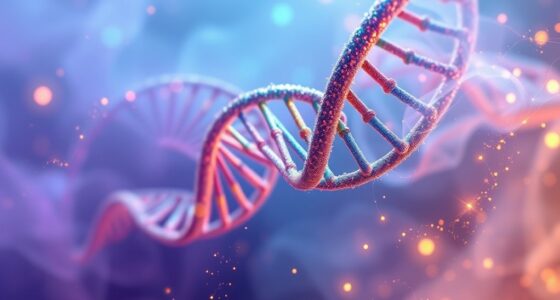

Nanotechnology in medicine offers exciting possibilities like targeted drug delivery, allowing treatments to focus precisely on diseased cells, which reduces side effects. You can also benefit from nanorobots that scan your bloodstream for early signs of illness and help detect issues before symptoms appear. As these technologies advance, ethical and safety concerns arise, such as long-term effects and data privacy. Exploring further reveals how ongoing innovations are shaping a safer, more effective healthcare future.
Key Takeaways
- Nanotechnology enables targeted drug delivery, improving treatment precision and reducing side effects.
- Nanorobots facilitate real-time diagnostics and early disease detection within the bloodstream.
- Continuous advancements enhance early diagnosis, health monitoring, and development of sophisticated diagnostic tools.
- Ethical concerns include safety, long-term effects, privacy, and the need for regulation of nanomedicine applications.
- Challenges involve balancing innovation with safety, protecting health data, and establishing regulations for responsible use.
Have you ever wondered how tiny particles can revolutionize healthcare? The answer lies in the incredible potential of nanotechnology, especially when it comes to targeted drug delivery and nanorobot diagnostics. Imagine medicines that hone in precisely on cancer cells, leaving healthy tissue untouched, reducing side effects and increasing effectiveness. That’s the promise of targeted drug delivery. By engineering nanoparticles to recognize specific markers on diseased cells, you can guarantee treatments are more precise. This approach not only enhances the effectiveness of therapies but also minimizes the damage to the rest of your body. It’s like having a microscopic GPS guiding medication directly where it’s needed most.
In addition, nanorobot diagnostics take this precision even further. Picture tiny robotic devices, no larger than a blood cell, traveling through your bloodstream, scanning for signs of illness in real time. These nanorobots can identify abnormalities at the cellular or molecular level, providing rapid and accurate diagnoses. They could detect cancer at its earliest stages before symptoms even appear, transforming how you approach health monitoring. Because they operate on such a small scale, nanorobot diagnostics can access hard-to-reach areas within your body, offering insights that traditional tools might miss. Advances in nanotechnology design are continually improving the capabilities of these microscopic devices, making early detection more feasible than ever. This kind of early detection could considerably improve treatment outcomes and save lives.
But as exciting as these advancements are, they come with important ethical questions. You need to think about issues like safety and long-term effects. How will these tiny devices interact with your body over time? Could they cause unforeseen side effects or immune responses? Guaranteeing that nanomedicine is safe for widespread use is vital. Furthermore, privacy concerns also arise. If nanorobots can monitor your health in real time, who has access to that sensitive information? Protecting your personal health data becomes a priority. There’s also the challenge of regulation—setting standards and guidelines to oversee the development and deployment of these technologies. You want to make sure that innovation doesn’t outpace safety measures.
Frequently Asked Questions
How Does Nanotechnology Improve Drug Delivery Methods?
Nanotechnology improves drug delivery by enabling targeted therapy, so you can direct medications precisely where needed, reducing side effects. It also allows for controlled release, meaning you get a steady, sustained dose over time. This precision helps increase treatment effectiveness and minimizes waste. By using nanotech, you benefit from smarter, more efficient drug delivery systems that work better and safer for your health.
What Are Potential Long-Term Environmental Impacts of Medical Nanomaterials?
Oh, you’ll love how tiny nanomaterials might turn into colossal environmental villains! As they accumulate, you risk environmental buildup that could disrupt ecosystems, causing unpredictable chaos. Long-term, this environmental accumulation may threaten aquatic life, soil health, and even human safety. So, next time you marvel at medical marvels, remember, these tiny particles could someday cause a big, messy disruption in our planet’s delicate balance.
Are There Risks of Unintended Immune Responses to Nanotech Therapies?
You should be aware that nanotech therapies can trigger unintended immune responses, risking immune system interference. Your body might recognize nanomaterials as foreign, leading to inflammation or rejection. There’s also a concern about nanotoxicity, which could cause harmful side effects. While these risks exist, ongoing research aims to develop safer nanomaterials, minimizing immune responses and toxicity to guarantee effective and safe medical treatments.
How Is Patient Privacy Protected With Nanotechnology-Based Diagnostics?
Your privacy is like a treasure chest, guarded carefully with data encryption and strict consent protocols. When using nanotech-based diagnostics, healthcare providers encrypt your data to prevent unauthorized access. They also guarantee you understand and agree to how your information is used through transparent consent protocols. These measures act as digital locks, shielding your personal health details from breaches while allowing your care to benefit from cutting-edge nanotechnology.
What Regulations Govern the Development of Nanomedicine Products?
You should be aware that the development of nanomedicine products is governed by international standards and regulations set by regulatory agencies like the FDA and EMA. These agencies ensure safety, efficacy, and quality through rigorous testing and approval processes. They also monitor ongoing research and manufacturing practices to protect public health, requiring companies to adhere to strict guidelines that keep pace with technological advances in nanomedicine.
Conclusion
You now see how nanotechnology is transforming medicine, offering groundbreaking treatments and improved patient care. While it holds incredible promise, remember that with great power comes great responsibility, and ethical considerations are just as crucial as technological advances. Embrace these innovations wisely, knowing you’re on the cutting edge of a new era. Keep in mind, the ball’s in your court to guarantee these tiny marvels are used for good, not just for show.