Social media profoundly influences your romantic relationship by making communication easier and helping you feel more connected. It allows you to share moments, express love, and stay close even when apart. However, it also presents challenges like jealousy, insecurity, and misunderstandings, which can harm trust if not managed wisely. Balancing online interactions with offline life is key. Want to discover ways to navigate social media healthily in your relationship? Keep exploring for helpful insights.
Key Takeaways
- Social media facilitates easier communication, sharing moments, and expressing affection, strengthening romantic bonds.
- It enables online intimacy, deepening emotional connection through private exchanges and daily interactions.
- Social media can also introduce challenges like jealousy, insecurity, and misunderstandings impacting trust.
- Monitoring partner activity online may lead to suspicion and digital jealousy, sometimes undermining trust.
- Proper use, open communication, and boundaries help social media enhance relationships without causing harm.
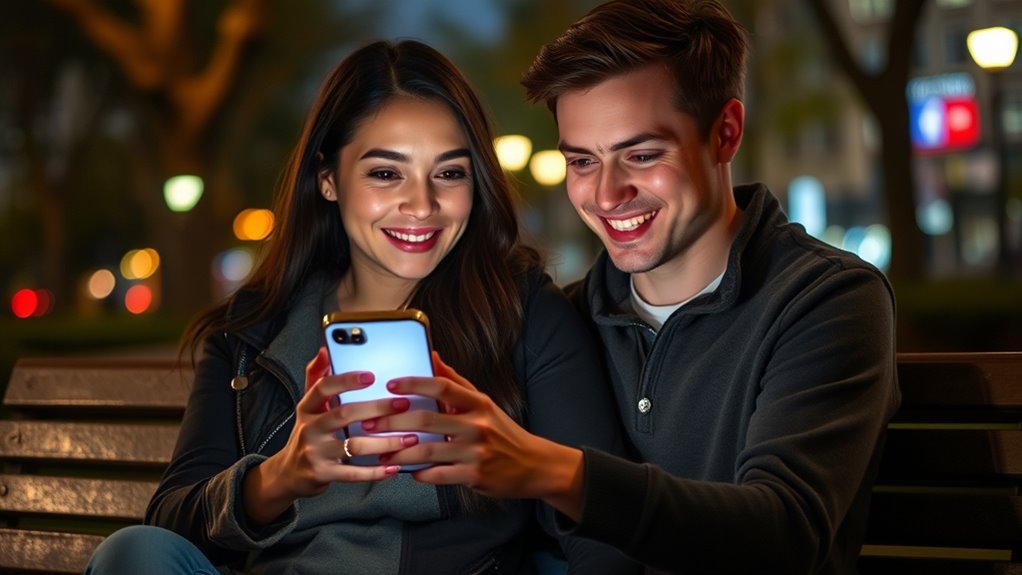
How has social media transformed the way we experience romantic relationships? It’s a question that touches on both the opportunities and challenges that come with connecting online. Social media platforms have made it easier than ever to stay in touch, share moments, and express affection. But at the same time, they’ve introduced new complexities, like digital jealousy and the nuances of online intimacy. You might find yourself scrolling through your partner’s profile and feeling a twinge of doubt or insecurity. That’s digital jealousy, a common emotion in today’s digital age. It’s often fueled by seeing your partner interact with others or share their feelings publicly, which can make you question your place in their life. These feelings aren’t necessarily rooted in actual betrayal but stem from the constant exposure to their online world, which can amplify insecurities and doubts. Understanding the impact of social media on mental health can help you manage these feelings more effectively. Online intimacy has become a double-edged sword. On one hand, it allows you to deepen your connection, share your thoughts, and express love more openly than in traditional settings. It’s easier to send a sweet message or share a private joke, strengthening your bond in everyday moments. However, this digital closeness can also blur boundaries. When your partner’s online interactions become more frequent or intimate than your offline interactions, you might feel left out or suspicious. You may start questioning whether your relationship is enough or if there’s someone else on the other side of that screen. This heightened sense of online intimacy can sometimes lead to misunderstandings or conflicts, especially if communication isn’t clear or your feelings aren’t openly discussed. Social media’s role in romantic relationships makes it easier to monitor or keep tabs on each other, but that can backfire. Constantly checking your partner’s activity can lead to obsessive thoughts or misinterpretations, fueling insecurities. Instead of fostering trust, it might breed suspicion and digital jealousy, which can damage your relationship over time. The key is finding a balance—using social media to enhance your connection without letting it control your emotions. Open communication about your feelings and boundaries is essential. Recognizing that online interactions are just one part of your relationship helps you avoid unnecessary stress or misunderstandings. By understanding how these digital dynamics influence your emotions, you can navigate social media in a way that supports your relationship rather than undermines it.
Top picks for "role social media"
Open Amazon search results for this keyword.
As an affiliate, we earn on qualifying purchases.
Frequently Asked Questions
How Does Social Media Influence Trust Between Partners?
Social media influences trust between partners through digital transparency and online validation. When you share openly, it builds trust by showing honesty and vulnerability. However, if your partner seeks constant validation online or hides certain activities, it can breed doubt. You might feel insecure or suspicious, especially if transparency is lacking. Ultimately, balancing genuine digital openness with healthy boundaries helps strengthen trust and reduces misunderstandings in your relationship.
Can Social Media Cause Jealousy in Relationships?
Feeling like a 90s dial-up connection, social media can spark jealousy in your relationship. It often triggers public jealousy and insecurity, especially when you see your partner liking or commenting on others’ posts. These online interactions can lead to misunderstandings or doubts, making you question their intentions. Recognizing these insecurity triggers helps you communicate openly and build trust, rather than letting social media’s shiny surface create unnecessary tension.
What Are Healthy Social Media Boundaries for Couples?
You should set clear social media boundaries by respecting each other’s digital privacy and practicing good social media etiquette. Agree on what’s appropriate to share or like, and avoid oversharing or posting sensitive content about your partner. Communicate openly about your comfort levels and boundaries, and revisit them regularly. This helps foster trust, reduces misunderstandings, and keeps your relationship healthy while steering through social media together.
How Does Social Media Impact Long-Distance Relationships?
Like Romeo and Juliet’s secret exchanges, your virtual presence can strengthen or strain your long-distance relationship. Social media fosters digital intimacy, keeping you connected across miles, but it can also spark insecurities or misunderstandings if boundaries aren’t clear. Use social media intentionally, sharing moments to build trust, while respecting each other’s privacy. This balance guarantees your connection remains genuine, even when physical distance keeps you apart.
Are Online Interactions More Meaningful Than In-Person Connections?
Online interactions can feel more meaningful because of virtual intimacy and the desire for online validation. You might find that sharing your thoughts and feelings virtually creates a deep connection, sometimes even more openly than in person. However, these interactions can also lack the physical presence and emotional cues that make face-to-face connections truly rich. Ultimately, it depends on how you balance digital intimacy with real-world experiences.
Conclusion
So, as you navigate your romantic relationship, remember that social media is just a tool—sometimes a coincidence, sometimes a connection. It can bring you closer or create distance, depending on how you use it. Keep in mind that behind every like or comment, there’s a real person with real feelings. Trust your intuition, stay honest, and let social media complement your relationship, not define it. After all, love is about what happens offline, not just online.