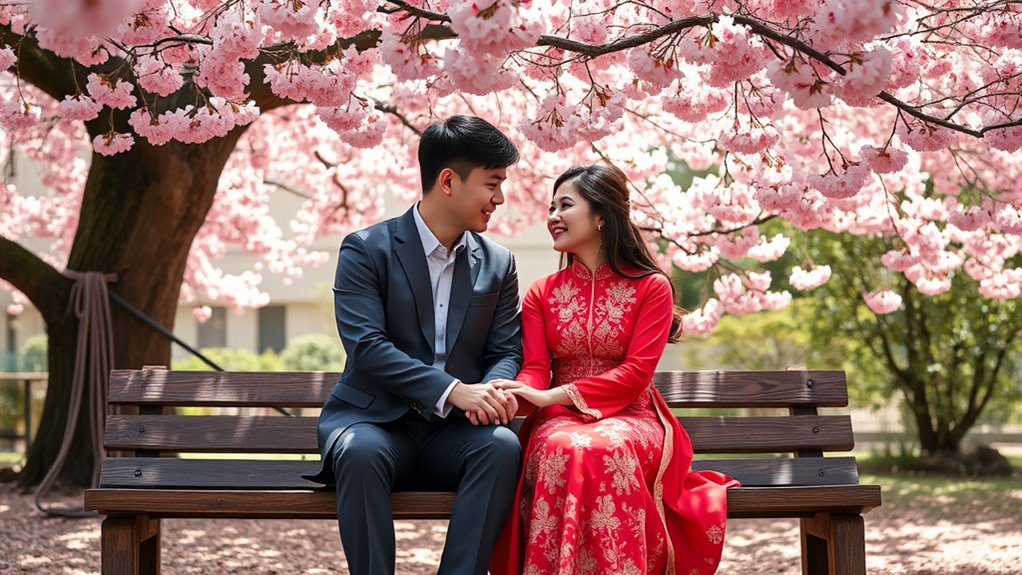

Exploring cultural differences in relationships starts with open communication and genuine curiosity about each other’s traditions. Respectful listening and asking questions help build mutual understanding, while embracing traditions can strengthen your bond. Be patient if misunderstandings occur and show flexibility to find common ground. Active participation in each other’s customs fosters trust and respect. To deepen your connection and turn differences into growth opportunities, consider exploring more strategies for successful cross-cultural relationships.
Key Takeaways
- Practice active listening and ask questions to understand your partner’s cultural background and perspectives.
- Respect and participate in each other’s traditions and customs to build mutual appreciation.
- Maintain patience and flexibility when misunderstandings arise, approaching them with empathy.
- Foster open communication by sharing feelings honestly and creating a safe space for honest dialogue.
- Embrace differences as opportunities for growth, showing curiosity and willingness to learn from each other.

Have you ever wondered how to smoothly traverse cultural differences in today’s interconnected world? It’s a question many people face when building relationships across diverse backgrounds. One of the key elements to fostering understanding is mastering interpersonal communication. When you’re open and attentive, you create a safe space for honest exchanges. Instead of making assumptions, ask questions that show genuine interest in your partner’s perspective. Listen actively, focusing on their words and non-verbal cues, which often reveal more than spoken language. This approach helps you understand their values, beliefs, and customs, making interactions more meaningful. Remember, effective interpersonal communication isn’t about changing who you are but about respecting differences and finding common ground. Incorporating AI-powered virtual reality in learning can further enhance cross-cultural understanding by providing immersive experiences that simulate diverse environments. Celebrating traditions plays a significant role in bridging cultural gaps. When you participate in your partner’s cultural festivities, you demonstrate respect and appreciation. Engage actively in their celebrations, whether it’s a holiday, a family ritual, or a community event. This not only enriches your understanding of their background but also shows that you value their identity. Sharing traditions can create powerful bonds, as it’s a way to honor each other’s heritage. Be curious and ask about the significance behind certain customs, foods, or rituals. You might find that embracing these traditions brings your relationship closer and promotes mutual respect. However, navigating cultural differences also requires patience and flexibility. Sometimes, miscommunications happen, or you might feel uncomfortable with certain practices. That’s normal. Instead of reacting defensively, approach these moments with empathy. Express your feelings honestly but without judgment, and listen to your partner’s explanation. Finding compromises or alternative ways to celebrate shared values helps avoid misunderstandings and fosters harmony. Remember, it’s about blending your worlds rather than overshadowing one with the other. Ultimately, successful traversal of cultural differences in relationships depends on your willingness to learn and adapt. Keep an open mind, show curiosity, and be respectful of traditions. Celebrate your differences as opportunities for growth rather than obstacles. By honing your interpersonal communication skills and actively participating in each other’s customs, you create a foundation built on trust and understanding. This approach not only strengthens your bond but also enriches your life with new experiences and perspectives. In today’s diverse world, embracing these differences makes your relationship more resilient, vibrant, and truly meaningful.
cross-cultural relationship communication guide
As an affiliate, we earn on qualifying purchases.
As an affiliate, we earn on qualifying purchases.
Frequently Asked Questions
How Can I Effectively Communicate Cultural Misunderstandings?
You can effectively communicate cultural misunderstandings by practicing cultural sensitivity and fostering an environment of trust. Engage in effective dialogue by openly sharing your feelings and listening without judgment. Ask questions to clarify intentions and avoid assumptions. Be patient and respectful, recognizing that misunderstandings are normal. This approach helps both of you learn and grow together, strengthening your relationship despite cultural differences.
What Are Common Challenges in Intercultural Family Planning?
Imagine your cultural identity as a delicate tapestry, intertwined with family expectations. You might face challenges like differing views on child-rearing or gender roles, which threaten to fray this fabric. Balancing your personal desires with family traditions can feel like walking a tightrope. Clear communication and mutual respect help you weave these threads into a stronger, unified fabric, honoring both your cultural roots and your future family’s needs.
How Do I Introduce My Partner to My Cultural Traditions?
You should start by sharing your cultural celebrations and traditional cuisine in an open, inviting way. Explain their significance and why they matter to you. Invite your partner to join in activities or prepare a meal together, making it a fun, shared experience. Respect their comfort level, answer questions patiently, and be open to learning about their traditions too. This approach builds mutual respect and deepens your connection.
How Can I Handle Criticism About My Cultural Background?
When faced with criticism about your cultural background, you might recall a friend who faced stereotypes at work. She responded by calmly explaining her traditions and emphasizing her identity validation, which helped others see her true self. You can do the same—address stereotypes directly, share your experiences, and stand firm in your cultural identity. This approach fosters respect and helps you handle criticism with confidence.
What Resources Are Available for Intercultural Relationship Support?
You can find valuable cultural resources online, such as articles, forums, and support groups that focus on intercultural relationships. Consider exploring intercultural counseling, where trained professionals help you navigate cultural differences effectively. Many organizations and community centers also offer workshops and resources to strengthen your understanding and communication. These tools can empower you to build a healthier, more respectful relationship by addressing cultural challenges proactively.
cultural tradition participation kit
As an affiliate, we earn on qualifying purchases.
As an affiliate, we earn on qualifying purchases.
Conclusion
By embracing empathy and open-mindedness, you can bridge boundaries and build bonds across borders. Remember, patience and persistence pave the path to harmony, helping you handle hurdles with humility. When you listen, learn, and love beyond borders, differences dissolve into discovery. Cultivating connection through compassion creates a cozy, cohesive community, turning cultural clashes into cherished cultures. So stay sincere, stay specific, and let understanding unite you in a uniquely beautiful bond.
interpersonal communication skills training
As an affiliate, we earn on qualifying purchases.
As an affiliate, we earn on qualifying purchases.
virtual reality cultural immersion experience
As an affiliate, we earn on qualifying purchases.
As an affiliate, we earn on qualifying purchases.