To tackle basic home repairs safely, always use the right tools and wear safety gear like goggles and gloves. Plan your projects carefully, gather all necessary items beforehand, and work in a well-lit, tidy area to avoid accidents. Keep electrical appliances checked and handle wiring cautiously to prevent shocks. Prioritize safety, know your limits, and consider professional help when needed. Staying organized and cautious guarantees successful repairs—if you want to learn more, keep exploring these essential safety and repair tips.
Key Takeaways
- Use proper tools and safety gear to prevent injuries during basic repairs.
- Understand electrical requirements to safely handle appliances and avoid hazards.
- Plan and organize projects to ensure efficient, safe, and cost-effective maintenance.
- Regularly inspect tools and equipment for safety and proper functioning before use.
- Know your limits and seek professional help for complex or unfamiliar repairs.
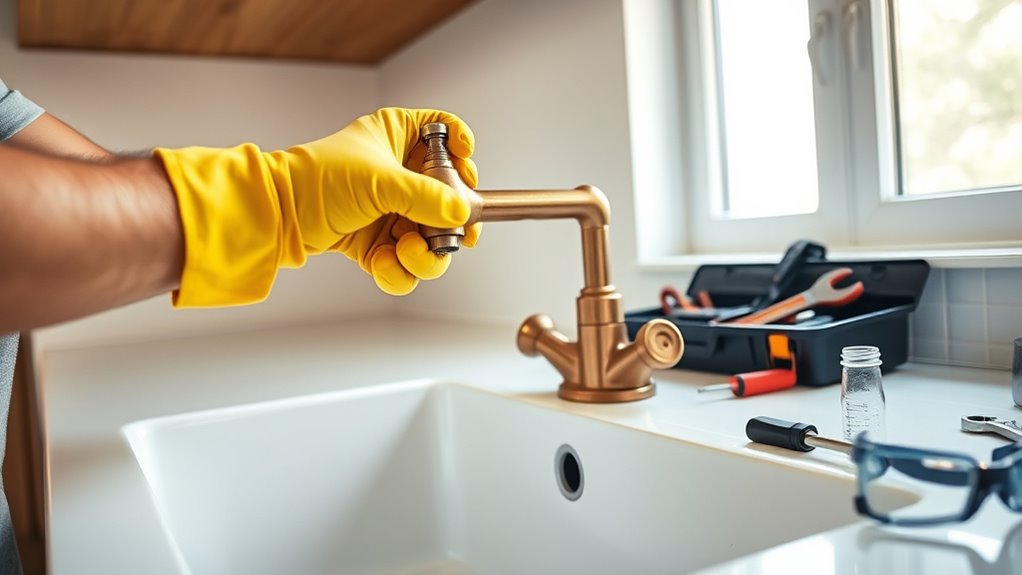
Have you ever wondered how you can save money and keep your home in top shape without constantly calling professionals? The secret is developing a solid understanding of basic DIY home maintenance. Starting with the right tools and a focus on safety is essential. It’s tempting to jump into repairs without thinking about tools safety, but neglecting this can lead to accidents that set you back financially and physically. Always verify your tools are in good condition, properly used, and stored safely after each project. Wearing safety gear like goggles, gloves, and masks protects you from injuries and airborne debris. Taking a few moments to familiarize yourself with your tools and their safe operation can make a significant difference in your DIY success and safety. Additionally, understanding the power requirements for appliances can prevent dangerous situations during repairs or installations. Budget planning plays a critical role in your DIY efforts. Before diving into repairs, set a realistic budget that includes costs of tools, replacement parts, and safety equipment. Knowing what you can afford prevents overspending and helps you prioritize repairs that are most urgent. Planning ahead also means researching the prices of supplies and choosing cost-effective options without compromising quality. Keep an eye out for sales and discounts on tools and materials, which can stretch your budget further. Additionally, consider investing in versatile tools that can handle multiple tasks, reducing overall expenses. A well-thought-out budget allows you to approach home maintenance methodically, avoiding impulsive purchases that can lead to unnecessary expenses. When planning your DIY projects, break down each task into manageable steps. This approach helps you stay organized and ensures you don’t overlook safety measures. For instance, if you’re replacing a faucet, gather all necessary tools beforehand, review instructions, and double-check your safety gear. Knowing your limits and avoiding overly complicated repairs initially can boost your confidence and reduce the risk of injury. Remember, safety isn’t just about wearing gear; it’s also about working in a well-lit area, keeping your workspace tidy, and knowing when to call in a professional for tasks that require specialized skills or tools. Proper planning and prioritization enable you to handle most repairs efficiently, saving money and minimizing stress.
Frequently Asked Questions
When Should I Call a Professional Instead of DIY Repairs?
You should call a professional when DIY pitfalls could lead to costly mistakes or safety hazards. If a repair involves complex electrical, plumbing, or structural work, don’t risk DIY errors that might increase costs later. Trust experts for jobs beyond your skill level, especially when safety is at stake. Investing in professional help can save you money and prevent potential accidents, ensuring the repair’s done correctly the first time.
What Safety Gear Is Essential for Home Maintenance Tasks?
Did you know that 30% of home injuries happen due to lack of safety gear? When tackling home maintenance tasks, you should always wear protective clothing and safety glasses to prevent injuries. Safety glasses protect your eyes from debris, while protective clothing shields your skin from cuts, chemicals, or sparks. Always prioritize safety gear; it keeps you safe and helps you work confidently without accidents.
How Can I Prevent Common Household Electrical Hazards?
To prevent common household electrical hazards, prioritize electrical safety by regularly inspecting cords and outlets for damage. Use circuit prevention devices like circuit breakers and outlet covers to avoid overloads and accidental shocks. Always turn off power before working on electrical systems, and avoid overloading circuits. Keep water away from electrical appliances, and never ignore warning signs like sparks or buzzing sounds. Staying vigilant helps make certain your home remains safe from electrical hazards.
What Are Signs That Indicate Plumbing Issues Require Expert Help?
You should call an expert if you notice leaking faucets that won’t stop or see persistent low water pressure. These signs often point to hidden plumbing problems like pipe blockages or leaks that you can’t fix yourself. Ignoring these issues can lead to water damage or higher bills. Trust a professional plumber to diagnose and repair the problem properly, ensuring your home’s plumbing stays in good shape.
How Often Should I Perform Routine Safety Inspections at Home?
You should perform routine safety inspections at home every three to six months. Follow an inspection schedule to catch potential hazards early. Use a safety checklist to make certain you check smoke detectors, carbon monoxide alarms, fire extinguishers, and electrical outlets regularly. This proactive approach helps prevent accidents and keeps your home safe. Regular inspections also allow you to identify and address minor issues before they become major repairs, ensuring peace of mind.
Conclusion
Now that you’ve tackled these basic repairs, your home is safer and more reliable—at least until the next unexpected leak or squeak appears. Ironically, by learning to fix things yourself, you might just discover how easily things fall apart without a professional’s touch. But hey, at least you’ll have a toolbox full of confidence and a home that’s slightly less likely to surprise you with chaos—until the next DIY adventure, of course.