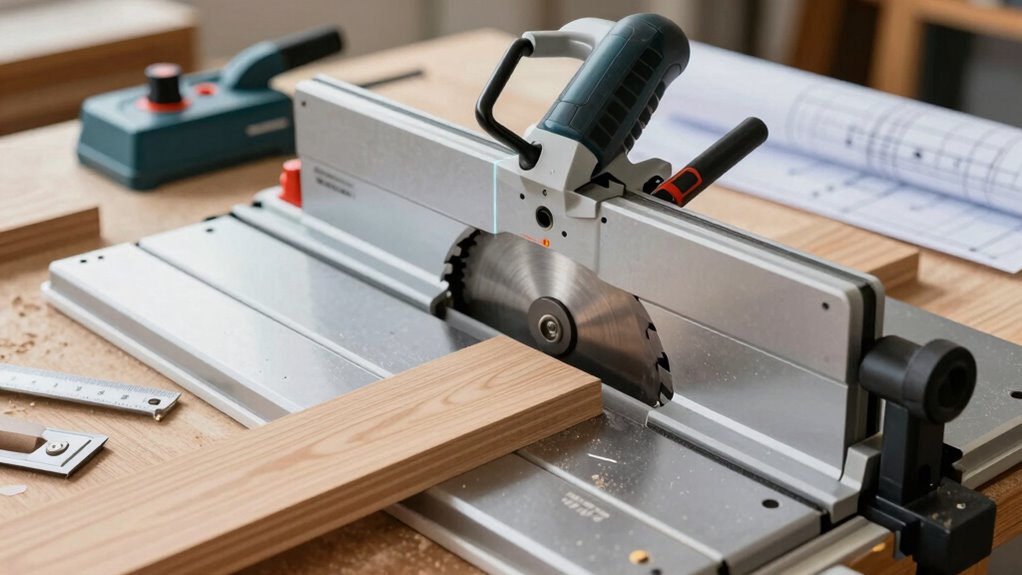

Using table saws and miter saws requires more planning because safety, accuracy, and efficiency hinge on several key factors. You need to guarantee blades are sharp and properly aligned, set up dust extraction systems, and organize your workspace for easy access. Proper positioning of tools and safety features is vital for quick adjustments and hazard prevention. If you want to discover how detailed planning keeps your projects safe and precise, keep exploring these essential tips.

Get the little things that make your day delivered free with Prime
- Fast, free delivery on millions of items
- Prime Video, Amazon Music and more included
- Member-only deals all year
Key Takeaways
- Proper planning ensures safe access to safety features and controls, reducing the risk of accidents during operation.
- Precise layout and organization are essential for supporting tools, measurement stations, and workspace flow.
- Adequate planning helps align blades correctly, maintain sharpness, and implement effective dust extraction for safety and quality.
- Anticipating space needs prevents clutter, allowing safe maneuvering of large workpieces and adjustments.
- Thoughtful setup reduces errors, improves accuracy, and ensures efficient workflow, which is critical for complex cuts.

Planning for table saws and miter saws is vital to guarantee your woodworking projects are precise and efficient. These tools are powerful, and without proper preparation, accidents or mistakes can easily occur. You need to think about blade safety first—making sure the blades are sharp, correctly aligned, and properly guarded. A dull or misaligned blade can cause kickback or produce rough cuts, which compromises both safety and quality. Regularly inspecting and maintaining the blades is essential to keep them in top condition. When planning your setup, consider how you’ll access and operate the blade guard and safety features. Clear visibility and easy access minimize risks, and always follow safety protocols to protect yourself from injuries. Additionally, understanding the blade safety features and their correct operation is crucial for preventing common hazards. Dust extraction is another vital component often overlooked during planning. Woodworking generates a significant amount of sawdust and debris, which can clutter your workspace and pose health hazards. An effective dust extraction system keeps your area clean and reduces airborne particles that can irritate your lungs or cause long-term respiratory issues. When planning your saw setup, assess your workspace and determine how to best integrate dust collection accessories. Many saws come with built-in ports for vacuum hoses or dust collectors, so it’s wise to choose models compatible with your system. Proper dust extraction not only improves air quality but also increases visibility, allowing you to make more precise cuts. Beyond safety features and dust management, you need to think about the overall layout of your workspace. Position your table saw and miter saw in a way that allows ample room for maneuvering large pieces and making adjustments. Consider the proximity to power outlets, storage for accessories, and space for supporting workpieces. Good planning minimizes the need to move tools around or work in cramped conditions, reducing the risk of accidents and speeding up your workflow. You should also plan for measuring and marking tools, clamps, and work surfaces. Accurate measurements are the backbone of precise cuts, and having dedicated, accessible stations for marking and clamping helps streamline your process. Properly planning your setup ensures you can make adjustments safely and efficiently, without rushing or risking slips.
As an affiliate, we earn on qualifying purchases.
Frequently Asked Questions
What Safety Gear Is Essential When Using These Saws?
When using table and miter saws, you need essential safety gear like protective eyewear to guard your eyes from flying debris and hearing protection to reduce noise-induced hearing loss. Always wear gloves if appropriate, but avoid loose-fitting ones that could get caught. Wearing these items keeps you safe during cuts, helping prevent accidents and injuries. Prioritize safety gear to guarantee a secure, confident woodworking experience.
How Do Blade Types Affect Cutting Performance?
You’ll notice that blade types greatly influence cutting performance, especially when it comes to blade compatibility and cutting precision. A fine-tooth blade offers smooth, precise cuts perfect for detailed work, while a carbide-tipped blade handles tougher materials with ease. Choosing the right blade guarantees your saw operates efficiently, reduces kickback, and produces cleaner results. So, matching your blade to your project’s needs opens the full potential of your saw.
What Maintenance Routines Prolong Saw Lifespan?
To prolong your saw’s lifespan, regularly check blade alignment to make certain accurate cuts and prevent unnecessary wear. Keep dust collection systems clean and functioning properly to reduce debris buildup, which can strain the motor. Lubricate moving parts as recommended, and inspect blades for dullness or damage. Proper maintenance not only extends your saw’s life but also keeps your cuts precise and safe.
How Do Power Requirements Vary Between Models?
Power requirements vary between models, primarily due to power compatibility and voltage differences. You’ll find that some saws operate on standard household voltages, like 120V, while others require higher voltages, such as 220V or 240V, for increased power. Always check voltage specifications before purchase, because mismatched power compatibility can lead to poor performance or electrical issues. Planning for the right voltage ensures safe, smooth, and swift sawing sessions.
Can These Saws Handle Specialized or Thick Materials?
Yes, these saws can handle specialized or thick materials, but it’s crucial to take into account material compatibility and blade customization. Make sure your saw’s motor power matches the demands of thicker or tougher materials, and choose the right blade for the job. Adjusting blade height and angle can improve cut quality and safety. Planning for these factors helps you achieve precise cuts and prevents damage to your equipment.
miter saw dust collection system
As an affiliate, we earn on qualifying purchases.
As an affiliate, we earn on qualifying purchases.
Conclusion
Planning your table saw and miter saw projects might seem straightforward, but it’s more complex than it looks. Did you know that improper planning can lead to up to 30% more material waste? By taking the time to carefully prepare, you not only save money but also guarantee precision and safety. So, don’t rush—invest some extra effort upfront. It’ll make your woodworking projects smoother, more enjoyable, and ultimately more successful.
As an affiliate, we earn on qualifying purchases.
measuring and marking tools for woodworking
As an affiliate, we earn on qualifying purchases.
As an affiliate, we earn on qualifying purchases.
Columbus Day / Indigenous Peoples' Day Picks
long weekend sales
As an affiliate, we earn on qualifying purchases.