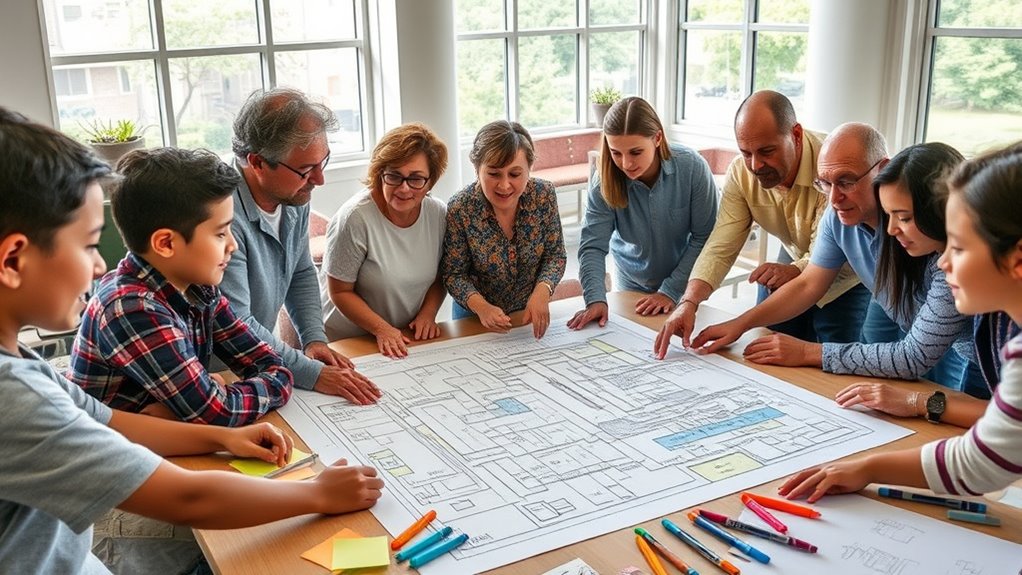

Participatory design processes involve actively engaging residents and community members in shaping projects that affect them. You’ll gather diverse perspectives through workshops, meetings, and informal conversations, ensuring solutions reflect their needs and concerns. This approach fosters shared ownership, encourages collaboration, and builds trust between designers and residents. By involving people early and often, you create practical, meaningful solutions with strong community support. To discover how this ongoing engagement can benefit your project, continue exploring these strategies.
Key Takeaways
- Involve residents early and continuously to ensure solutions reflect their needs and desires.
- Use diverse engagement methods like workshops, meetings, and informal conversations to gather varied perspectives.
- Facilitate open dialogue and consensus-building among residents and stakeholders throughout the process.
- Foster shared ownership and responsibility, increasing community buy-in and reducing resistance.
- Maintain transparency and ongoing communication to build trust and support for development initiatives.

Participatory design processes involve actively engaging users and stakeholders throughout the development of a product or service. When you incorporate community engagement into the process, you create a platform where residents can share their ideas, concerns, and aspirations. This approach isn’t just about collecting feedback; it’s about fostering a sense of ownership and collaboration. By involving community members early and often, you guarantee that the final design truly reflects their needs and desires. Collaborative planning becomes the backbone of this method, where everyone works together to shape solutions that are practical and meaningful. You’re not designing in isolation—you’re building with the community, creating a sense of shared purpose that can lead to more sustainable and accepted outcomes.
Engaging communities early ensures solutions are practical, meaningful, and embraced through shared ownership and collaboration.
When you prioritize community engagement, you break down barriers that often exist between designers, planners, and residents. Instead of presenting pre-made solutions, you invite residents to participate in shaping the ideas from the ground up. This might involve workshops, public meetings, or informal conversations, all aimed at gathering diverse perspectives. As you facilitate these interactions, you gain valuable insights that help identify real needs and avoid assumptions that might overlook critical local nuances. The process becomes more transparent, and residents feel empowered because they see their input making a difference. This sense of involvement can lead to greater trust, which is essential for successful implementation and long-term support.
Collaborative planning in participatory design isn’t just about gathering opinions; it’s about working together to develop solutions. You, as a facilitator, encourage dialogue and consensus-building among stakeholders. You highlight common goals and help navigate conflicting interests, ensuring that everyone’s voice is heard and valued. This collective effort often results in innovative ideas that might not surface in traditional top-down planning. Through this process, you foster a shared responsibility for the project’s success, which can lead to increased community buy-in and reduced resistance during implementation. It’s a dynamic way to leverage local knowledge and expertise, turning residents into active partners rather than passive recipients.
Ultimately, participatory design with a focus on community engagement and collaborative planning transforms the development process into a cooperative journey. You’re not just designing for the community—you’re designing with them. This inclusive approach leads to solutions that are more relevant, accepted, and sustainable because they emerge from genuine collaboration. By keeping residents involved at every step, you help build stronger communities where everyone feels invested in the outcome. This ongoing partnership doesn’t end when the project is completed; it sets a foundation for continuous improvement and shared success.
Engaging residents in this way also promotes predictive modeling that can inform future planning and development efforts, ensuring ongoing responsiveness to community needs.
Frequently Asked Questions
How Do You Measure the Success of Participatory Design?
You measure the success of participatory design by looking at quantitative metrics like increased resident engagement levels and project outcomes. Stakeholder feedback is vital, so you gather their opinions to see if their needs and ideas are reflected in the final design. When residents feel heard and see tangible improvements, you know the process was effective. Balancing data and feedback helps you evaluate whether the design truly meets community needs.
What Challenges Are Common in Engaging Residents Effectively?
You often face challenges like building community trust and managing stakeholder diversity. It can be tough to get residents involved consistently, especially when trust is lacking or when different groups have conflicting interests. You need to create inclusive spaces where everyone feels heard and valued. Overcoming these barriers requires patience, transparent communication, and strategies that respect diverse perspectives, ensuring meaningful engagement and fostering stronger community relationships.
How Can Technology Enhance Participatory Design Processes?
Technology acts like a bridge, connecting you with residents regardless of distance. By using digital tools, you can facilitate virtual collaboration, making participation more accessible and inclusive. These tools enable real-time feedback, interactive surveys, and online forums, ensuring residents stay engaged. Embracing technology streamlines the process, fosters diverse input, and keeps everyone involved, creating a dynamic and responsive participatory design process that adapts to your community’s needs.
What Are Best Practices for Resolving Conflicts Among Stakeholders?
To resolve conflicts among stakeholders, focus on effective conflict resolution techniques and stakeholder negotiation. You should listen actively, acknowledge different perspectives, and seek common ground. Facilitate open communication, remain neutral, and emphasize shared goals to build trust. Use collaborative problem-solving to address disagreements, ensuring all voices are heard. By fostering mutual respect and understanding, you create a positive environment where stakeholders can work together toward successful project outcomes.
How Sustainable Are Participatory Design Initiatives Long-Term?
Like a sturdy tree, participatory design initiatives can stand the test of time if you foster community ownership and implement adaptive strategies. By actively involving residents in decision-making and regularly adjusting plans based on feedback, you guarantee long-term sustainability. This ongoing engagement keeps the project relevant and resilient, allowing it to grow and thrive alongside the community’s evolving needs. Your dedication makes these initiatives truly enduring.
Conclusion
As you’ve seen, participatory design truly transforms communities when residents actively shape their spaces. It’s no coincidence that places where people are involved tend to be more vibrant and meaningful. When you engage residents in the process, you not only create better environments but also foster a sense of ownership and connection. So, next time you’re planning a project, remember: the most impactful designs often come from the very communities they serve.