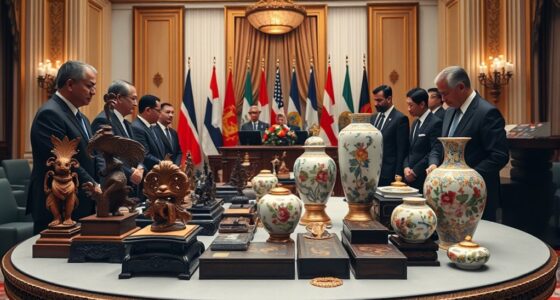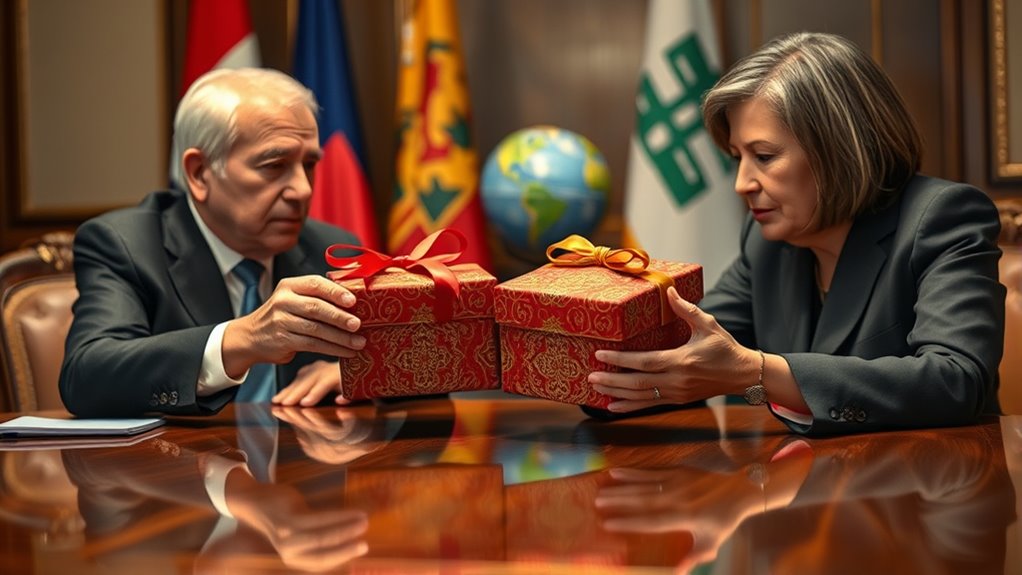

Gifts play a vital role in conflict resolution and diplomacy by symbolizing respect, building trust, and fostering mutual understanding. They communicate goodwill and shared values, often acting as personal gestures that reinforce alliances and ease tensions. Thoughtfully chosen gifts, presented with cultural awareness, can soften disagreements and create positive negotiation environments. If you want to discover more about how these exchanges shape international relations and peacebuilding, keep exploring further.
Key Takeaways
- Diplomatic gifts serve as symbols of respect, trust, and mutual understanding, fostering positive relationships and easing tensions.
- Thoughtfully chosen gifts can reinforce shared values and commitments, aiding in conflict mitigation and reconciliation efforts.
- Proper presentation and cultural appropriateness in gift exchanges promote goodwill and reduce misunderstandings during negotiations.
- Personalized, culturally reflective gifts help build emotional bonds and long-term trust between conflicting parties.
- Incorporating sustainable and ethical gifts aligns with shared values, supporting peacebuilding and responsible diplomacy.
Top picks for "role gift conflict"
Open Amazon search results for this keyword.
As an affiliate, we earn on qualifying purchases.
Historical Significance of Gift Exchanges in Diplomacy

Throughout history, gift exchanges have played a vital role in diplomacy, serving as symbols of goodwill and mutual respect between nations. In ancient practices, ceremonial exchanges often marked significant events, such as treaties or alliances. These rituals weren’t just about giving objects; they represented trust, commitment, and a desire to maintain peaceful relations. Gift-giving in diplomacy helped establish bonds that could transcend conflicts, fostering understanding and cooperation. During these exchanges, the value wasn’t solely monetary—it was about the gesture and the message behind it. Over centuries, these ceremonial practices laid the groundwork for modern diplomatic customs. Recognizing the historical importance of gift exchanges reveals their enduring power to build bridges, create alliances, and promote harmony between nations. Incorporating expert voice actors into diplomatic ceremonies can further enhance the message of goodwill. Additionally, understanding the cultural significance of gifts can help prevent misunderstandings and strengthen international relationships. Furthermore, the craftsmanship and presentation of gifts often reflected a distinctive cultural identity, adding depth to the diplomatic gesture. Acknowledging the symbolism of gifts can deepen mutual understanding and respect in diplomatic interactions, especially when considering the traditions of gift wrapping that add meaning to the exchange.
Cultural Variations in Gift-Giving Practices
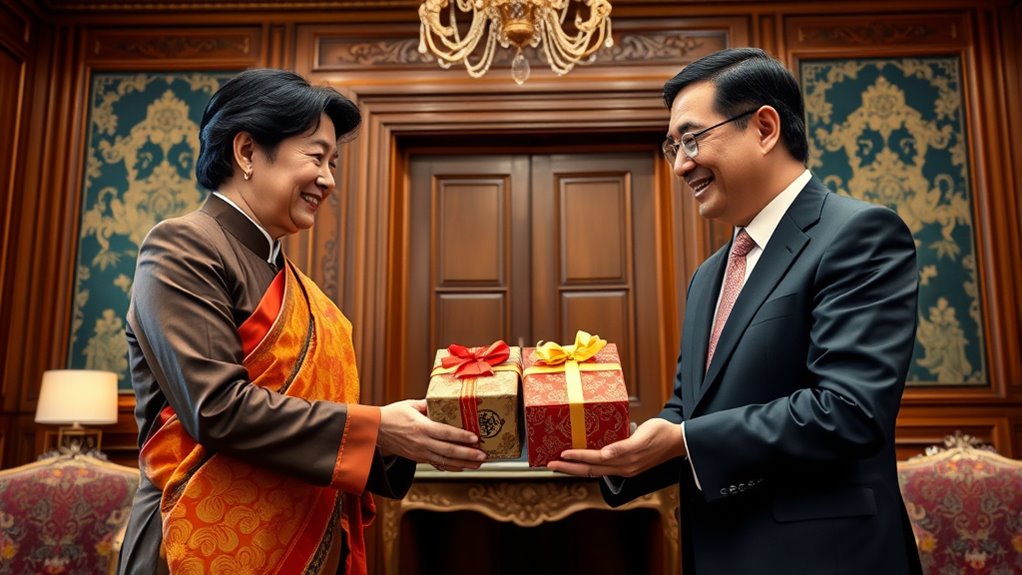
Gift-giving customs vary widely across cultures, shaping how nations express goodwill and build relationships. You’ll notice that regional customs influence how, when, and what is exchanged during traditional ceremonies. For example, some cultures emphasize modest gifts to avoid appearing greedy, while others see elaborate presents as a sign of respect. In certain societies, timing is critical—gifts are exchanged at specific moments in traditional ceremonies to honor traditions and social hierarchy. You should also be aware that the significance of gifts can differ; what’s considered a thoughtful gesture in one culture might be inappropriate in another. Recognizing cultural sensitivities related to gift-giving is essential for effective diplomacy and mutual understanding. Additionally, understanding the financial implications of gift exchanges can help prevent misunderstandings and foster trust in diplomatic contexts. Being aware of the emotional resonance that gifts carry in different cultures can further enhance diplomatic efforts and foster stronger relationships. Recognizing the importance of cultural context can help you navigate diplomatic interactions more effectively and demonstrates cultural awareness, which can significantly strengthen relationships and foster mutual respect in international settings.
Symbolism and Meaning Behind Diplomatic Gifts

Diplomatic gifts often carry deep cultural significance, symbolizing respect and mutual understanding. You’ll notice how these presents can convey honor and reinforce the importance of the relationship. They also serve as symbols of trust and alliance, strengthening diplomatic ties beyond words. Understanding legal procedures in different contexts highlights the importance of respect for established protocols and agreements. Additionally, recognizing the cultural adaptations of holiday celebrations can enhance the effectiveness of diplomatic exchanges by demonstrating cultural awareness. Incorporating vetted practices ensures that gift exchanges remain appropriate and culturally sensitive, fostering goodwill and cooperation. Moreover, the growing interest in alternative investments like Gold IRAs reflects a broader trend towards diversification and strategic planning in international relations.
Furthermore, the subconscious power during sleep can influence the emotional tone and intent behind gift exchanges, subtly impacting diplomatic relations.
Cultural Significance of Gifts
The cultural significance of gifts in diplomacy often lies in their symbolism and the deeper meanings they carry. You recognize that each gift reflects cultural symbolism, embodying values, history, or beliefs unique to a nation. These gifts serve as aesthetic expressions, showcasing artistry, craftsmanship, and cultural identity. When you select a diplomatic gift, you’re not just offering an object but conveying respect, trust, and shared values. Understanding the cultural symbolism behind a gift helps you appreciate its importance beyond surface appeal. It’s through this lens that gifts become powerful tools for fostering mutual understanding and strengthening diplomatic relationships. By choosing items rich in meaning and cultural significance, you help create a meaningful connection that transcends words and diplomatically bridges differences. Additionally, considering cultural symbolism in gifts can enhance the effectiveness of these exchanges in fostering lasting international relationships. Recognizing the artistry and craftsmanship involved in such gifts further underscores their cultural importance and promotes appreciation across cultures. Furthermore, selecting gifts that reflect cultural symbolism demonstrates your awareness and respect for the recipient’s heritage, thereby deepening diplomatic rapport. Incorporating unique and meaningful designs into gift choices can also reinforce the message of cultural appreciation and mutual respect, inspiring inspirational quotes about unity and understanding to reinforce shared values.
Conveying Respect and Honor
When presenting a diplomatic gift, you communicate respect and honor through carefully chosen symbols that resonate across cultures. These gifts serve as a form of personal expression, allowing you to convey appreciation and recognition without words. The emotional connection behind the gift demonstrates your sincere regard for the recipient’s status and traditions. By selecting items with meaningful symbolism, you show that you understand and respect their cultural values. This act of thoughtful giving helps to foster mutual respect and sets a tone of dignity in diplomatic exchanges. Additionally, incorporating elements of cultural authenticity, such as traditional patterns or locally sourced materials, can deepen the impact of your gesture. Understanding home essentials and appropriate gift-giving practices can also enhance diplomatic relationships. Recognizing cultural differences in gift-giving customs can prevent misunderstandings and demonstrate cultural sensitivity. Ultimately, the gift’s symbolism becomes a powerful gesture, reinforcing the importance of respect and honor in building trust and strengthening relationships across borders.
Symbols of Trust and Alliance
Have you ever wondered what makes certain gifts in diplomacy so powerful? It’s often the personal symbolism and emotional gestures behind them that create lasting trust. When a diplomat presents a gift, they’re not just exchanging objects—they’re signaling a bond of trust and alliance. These gifts often carry meaning beyond their material value, representing shared values or a commitment to future cooperation. The emotional gesture shows sincerity and respect, reinforcing diplomatic ties. Personal symbolism, like a custom artifact or culturally significant item, deepens the connection, making the gesture memorable. Such gifts become symbols of mutual understanding, fostering a sense of unity. In diplomacy, these meaningful exchanges build the foundation for collaboration and lasting alliances.
Strategic Uses of Gifts to Foster Trust and Cooperation
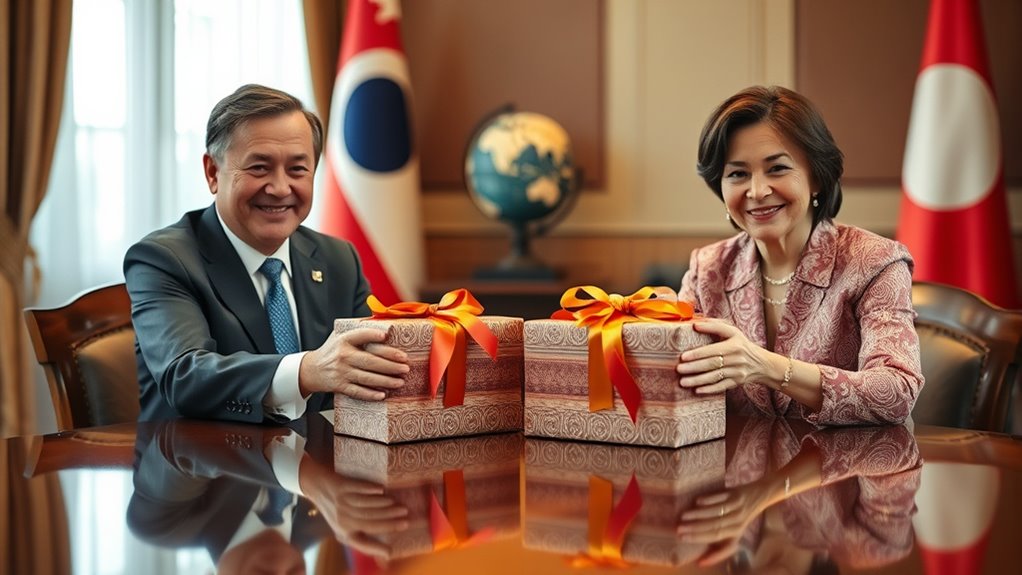
You can use gifts strategically to build mutual respect and demonstrate your goodwill. When chosen thoughtfully, gifts show your commitment to cooperation and help break down barriers. These gestures create a foundation of trust that encourages positive conflict resolution.
Building Mutual Respect
Building mutual respect through strategic gift-giving involves more than just exchanging tokens; it requires thoughtful selection and timing to demonstrate genuine appreciation and understanding. You need to consider personal boundaries, ensuring your gift respects cultural norms and individual preferences. An appropriate gift shows you value the relationship without overstepping boundaries or creating discomfort. Focus on meaningful, modest tokens that align with the recipient’s values and situation. When you choose gifts carefully, it signals your respect and willingness to foster trust. Avoid overly personal or extravagant presents that might be misinterpreted. Instead, aim for gestures that reinforce mutual understanding and appreciation, laying a foundation for ongoing cooperation. Proper gift appropriateness helps solidify respect, making your diplomatic efforts more authentic and effective.
Signaling Goodwill
Strategic gift-giving can be a powerful tool for signaling goodwill and fostering trust in conflict resolution. When you choose gifts that reflect personal expression, you demonstrate sincerity and a genuine desire to build rapport. These thoughtful gestures show that you’re invested in finding common ground, encouraging cooperation. Additionally, gifts can serve as subtle signals in commercial marketing, emphasizing your commitment to ongoing relationships rather than short-term gains. By carefully selecting tokens that resonate with the recipient’s values or culture, you reinforce positive intentions. This approach helps break down barriers, making it easier to navigate conflicts. Ultimately, using gifts strategically—whether as personal expressions of goodwill or as part of broader marketing efforts—can create a foundation of trust essential for successful diplomacy.
Gifts as Tools for Conflict Mitigation and Peacebuilding

Gifts can serve as powerful tools for conflict mitigation and peacebuilding when used thoughtfully. Personalized gift giving demonstrates genuine understanding and respect, helping to build trust between conflicting parties. By tailoring gifts to reflect shared values or cultural symbols, you foster a sense of connection and reconciliation. Additionally, thoughtful gift wrapping techniques enhance the presentation, showing care and effort that reinforce goodwill. When you present a well-wrapped, meaningful gift, it can soften tensions and open channels for dialogue. These gestures signal that both sides are committed to peace, making it easier to move past misunderstandings. Ultimately, strategic gifting rooted in sincerity can bridge divides and lay the groundwork for lasting peace.
Ethical Considerations and Controversies in Diplomatic Gifting
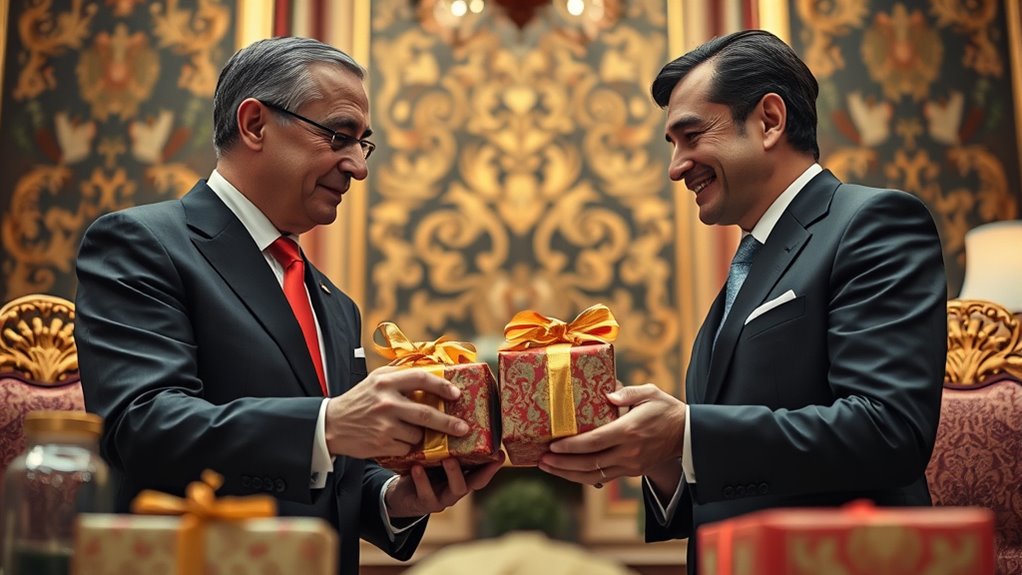
Have you ever considered the ethical dilemmas that come with diplomatic gifting? Private donations can blur lines of influence, raising concerns about favoritism or corruption. Gift regulation aims to create transparency and prevent abuse, but enforcement can be inconsistent. Sometimes, officials accept lavish presents that could be seen as bribes, compromising integrity. Conversely, refusing gifts might offend counterparts or hinder relationships. Balancing cultural sensitivities with ethical standards is complex, and missteps can damage trust or spark controversy. It’s essential to establish clear guidelines for gift acceptance and disclosure, ensuring that diplomatic exchanges remain transparent and ethical. Ultimately, understanding these controversies helps you navigate the delicate balance between diplomacy and integrity in international relations.
Modern Protocols and Norms Governing Diplomatic Exchanges
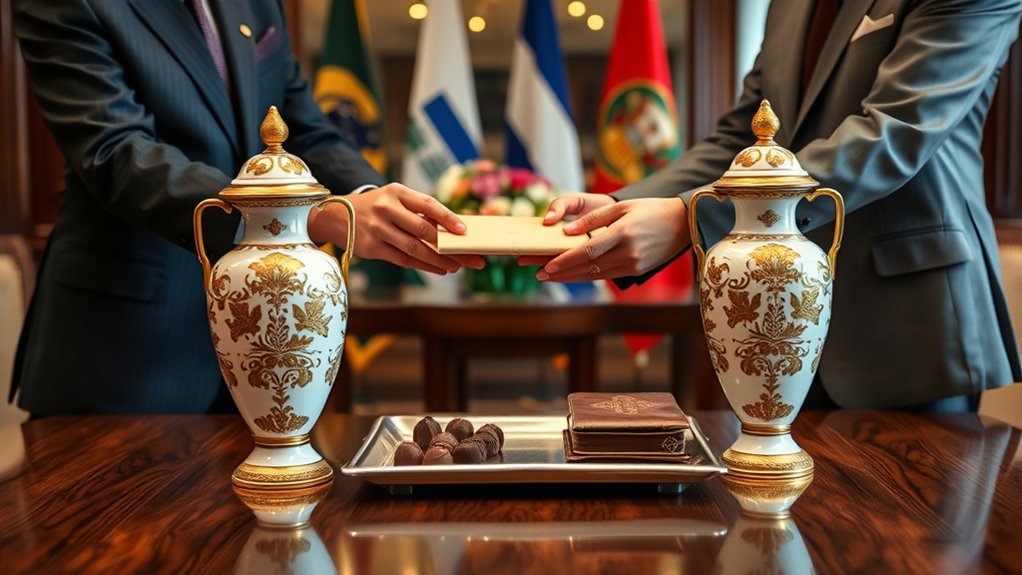
Modern protocols and norms shape how diplomatic exchanges are conducted today, ensuring that interactions remain respectful, appropriate, and culturally sensitive. You must understand that cultural authenticity is essential; it demonstrates respect for the host nation’s traditions and values. Diplomatic etiquette guides appropriate behaviors, language, and gift-giving practices, preventing misunderstandings or offenses. These norms emphasize the importance of researching cultural customs to avoid missteps and foster genuine relationships. You’re expected to be aware of varying expectations around gift presentation, timing, and significance, which uphold the dignity of all parties involved. By adhering to these modern protocols, you promote mutual respect and trust, creating a foundation for successful diplomacy. Ultimately, respecting cultural authenticity and following diplomatic etiquette strengthen international ties and facilitate conflict resolution.
Case Studies of Notable Gift-Giving Moments in History

Throughout history, several gift-giving moments have profoundly influenced diplomatic relationships, illustrating how a well-chosen present can symbolize goodwill or resolve conflicts. One notable example is when a gift of artistic expressions, like intricate tapestries or sculptures, signaled respect and cultural appreciation between nations. Similarly, culinary traditions have played a crucial role; offering traditional foods or rare delicacies often conveyed friendship and understanding. For instance, a historic exchange involving handcrafted artwork fostered trust between neighboring countries, while sharing regional dishes helped bridge divides. These moments highlight how thoughtful gifts rooted in cultural or artistic significance can serve as powerful symbols of reconciliation. Such gestures often go beyond material value, embodying respect and a desire for harmony in complex diplomatic contexts.
The Impact of Gifts on Negotiation Dynamics

Gifts can substantially influence the dynamics of negotiations by shaping perceptions and fostering trust between parties. When you consider personal gift preferences, you demonstrate attentiveness and respect, which can positively sway negotiations. Thoughtful gift presentation techniques, such as elegant wrapping or meaningful symbolism, enhance the gesture’s impact. A well-chosen gift can reduce tension, encourage cooperation, and create a sense of mutual understanding. Being aware of the recipient’s preferences ensures the gift resonates genuinely, strengthening relationships. Effective presentation emphasizes sincerity, making the gesture memorable. Pay attention to details; a carefully selected and beautifully presented gift signals goodwill and openness. These subtle cues can tilt negotiations in your favor, often paving the way for more constructive dialogue.
Future Trends in Diplomatic Gift-Giving and Cultural Diplomacy

You’ll see digital platforms transforming how gifts are exchanged in diplomacy, making the process more immediate and transparent. Sustainable and ethical gifts are also gaining importance, reflecting a global shift toward responsible diplomacy. These trends will shape the future of cultural diplomacy, emphasizing connection and shared values.
Digital Platforms for Gifting
Digital platforms are transforming how diplomatic gifts are exchanged and appreciated, offering new opportunities for cultural diplomacy. Virtual gifting allows governments and diplomats to send meaningful tokens instantly, bridging geographical gaps. Online gift registries streamline the process, making it easy to select culturally appropriate and personalized presents. These platforms also enable transparent tracking of gifts, fostering trust and accountability in diplomatic exchanges. You can participate in virtual gifting events or use digital catalogs to showcase cultural artifacts, strengthening international ties. This shift enhances the accessibility and efficiency of diplomatic gift-giving, making it more inclusive and adaptable to modern diplomacy.
- Seamless virtual gift exchanges across borders
- Curated digital catalogs for cultural artifacts
- Transparent tracking via online gift registries
Sustainable and Ethical Gifts
As the world increasingly prioritizes sustainability and ethical practices, diplomatic gift-giving is shifting toward more responsible choices. You’ll find that sustainable practices play a crucial role in selecting gifts that minimize environmental impact, such as locally sourced or eco-friendly items. Ethical sourcing ensures that products are obtained without exploiting workers or damaging ecosystems, aligning with global values of fairness and transparency. By choosing these kinds of gifts, you demonstrate respect not only for the recipient but also for broader social and environmental concerns. This trend fosters trust and promotes positive diplomatic relations rooted in shared values. As future trends develop, expect more emphasis on authenticity and accountability, making sustainable and ethical gifts an integral part of cultural diplomacy and conflict resolution strategies.
Frequently Asked Questions
How Do Diplomatic Gifts Influence Long-Term International Relationships?
You might wonder how diplomatic gifts influence long-term international relationships. These gifts carry cultural symbolism, showing respect and understanding of the other country’s traditions. They also set reciprocity expectations, encouraging ongoing goodwill and cooperation. When done thoughtfully, gifts strengthen bonds and foster trust, making future collaborations smoother. Recognizing the significance behind these exchanges helps you build deeper, more respectful relationships that endure beyond initial meetings.
Are There Legal Restrictions on the Types of Gifts Exchanged Diplomatically?
You might think diplomatic gift exchanges are free-for-alls, but legal constraints actually curb your generosity. Gift regulations set clear boundaries, preventing you from slipping controversial or excessive presents through diplomatic channels. These legal restrictions aim to maintain transparency and prevent corruption. So, while it may seem like a generous gesture, you should always be aware of the legal limits, ensuring your diplomatic exchanges stay within the rules and avoid unintended diplomatic faux pas.
How Do Recipients Perceive the Sincerity of Gift-Giving in Diplomacy?
When considering how recipients perceive the sincerity of diplomatic gifts, you should recognize that cultural perceptions vary widely. Some may see generous gifts as genuine gestures, while others might harbor recipient skepticism, questioning motives behind the gift. Your awareness of these cultural nuances helps you gauge sincerity more accurately. By respecting local customs and observing recipient reactions, you can better understand whether a gift is seen as heartfelt or strategic.
What Role Do Private Citizens Play in Diplomatic Gift Exchanges?
You play a subtle but meaningful role in diplomatic gift exchanges through your personal relationships and understanding of cultural symbolism. When you give or receive gifts, you help foster trust and goodwill, often reflecting shared values or history. Your actions show respect and appreciation, strengthening diplomatic ties. Recognizing the cultural significance behind gifts, you contribute to smoother interactions and long-term relationships between nations and individuals alike.
How Can Gift-Giving Practices Adapt to Digital and Virtual Diplomacy?
You can adapt gift-giving practices to digital diplomacy by embracing virtual etiquette and digital giftology. When exchanging virtual gifts, consider personalized e-cards, digital artwork, or online experiences that convey thoughtfulness. Guarantee your gestures are culturally sensitive and timely. By integrating these modern approaches, you strengthen diplomatic relationships, showing respect and understanding in virtual spaces, making your digital exchanges meaningful and effective in today’s interconnected world.
Conclusion
You now see how gifts play a crucial role in diplomacy, shaping relationships and easing conflicts. Did you know that nearly 70% of international negotiations involve some form of gift exchange? This highlights their power beyond material value, as symbols of trust and goodwill. As global diplomacy evolves, understanding cultural nuances and strategic gift-giving will become even more essential for fostering peaceful, cooperative international relations.