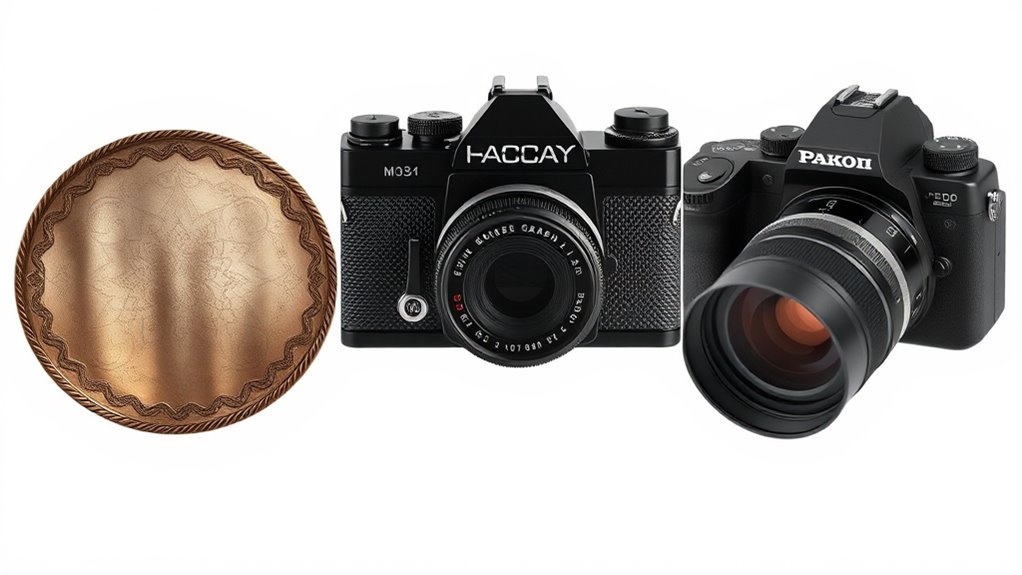

The evolution of photography starts with the daguerreotype, producing detailed images on metal plates, but it was complex and slow. As technology advanced, pioneers like George Eastman made cameras more portable and affordable with roll film, democratizing photography. Today, digital technology allows instant capture and sharing, expanding creative possibilities. Each step highlights human ingenuity and innovation, shaping how we tell stories and see the world. If you keep exploring, you’ll discover how these changes continue to influence visual culture.
Key Takeaways
- Photography began with complex, long-exposure techniques like the daguerreotype, producing detailed images on metal plates.
- Technological innovations, including roll film and portable cameras, democratized photography for the masses.
- Artistic experimentation with composition and lighting evolved alongside technical advancements, influencing creative expression.
- The development of digital imaging enabled instant capture, editing, and sharing, revolutionizing how images are produced and viewed.
- Throughout its history, photography has reflected human ingenuity, continuously expanding its artistic and societal impact.

Photography has come a long way from its early days, transforming how we capture and share moments. When you look back at the origins, you’ll find that the earliest techniques, known as historical techniques, laid the foundation for what photography has become today. The daguerreotype, for example, was one of the first practical methods, producing highly detailed images on metal plates. This process was complex and required long exposure times, but it marked a revolutionary step by turning a fleeting moment into a permanent image. Over time, these historical techniques evolved, making photography more accessible and practical, which allowed more people to participate in capturing their world.
Photography’s evolution began with historic techniques like the daguerreotype, transforming fleeting moments into lasting images.
As photography progressed, it started impacting art in profound ways. Artists began exploring the medium not just as a means of documentation but as a form of creative expression. The impact on art was immediate and significant, sparking debates about authenticity and the role of photography alongside traditional art forms like painting and sculpture. Photographers like Julia Margaret Cameron and Alfred Stieglitz pushed boundaries by experimenting with composition, lighting, and subject matter, elevating photography from mere record-keeping to an art form worthy of exhibition. These pioneers proved that photography could evoke emotion, challenge perceptions, and convey complex ideas—traits that traditionally belonged to fine art. This shift influenced countless artists and opened new pathways for artistic innovation.
Throughout this journey, the technological advancements built on earlier techniques, gradually reducing the complexity and cost of capturing images. The introduction of roll film by George Eastman, for example, made photography more portable and user-friendly. This democratization meant that everyday people, not just professionals or scientists, could take pictures. As a result, photography’s role extended beyond art and documentation into social and cultural domains, shaping how societies view themselves and their histories. Additionally, understanding retirement planning concepts like IRAs and RMDs highlights the importance of strategic financial management, which parallels how the evolution of photography involved careful innovation and adaptation to societal needs.
The impact on art continues today, but understanding the roots rooted in historical techniques helps you recognize how each breakthrough—from the wet plate collodion process to digital imaging—has expanded the creative possibilities. Every new method has challenged artists to rethink their approach, pushing the boundaries of what’s visually possible. Now, with digital technology, you can capture, edit, and share images instantly, a far cry from the painstaking methods of the past. Still, the essence remains the same: photography is about capturing moments, telling stories, and inspiring others. Its evolution from those early, technical days to today’s digital era reflects a constant drive for innovation, making every image a testament to human ingenuity and artistic expression.
Top picks for "evolution photography daguerreotype"
Open Amazon search results for this keyword.
As an affiliate, we earn on qualifying purchases.
Frequently Asked Questions
How Did Early Photographers Develop Their Images Without Modern Equipment?
Early photographers developed their images through manual focusing to guarantee clarity and precision. They used chemical processing in dark rooms, applying chemicals like silver nitrate to develop the images on glass or metal plates. You would carefully expose the photographic plate, then develop it in a series of chemical baths, which revealed the image. This meticulous process required patience and skill, as every step impacted the final photograph’s quality.
What Role Did Government and Military Use Play in Photographic Advancements?
You might think photography’s mainly about art, but government and military use pushed its boundaries. Military surveillance demanded clearer, faster images, spurring innovations like aerial photography. Conversely, government censorship aimed to control information, leading to restricted image dissemination and advancements in secure, discreet photography techniques. These contrasting needs accelerated technological progress, making photography a crucial tool for both strategic advantage and information control in wartime and beyond.
How Did Photography Influence Art Movements Throughout History?
You see how photography influenced art movements by enabling artistic experimentation and promoting documentary realism. Artists embraced new techniques, pushing boundaries in styles like Impressionism and Surrealism. Photography’s ability to capture real life inspired realism and social commentary, fostering movements focused on truth and everyday scenes. You can observe how these innovations shaped artistic expression, blending visual accuracy with creative exploration, ultimately transforming the landscape of art throughout history.
What Are the Environmental Impacts of Digital vs. Film Photography?
You might think digital photography’s greener, but it’s not all smooth sailing. It reduces chemical waste compared to film, which uses hazardous chemicals, yet increases energy consumption due to electronic devices and data storage. Film photography, on the other hand, involves chemical waste from developing processes. Both have environmental footprints, so weigh the trade-offs carefully — sometimes, the grass isn’t always greener on the other side.
How Has Photography Shaped Social and Cultural Perceptions Over Time?
You see how photography shapes social and cultural perceptions through visual storytelling and social documentation. It allows you to share powerful stories, highlight societal issues, and preserve history. As you observe photographs, you’re influenced by the emotions and narratives they convey, shaping your understanding of diverse cultures and moments in time. Photography becomes a tool for connection, education, and change, influencing perceptions and fostering empathy across communities.
Conclusion
You’ve traveled through time, witnessing photography’s profound progression from primitive daguerreotypes to dazzling digital images. With every innovation, you’ve seen how technology transforms tradition, turning fleeting moments into timeless treasures. Remember, this evolution is an exciting escape into endless creativity, where each new development dazzles and delights. So, keep capturing, creating, and celebrating this continuous, enthralling journey of visual discovery—because the future of photography promises even more breathtaking breakthroughs.