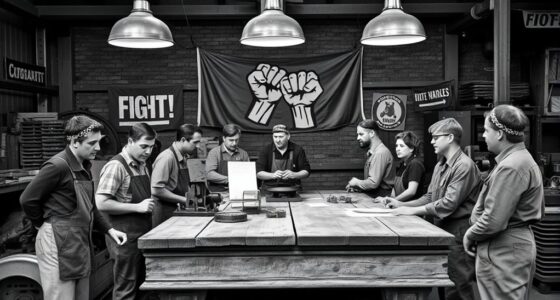

The history of etiquette shows that social norms change as societies grow and face new challenges. You’ll see shifts from strict Victorian modesty to more relaxed, inclusive behaviors driven by broader cultural, political, and social movements. As values evolve, so do expectations around manners and respect. Understanding these patterns reveals how society reflects its priorities and power structures through etiquette. Keep exploring to uncover more about how these changes shape our world today.

Get the little things that make your day delivered free with Prime
- Fast, free delivery on millions of items
- Prime Video, Amazon Music and more included
- Member-only deals all year
Key Takeaways
- Evolving social norms reflect broader cultural shifts and changing societal values over time.
- Etiquette movements reveal priorities like equality, modesty, or individual rights at different historical periods.
- Reinterpretation or rejection of traditional norms signals societal responses to cultural and political transformations.
- Relaxation of Victorian standards exemplifies how social change influences formal behaviors and dress codes.
- Drivers such as social movements and political reforms continuously shape and update social etiquette.
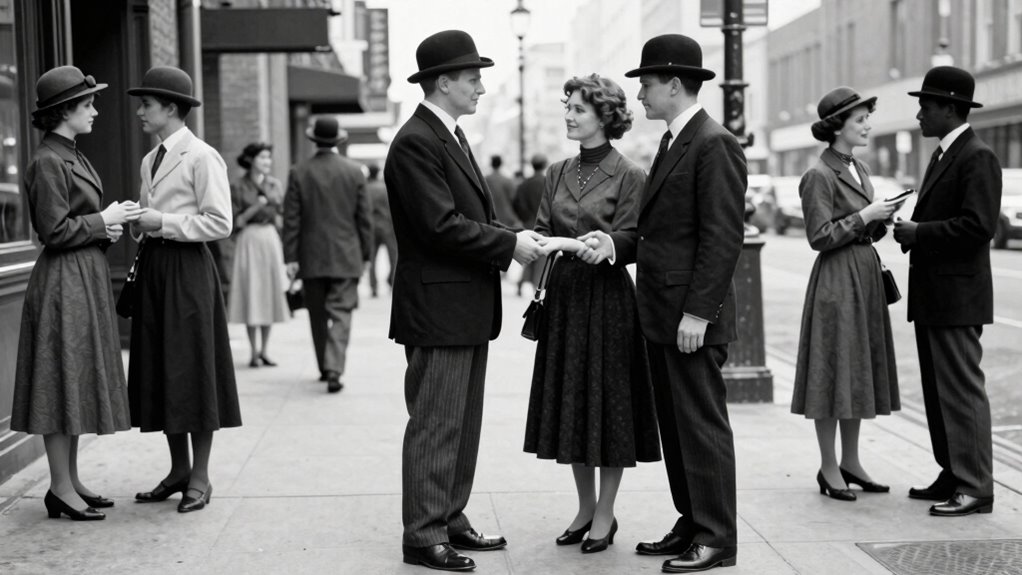
Have you ever wondered how social norms evolve over time? The story of etiquette offers a fascinating glimpse into cultural evolution, revealing how societies adapt their behaviors and expectations to reflect changing values and circumstances. Social norms, the unwritten rules that govern our interactions, don’t remain static. Instead, they shift as cultures grow, merge, or face new challenges. When we look back through history, we see that what was once considered proper can become outdated, replaced by new standards that better align with contemporary beliefs.
Throughout history, etiquette has served as a mirror for societal priorities and power structures. In medieval times, strict codes dictated behavior based on class and hierarchy, emphasizing deference and formality. As societies moved into the Renaissance and Enlightenment eras, these norms softened, emphasizing individual rights and more egalitarian interactions. This transition illustrates how cultural evolution influences social norms, gradually reshaping what’s deemed acceptable or respectful. It’s not just about manners but about the underlying values that drive societal change. Additionally, cultural shifts often lead to the reinterpretation or rejection of traditional etiquette, reflecting broader societal transformations. These shifts in social expectations can also be traced through historical documents, which reveal changing attitudes over time.
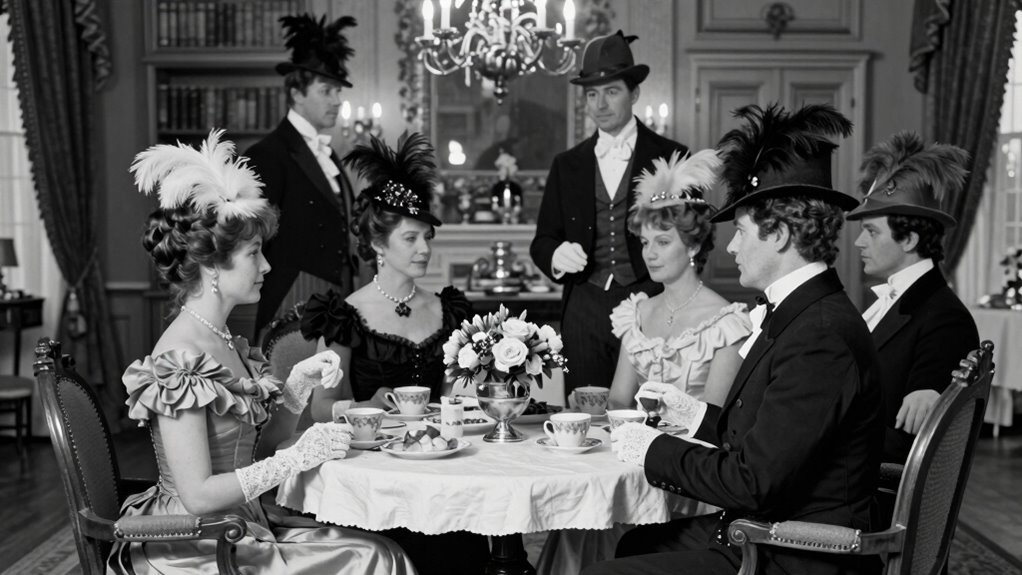
The Victorian era, for example, solidified many formalities that emphasized modesty and restraint, reflecting the era’s values. Yet, as the 20th century unfolded, many of these norms relaxed, driven by movements advocating for gender equality, civil rights, and personal freedom. The decline of rigid dress codes, the more casual approach to greetings, and the broader acceptance of diverse lifestyles all exemplify how social norms adapt in response to cultural shifts. These changes aren’t accidental—they’re responses to evolving attitudes about identity, authority, and community.
As an affiliate, we earn on qualifying purchases.
Frequently Asked Questions
How Has Technology Influenced Modern Etiquette Standards?
Technology has transformed modern etiquette by introducing digital manners necessary for virtual communication. You now navigate behaviors like timely responses, respectful online language, and appropriate social media sharing. These new standards help maintain respect and clarity in digital interactions, just as traditional manners did in person. By being mindful of digital manners, you guarantee respectful, effective communication, fostering positive relationships in an increasingly connected world.
Are Traditional Etiquette Rules Still Relevant Today?
Traditional etiquette rules are like a sturdy bridge, connecting past manners with today’s casual dress and formal manners. While some rules feel outdated, many still guide respectful interactions and social harmony. You still benefit from knowing basic manners, especially in formal settings, but adapting them to modern contexts makes them relevant. So yes, traditional etiquette remains relevant, helping you navigate social situations with grace amid changing fashions and customs.
How Does Etiquette Vary Across Different Cultures?
You’ll notice that etiquette varies greatly across cultures due to different cultural customs and ritual differences. In some societies, bowing shows respect, while in others, a handshake is customary. You should always observe local behaviors and adapt accordingly. Understanding these differences helps you navigate social interactions smoothly, showing respect and appreciation for each culture’s unique etiquette. This awareness fosters better communication and positive relationships worldwide.
What Role Does Social Media Play in Shaping Etiquette?
Social media plays a huge role in shaping etiquette today, especially through digital manners and online decorum. You’re expected to be respectful, thoughtful, and considerate in your interactions. As online platforms evolve, so do norms around politeness, privacy, and sharing. You need to navigate these changes by practicing good digital manners, avoiding offensive language, and respecting others’ boundaries, which helps foster positive online communities and reflects social change.
Can Etiquette Help Bridge Social Divides?
Etiquette can definitely help bridge social divides by promoting interpersonal harmony and understanding. When you follow respectful behaviors, you foster trust and reduce misunderstandings, which strengthens social cohesion. By practicing empathy and considerate communication, you create an environment where diverse perspectives are valued. This active effort to uphold good manners encourages inclusivity, making it easier for different groups to connect and collaborate, ultimately fostering a more unified and harmonious society.
formal dress code etiquette book
As an affiliate, we earn on qualifying purchases.
As an affiliate, we earn on qualifying purchases.
Conclusion
As you’ve seen, etiquette is like a river constantly flowing and adapting to new currents of social change. It reflects society’s values and, in turn, shapes them. By understanding its evolution, you can navigate today’s social waters with grace and confidence. Remember, just as a tree bends with the wind, etiquette bends with time—always growing, never breaking. Embrace these changes, and you’ll find yourself sailing smoothly through the ever-shifting tides of society.
modern manners for social interactions
As an affiliate, we earn on qualifying purchases.
As an affiliate, we earn on qualifying purchases.
online communication etiquette course
As an affiliate, we earn on qualifying purchases.
As an affiliate, we earn on qualifying purchases.
NFL season / tailgating Picks
team gear
As an affiliate, we earn on qualifying purchases.