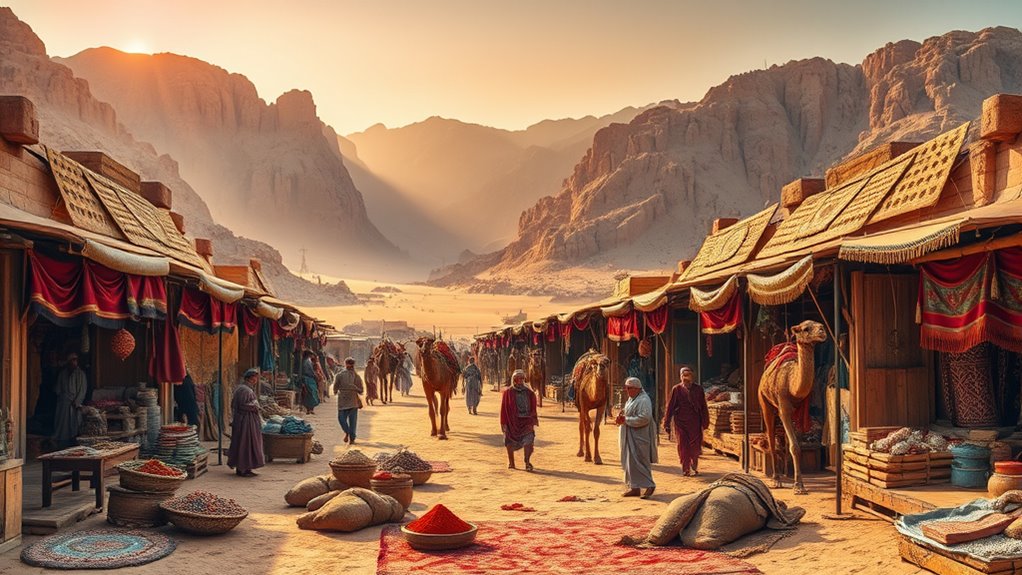

Ancient trade routes like the Silk Road and Spice Route connected civilizations across Asia, Africa, and Europe, allowing you to exchange goods, ideas, and beliefs. These networks enabled merchants to share silk, spices, gold, and cultural practices, fostering mutual understanding and technological advances. They also promoted cultural exchanges that shaped art, religion, and knowledge. To discover how these routes impacted the world and shaped our history, continue exploring these fascinating pathways.
Key Takeaways
- The Silk Road and Spice Route were major ancient trade networks connecting Asia, Europe, and Africa.
- They facilitated the exchange of goods like silk, spices, gold, and other valuable commodities.
- These routes promoted cultural, religious, and technological exchanges between civilizations.
- The Silk Road linked overland routes across Central Asia, while the Spice Route primarily used maritime pathways.
- Both routes contributed to the development of cities, trade practices, and shared knowledge across continents.
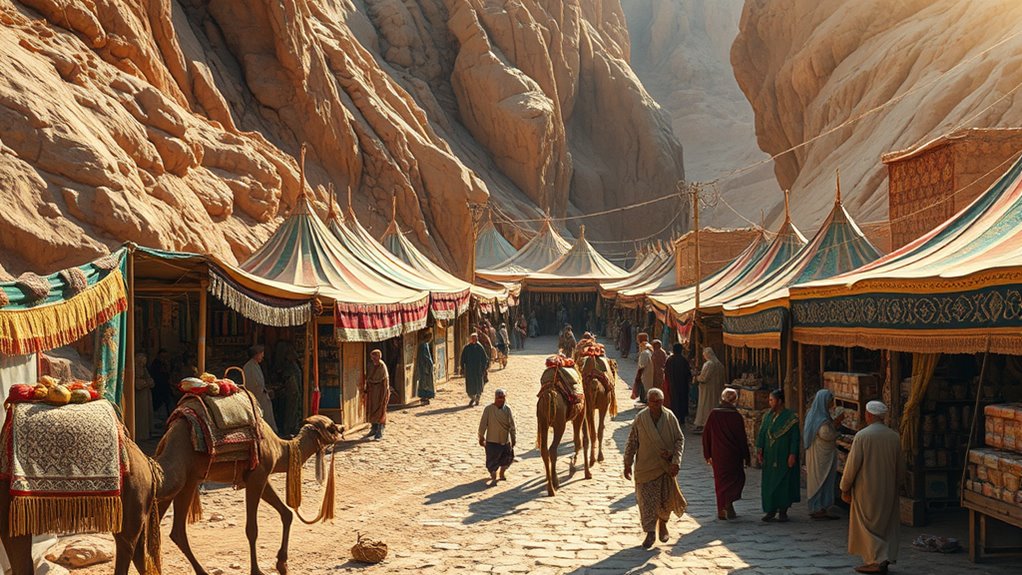
Have you ever wondered how civilizations connected and exchanged goods long before modern transportation? Ancient trade routes like the Silk Road and Spice Route made this possible, creating a network that linked distant lands across continents. These routes weren’t just pathways for trading valuable commodities; they also fostered cultural exchanges, spreading ideas, religions, technologies, and traditions. Maritime commerce played a vital role in this interconnected web, especially along coastal routes and sea lanes, where ships carried silk, spices, gold, and other treasures across vast oceans.
Ancient trade routes connected distant lands, spreading goods, ideas, and cultural exchanges across continents and oceans.
Maritime commerce allowed civilizations separated by water to maintain contact and trade regularly, bypassing some of the challenges of overland travel. Ships traveled along the Indian Ocean, the Mediterranean, and the South China Sea, connecting regions spanning Africa, Asia, and Europe. These maritime routes facilitated the movement of goods that might have been too bulky or expensive to transport over land, making trade more efficient and expanding the reach of different cultures. As merchants sailed from port to port, they didn’t just exchange commodities—they also shared stories, beliefs, and customs, enriching societies along the way. This exchange of ideas helped shape art, religion, and technological innovations that persisted long after the trade routes declined. Additionally, these routes contributed to the development of emergent technologies such as navigational tools and shipbuilding techniques, which further advanced maritime trade.
The Silk Road, stretching from China through Central Asia to the Mediterranean, exemplifies overland trade’s importance, but it was equally a conduit for cultural exchanges. Traders and travelers along this route brought more than silk and spices; they carried Buddhism, Christianity, and Islam, along with artistic styles and scientific knowledge. The Silk Road’s interconnected network enabled civilizations to learn from each other, fostering mutual understanding amid diverse cultures. Similarly, the Spice Route connected India, Southeast Asia, the Middle East, and Africa, not only trading spices but also spreading culinary traditions and medicinal practices. Ships on this route often carried exotic goods and cultural ambassadors, promoting cross-cultural interactions that influenced local customs and beliefs.
In essence, these ancient trade routes did more than just move goods—they created a vibrant tapestry of cultural exchanges that shaped the development of civilizations. Maritime commerce, in particular, expanded the scope of trade beyond land boundaries, enabling civilizations to thrive through continuous contact. Whether through bustling port cities or caravan routes crossing deserts and mountains, these pathways laid the foundation for a connected world, illustrating how trade has always been about more than material wealth—it’s about shared human experiences.

Rand McNally Easy to Read: New York State Map
Regularly updated, full-color maps
As an affiliate, we earn on qualifying purchases.
As an affiliate, we earn on qualifying purchases.
Frequently Asked Questions
How Did the Silk Road Influence Modern Global Trade?
The Silk Road influences modern global trade by fostering cultural diffusion and encouraging technological advancements. You see how ideas, goods, and innovations spread across continents, shaping economies today. This ancient network laid the groundwork for interconnected markets, helping countries collaborate and share knowledge. As a result, you benefit from diverse products and improved technologies, making today’s trade more dynamic and globally integrated, just like the Silk Road once facilitated centuries ago.
What Were Common Goods Traded Along the Spice Route?
Imagine a vibrant tapestry woven with threads of silk and spices, each representing treasures traded along the route. You’d find silk and spices as the main colors, alongside tea and textiles adding richness. These goods connected distant lands, fueling cultural exchanges and economic growth. By trading silk and spices, you not only exchanged luxury items but also shared stories, traditions, and innovations that shaped the world’s interconnected history.
Were There Any Major Conflicts Along These Trade Routes?
Yes, there were major conflicts along these trade routes. You’d often encounter trade route piracy, where pirates attacked merchant ships, and territorial disputes between empires vying for control. These conflicts disrupted trade flow, increased security measures, and sometimes led to military confrontations. Despite these challenges, traders kept moving goods, adapting to threats and forging alliances to protect their valuable cargo and interests along the routes.
How Did These Routes Affect Cultural Exchanges?
Think of these routes as bridges connecting diverse worlds, where cultural diffusion blooms like vibrant flowers. You see, as merchants traveled, they exchanged not just goods but ideas, religions, and traditions. Language exchange flourished, creating a rich tapestry of communication. These routes transformed isolated societies into interconnected hubs, fostering understanding and shared knowledge. You’d witness a melting pot of cultures, each influencing the other, shaping histories in a dance of perpetual cultural exchange.
When Did These Trade Routes Decline in Use?
You’ll find that the trade routes declined mainly due to decline reasons like political instability, the rise of maritime trade, and new trade route shifts. By the late 14th and 15th centuries, these routes became less popular as Europeans favored sea routes, reducing overland traffic. This shift in trade routes considerably impacted the flow of goods and cultural exchanges, marking the end of their prominence in global trade history.

Sands3D™ Parthenon Model – Miniature Greek Temple Replica, Ancient Architecture Display, Classical Landmark Collectible
🏛️ Exquisite Parthenon Replica – A beautifully crafted miniature of the historic Greek Parthenon, showcasing its iconic columns…
As an affiliate, we earn on qualifying purchases.
As an affiliate, we earn on qualifying purchases.
Conclusion
As you imagine walking these ancient pathways, you realize how they connect worlds, cultures, and stories. The Silk Road and Spice Route aren’t just roads; they’re threads weaving humanity’s shared history. They remind you that trade isn’t just about goods—it’s about bringing people together, crossing borders, breaking barriers. These routes whisper that our past’s echoes still shape us today, urging you to cherish the bonds that bind us across time and space.

Liquidraw Solid Brass Navigation Divider 8" (20cm) | Single Handed Marine Nautical Plotting Tool | Professional Navigational Instrument for Drafting, Maritime Measurement & Technical Drawing
SOLID BRASS MARINE DIVIDER: Crafted from solid brass for durability & long-term precision, this navigation divider is a…
As an affiliate, we earn on qualifying purchases.
As an affiliate, we earn on qualifying purchases.

Insight Guides The Silk Road: Travel Guide with eBook
As an affiliate, we earn on qualifying purchases.
As an affiliate, we earn on qualifying purchases.