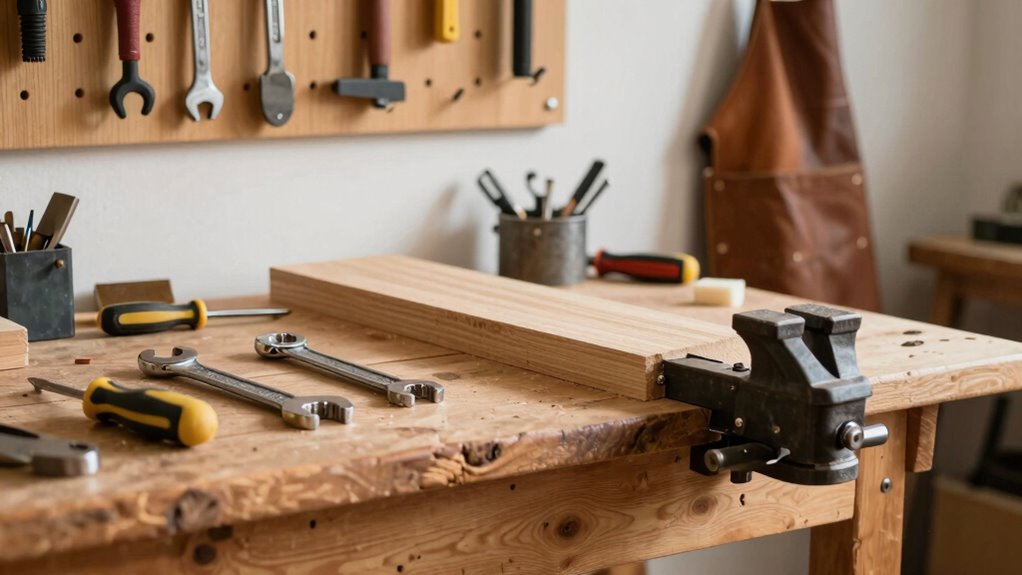

A useful workbench supports your workflow with ergonomic features, like adjustable height for comfort and reduced strain, helping you work longer without fatigue. Durable materials, such as hardwood or heavy-duty steel, guarantee it withstands daily demands and last over time. Integrated features that suit different projects, along with a design that fits seamlessly into your workspace, make your tasks more efficient and safer. Keep exploring to discover how to choose the perfect workbench for your needs.
Open a free Amazon Business account
Business pricing, bulk buying and tax-exempt orders.
As an affiliate, we earn on qualifying purchases.
Key Takeaways
- Proper ergonomic design ensures comfort and reduces fatigue during prolonged use.
- Durability of materials like hardwood or heavy-duty metal guarantees longevity under heavy workloads.
- Adjustable height features allow customization for different tasks and user preferences.
- Integration with workspace improves efficiency and supports seamless workflow.
- Functional features, such as adequate surface area and stability, enhance usability and safety.
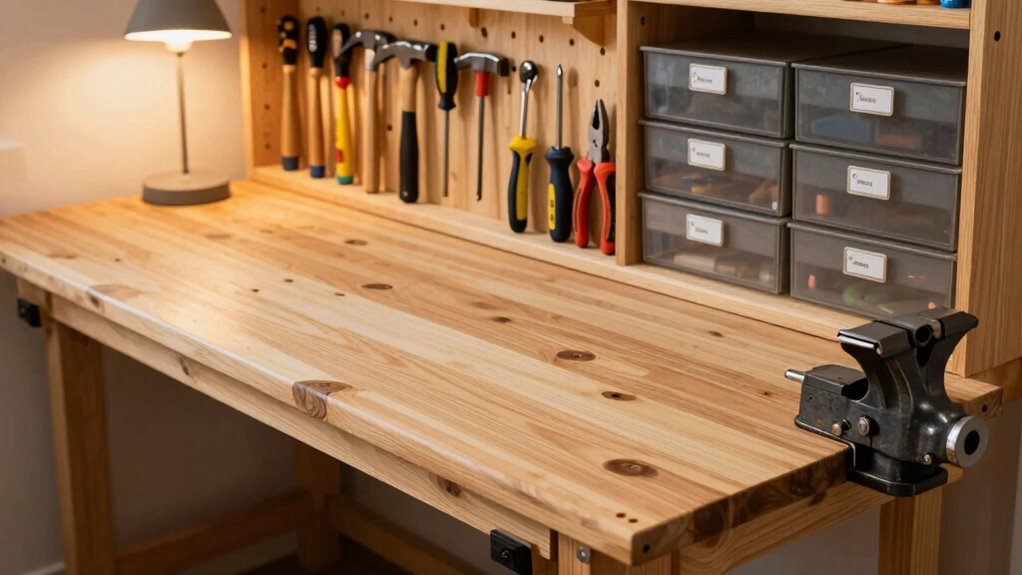
Ever wonder what truly makes a workbench useful? It’s not just about having a surface to work on; it’s about how well that surface supports your tasks and fits into your workflow. A good workbench prioritizes workbench ergonomics, meaning it’s designed to reduce strain and improve comfort during prolonged use. When you’re working on projects, you want to avoid awkward postures or excessive reaching, which can lead to fatigue or injury. An ergonomic workbench height, typically aligned with your waist or just below, allows you to work comfortably whether you’re sawing, assembling, or sanding. Adjustable height options can be a game-changer, letting you customize the workspace to suit different tasks or users. Think about your typical projects—if you often work on detailed, delicate pieces, you might prefer a slightly lower surface for precision, whereas larger, rougher projects benefit from a higher, more supportive stance. Additionally, considering the material durability of your workbench ensures it can withstand the demands of various projects over time. Material durability is another critical factor that determines a workbench’s usefulness. You need a sturdy, resilient surface that can withstand the wear and tear of daily use. Hardwoods like maple or oak are excellent choices because they resist dents and scratches better than softer woods. If you prefer a metal workbench, ensure it’s constructed from heavy-duty steel or aluminum, which can endure heavy loads without warping or bending. The durability of the material directly impacts the longevity of your workbench and your ability to rely on it over time. A fragile or poorly made workbench can become a hazard or a source of frustration, especially when you’re applying force or working with heavy materials. Incorporating ergonomic features into your workbench design can further enhance your comfort and reduce fatigue during long sessions. Selecting a workbench with proper height adjustment capabilities can help prevent repetitive strain injuries. The material properties of your workbench also influence how well it performs under different conditions, such as temperature or humidity changes. Understanding how air quality impacts your workspace can further improve your overall work environment, ensuring you stay healthy and comfortable during extended projects. Ultimately, a useful workbench seamlessly combines ergonomic design, durable materials, and functional features. It becomes an extension of your workspace, helping you work smarter, not harder. When you choose a workbench with these qualities in mind, you’re investing in a reliable partner for your projects—one that supports your comfort, safety, and productivity every step of the way.
As an affiliate, we earn on qualifying purchases.
Frequently Asked Questions
How Do I Choose the Right Workbench Height for Me?
To choose the right workbench height, aim for an adjustable height that allows you to maintain an ergonomic posture. When standing, your elbows should be at a 90-degree angle, and your wrists should stay straight. If you prefer sitting, make certain the work surface supports comfortable, strain-free work. Adjustability helps you customize the height based on your tasks and comfort, reducing fatigue and preventing injury during prolonged use.
What Materials Are Best for a Durable Workbench Surface?
For a durable workbench surface, opt for materials like hardwood, plywood, or butcher block, which withstand heavy use and resist damage. These surfaces pair well with workbench accessories like clamps and vises. An ergonomic design is key—you want a surface height that reduces strain during work. Combining sturdy materials with thoughtful accessories guarantees your workbench remains functional, comfortable, and long-lasting through all your projects.
Can I Customize a Workbench for Specific Projects?
Yes, you can customize your workbench for specific projects by adding workbench accessories like specialized clamps, vises, or tool holders. Incorporate storage solutions such as drawers, shelves, or pegboards to keep your tools organized and within reach. Tailoring your workbench to your needs not only boosts efficiency but also makes your workspace more comfortable and productive, ensuring you have everything you need right at your fingertips.
How Do I Maintain and Clean My Workbench Effectively?
A clean workbench is a safe workbench, so stay on top of maintenance. Regularly wipe down surfaces with a damp cloth and use storage solutions like drawers and pegboards to keep tools organized. Follow organizational tips by clearing clutter after each project and labeling storage spots. Remember, “A place for everything, and everything in its place,” helps maintain a tidy workspace, ensuring efficiency and safety.
What Safety Features Should I Look for in a Workbench?
You should look for safety features like an ergonomic design, which reduces strain during long work sessions, and safety accessories such as adjustable clamps or protective guards. Make sure the workbench has sturdy construction, non-slip feet, and proper electrical grounding if it includes powered tools. These features help prevent injuries, improve comfort, and keep your workspace secure. Prioritize adjustable elements and safety accessories to customize protection and support your specific projects.
As an affiliate, we earn on qualifying purchases.
Conclusion
Think of a workbench like a trusted partner—its usefulness hinges on how well it supports your projects. I once helped a friend build a birdhouse, and his old, wobbly bench made the task frustrating. But once we upgraded to a sturdy, well-organized one, everything clicked into place. A good workbench isn’t just furniture; it’s the foundation of your craft, turning chaos into clarity and effort into achievement.
ergonomic workbench with storage
As an affiliate, we earn on qualifying purchases.
As an affiliate, we earn on qualifying purchases.
hardwood workbench for woodworking
As an affiliate, we earn on qualifying purchases.
As an affiliate, we earn on qualifying purchases.
NFL season / tailgating Picks
team gear
As an affiliate, we earn on qualifying purchases.