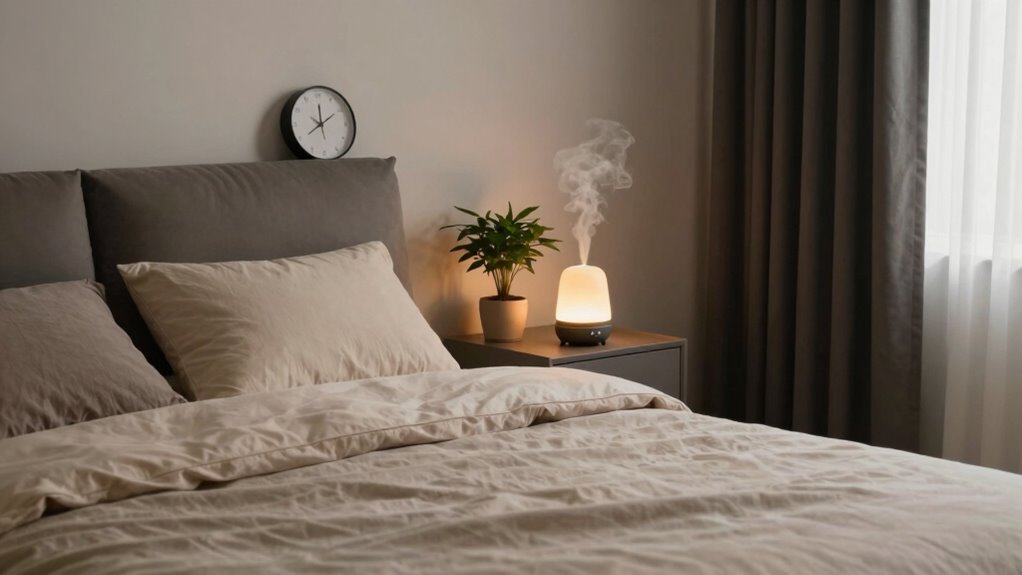

To improve your sleep and recovery environment, keep your space dark and dim in the evening by using blackout curtains and warm-toned, adjustable lighting. Let natural light in the morning to reset your internal clock, and avoid blue light from screens before bed. Maintain a cool, consistent temperature between 60-67°F, and guarantee good air quality with ventilation or air purifiers. These simple adjustments can make a big difference—keep going to learn more tips.

Get the little things that make your day delivered free with Prime
- Fast, free delivery on millions of items
- Prime Video, Amazon Music and more included
- Member-only deals all year
Key Takeaways
- Use dim, warm lighting in the evening and avoid blue light from screens before bed.
- Maximize natural light during the day and keep the room dark at night with blackout curtains.
- Maintain a cool, consistent room temperature between 60-67°F for optimal sleep.
- Ensure proper ventilation and air quality with fresh air and air purifiers.
- Minimize indoor light pollution to support circadian rhythm and restful sleep.
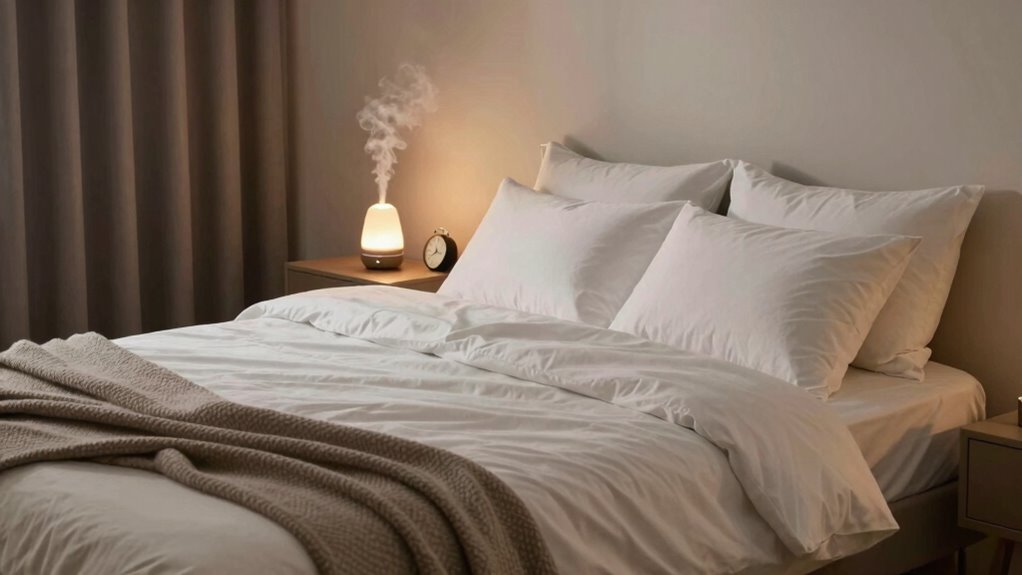
Creating a sleep-friendly environment is essential for improving your rest and recovery. The way your space is set up directly impacts how easily you fall asleep and how restful your sleep becomes. Two key elements to focus on are lighting adjustments and temperature control. These factors can make a significant difference in creating a calming atmosphere that promotes deeper, more restorative sleep.
Start by paying attention to your lighting. Bright, harsh lights can interfere with your body’s natural sleep cycle by suppressing melatonin production. To optimize your environment, use dim, soft lighting in the evening. Consider installing adjustable lamps or using smart bulbs that can be dimmed or changed to warmer tones. Avoid screens with blue light at least an hour before bed, as this type of light tricks your brain into thinking it’s daytime, making it harder to wind down. Instead, opt for calming, amber-colored night lights if you need illumination during the night. In the morning, let natural light flood your space to help reset your internal clock, but in the evening, keep the room dark or use blackout curtains to signal to your body that it’s time to rest. Proper lighting can influence your melatonin production and support your circadian rhythm, which is a crucial aspect of sleep health. Additionally, incorporating light regulation into your routine can further enhance your sleep quality. Ensuring your space is free from light pollution can also significantly improve your ability to fall asleep and stay asleep throughout the night. Maintaining a consistent sleep environment free from disruptive light sources can help reinforce your body’s natural sleep cues. Good airflow and ventilation can also help control indoor light levels, especially in spaces where windows might be a source of unwanted light.
Temperature control is equally important. Your body naturally cools down as you prepare for sleep, so setting your room to a comfortable, slightly cool temperature can facilitate this process. Ideally, aim for a room temperature around 60 to 67 degrees Fahrenheit (15.5 to 19.5 degrees Celsius). If your space tends to be warm or stuffy, consider using a fan or an air conditioner to lower the temperature. Conversely, if it’s too cold, a space heater or extra blankets can help maintain a cozy environment without making it too hot. Keep in mind that fluctuations in temperature can disrupt your sleep, so try to maintain a consistent climate throughout the night. Ventilation is also key; fresh air helps regulate humidity and prevents stuffiness, so crack a window or use an air purifier if needed. Proper ventilation plays a vital role in creating an environment conducive to restful sleep and can help reduce indoor allergens that might disturb your rest. Additionally, controlling humidity levels can prevent discomfort caused by excessive dryness or dampness, further supporting your sleep quality. Using air purification systems can also remove airborne irritants, ensuring your sleeping environment remains clean and allergen-free.
As an affiliate, we earn on qualifying purchases.
Frequently Asked Questions
What Is the Ideal Room Temperature for Sleep?
The ideal room temperature for sleep is typically between 60 and 67°F (15.5 to 19.5°C). You should focus on temperature regulation to maintain this range, as it promotes maximum sleep comfort. When your room stays within this temperature, your body can naturally lower its core temperature, making it easier to fall asleep and stay asleep. Keep your space cool and well-ventilated for the best sleep quality.
How Does Lighting Affect Sleep Quality?
Lighting markedly impacts your sleep quality by influencing your circadian rhythms through light exposure. Bright or blue light in the evening suppresses melatonin production, making it harder to fall asleep. To improve sleep, dim your lights or use warm, low-intensity lighting at night. This helps your body recognize it’s time to wind down, supporting better sleep and recovery. Proper lighting ensures your circadian rhythms stay in sync.
Can Plants Improve Sleep Environment?
Did you know indoor plants can improve air quality by filtering toxins? Yes, plants like snake plants or peace lilies enhance air purification, creating a fresher sleep environment. They also align with Feng shui principles, promoting positive energy flow and harmony in your space. Incorporating plants into your bedroom not only boosts air quality but also fosters a calming atmosphere, helping you relax and enjoy better sleep naturally.
What Sleep Aids Are Safe for Bedroom Use?
For safe sleep aids in your bedroom, opt for natural options like melatonin or herbal teas, but always check sleep aid safety and consult a healthcare professional before use. Avoid bedroom medication that causes grogginess or dependency. Using a white noise machine or blackout curtains can also promote better sleep without medication. Prioritize non-pharmaceutical methods to create a relaxing environment, ensuring your sleep space supports recovery and restful nights.
How Often Should I Change My Bedding for Better Recovery?
You should change your bedding weekly to guarantee better recovery. Fresh bedding materials prevent dust, allergens, and bacteria from accumulating, which can disrupt sleep. Your sleep position matters too—using clean, comfortable sheets supports proper alignment and reduces discomfort. Regularly swapping out your bedding keeps your sleep environment healthy and inviting, helping you relax faster and wake up refreshed. Prioritize this routine to maximize your sleep quality and recovery.
As an affiliate, we earn on qualifying purchases.
Conclusion
Remember, your space is your sanctuary—think of it as a temple for rest, much like the sacred chambers of ancient temples where tranquility reigned. By optimizing your environment, you’re not just improving sleep; you’re restoring your body and mind, revealing a better version of yourself. So, take charge now, and transform your space into a haven where every night renews you like the dawn of a new day. Sleep well, and rise refreshed.
As an affiliate, we earn on qualifying purchases.
As an affiliate, we earn on qualifying purchases.
Fall Picks
fall essentials
As an affiliate, we earn on qualifying purchases.