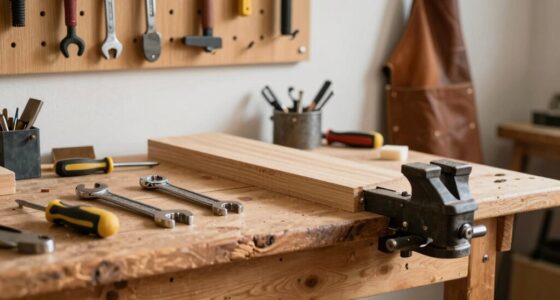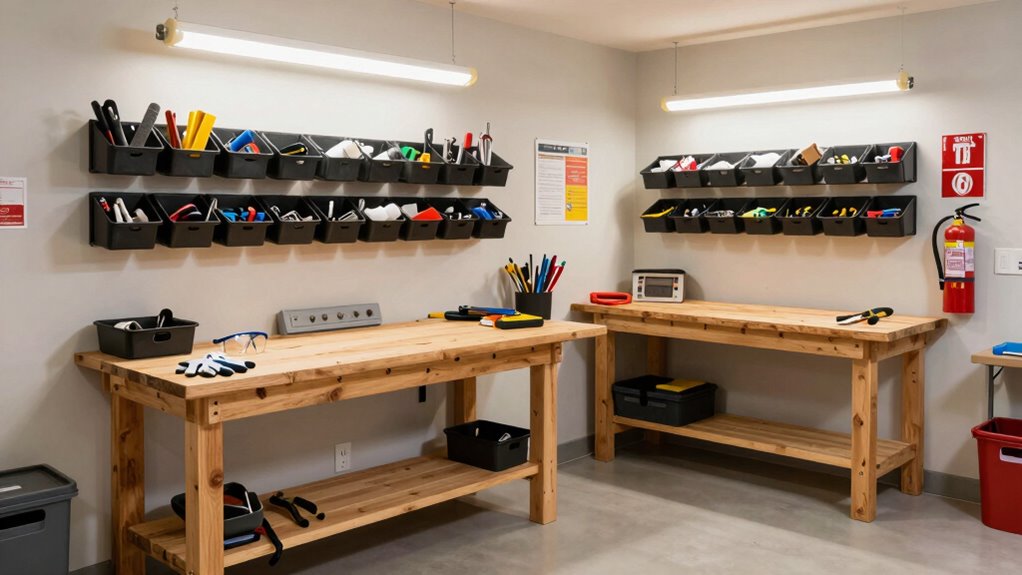

To create a safer workshop at home, prioritize wearing proper PPE like goggles, gloves, ear protection, and dust masks. Keep your workspace organized, store tools correctly, and regularly inspect safety devices and equipment. Guarantee good ventilation and bright lighting, and never bypass safety features on tools. Maintain emergency supplies such as a first aid kit and fire extinguishers, and develop clear safety procedures. Continuing will help you master effective safety practices for your workshop.

Get the little things that make your day delivered free with Prime
- Fast, free delivery on millions of items
- Prime Video, Amazon Music and more included
- Member-only deals all year
Key Takeaways
- Ensure proper PPE use, including goggles, gloves, masks, and ear protection, and keep them accessible.
- Organize tools and workspaces to prevent clutter and tripping hazards.
- Install safety guards on machinery and never bypass safety features.
- Maintain effective ventilation and lighting to reduce inhalation risks and improve visibility.
- Regularly inspect and maintain equipment, fire extinguishers, and safety devices for optimal safety.
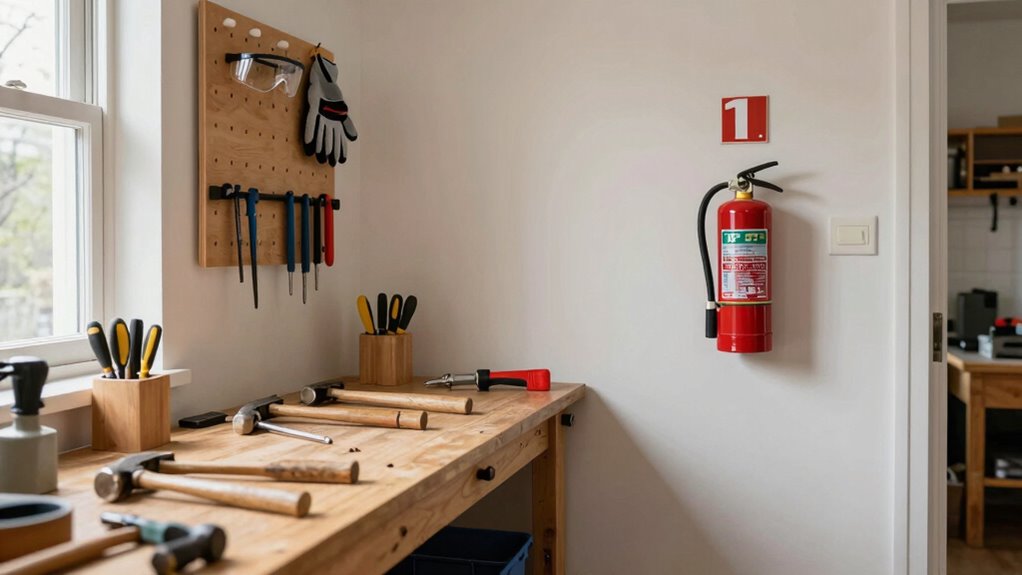
Creating a safer workshop at home is vital to prevent accidents and protect yourself while working on projects. One of the most effective ways to achieve this is by prioritizing personal protective equipment (PPE). PPE acts as your first line of defense against injuries, so always wear safety goggles to shield your eyes from flying debris, gloves to protect your hands from splinters and chemicals, and ear protection when operating loud machinery. Don’t forget to use dust masks or respirators when working with materials that produce fine dust or fumes. Keeping PPE easily accessible and wearing it consistently reinforces safe habits and reduces the risk of avoidable injuries.
Prioritize PPE like goggles, gloves, and masks to stay safe and prevent injuries in your home workshop.
Along with PPE, emergency preparedness plays a key role in maintaining a safe workshop environment. You should have a well-stocked first aid kit within reach, stocked with bandages, antiseptic, and other essentials to handle minor injuries immediately. Make certain you know the location of fire extinguishers and keep them in visible, accessible spots. Regularly check that they are in working condition and understand how to use them properly. Additionally, create an emergency plan that includes clear steps for evacuation and communication if an accident occurs. Practicing these procedures can make a notable difference when seconds matter. Ensuring your workspace is well-organized can also help prevent accidents and improve response times during emergencies. Incorporating safety signage can further alert you to potential hazards and remind you of safety precautions.
Organizing your workspace also contributes to safety. Keep your tools properly stored when not in use, and ensure your work surfaces are clear of clutter. A tidy workshop minimizes tripping hazards and allows you to work efficiently without the risk of knocking over sharp or heavy tools. Regularly inspecting your tools and safety devices ensures they are in optimal condition and ready for use, which is an important part of a comprehensive safety approach. Maintain machinery by following manufacturer guidelines for cleaning and maintenance, and always disconnect power before making adjustments or repairs. Proper ventilation is equally important, especially when working with paints, solvents, or other chemicals. Good airflow reduces inhalation risks and keeps your workspace comfortable and safe. Incorporating ventilation solutions can significantly improve indoor air quality and reduce exposure to harmful fumes. Regularly inspecting your ventilation systems ensures they function effectively and continue to provide a safe environment.
Lighting is another vital aspect. Adequate, bright lighting helps you see what you’re doing clearly, reducing mistakes and accidents. Use energy-efficient bulbs and consider task lighting for detailed work. Installing safety guards on saws, drills, and other power tools provides extra protection, preventing accidental contact with moving parts. Never bypass safety features; they are there to protect you. Regularly inspecting your tools and safety devices ensures they are in optimal condition and ready for use, which is an important part of a comprehensive safety approach. Staying aware of safety standards and best practices can also help you identify potential hazards before they cause harm.
Creating a safer workshop at home is about being proactive and attentive. By equipping yourself with PPE, preparing for emergencies, organizing your workspace, and maintaining your equipment, you greatly lower the risk of injuries. Safety isn’t just a one-time effort but an ongoing practice that ensures you can enjoy your projects without worry. Staying vigilant and making safety a priority keeps your workshop a space for creativity and productivity, not accidents. Incorporating routine safety checks into your regular schedule further enhances your safety practices and helps catch potential issues early.
As an affiliate, we earn on qualifying purchases.
Frequently Asked Questions
What Are the Essential Safety Gear Items for a Home Workshop?
You need essential safety gear like personal protective equipment (PPE) such as goggles, gloves, and ear protection to keep yourself safe. A dust mask or respirator is vital for respiratory safety, especially during sanding or cutting. Keep a fire extinguisher nearby for emergency preparedness, and have first aid supplies accessible. These items help prevent injuries and guarantee you’re ready to handle accidents effectively in your home workshop.
How Often Should Safety Equipment Be Inspected or Replaced?
You should schedule safety gear inspections regularly, ideally every three to six months, to guarantee peak operation. Follow a consistent equipment inspection schedule, checking for wear, damage, or deterioration. Safety gear maintenance is vital; replace worn or damaged items immediately to prevent accidents. Regularly reviewing your gear’s condition keeps your workshop safe, sound, and secure. Staying vigilant with inspections and prompt replacements is your best bet for a safer, more secure workspace.
Are There Specific Safety Tips for Children in a Workshop?
You should always supervise children closely in your workshop to prevent accidents. Keep them away from dangerous tools and chemicals, and guarantee they understand safety rules. Use clear safety signage to highlight hazards and remind them of precautions. Regularly check that children are following safety protocols, and teach them proper handling of tools. By staying vigilant and setting boundaries, you create a safer environment where kids can learn and explore safely.
How Do I Properly Dispose of Hazardous Workshop Waste?
Like a savvy time traveler, you should prioritize proper chemical disposal to avoid hazards. Carefully identify hazardous waste, then follow local regulations for disposal or recycling. Use designated containers, label them clearly, and never pour chemicals down the drain. Practice waste minimization by storing only what you need and seeking alternatives. Proper disposal keeps your workshop safe, eco-friendly, and compliant with laws, ensuring everyone stays protected while you work.
What Are Common Safety Mistakes to Avoid in a Home Workshop?
You should always prioritize fire prevention by keeping flammable materials away from heat sources and never leaving tools unattended when in use. Electrical safety is essential—regularly check cords for damage, avoid overloading outlets, and unplug tools when not in use. To prevent accidents, wear proper protective gear, maintain a clean workspace, and stay alert. These habits help you avoid common safety mistakes and create a safer home workshop.
workshop tool storage organizers
As an affiliate, we earn on qualifying purchases.
As an affiliate, we earn on qualifying purchases.
Conclusion
By following these simple safety tips, you’ll turn your workshop into a fortress of protection, making accidents feel like a distant nightmare. Keep your workspace organized, wear the right gear, and stay alert—your safety is worth more than gold. Remember, a safe workshop isn’t just a good idea; it’s the difference between working confidently and facing chaos. Take action now, and you’ll be crafting in a haven so safe, even the most mischievous tools won’t stand a chance!
As an affiliate, we earn on qualifying purchases.
dust mask respirator for woodworking
As an affiliate, we earn on qualifying purchases.
As an affiliate, we earn on qualifying purchases.
NFL season / tailgating Picks
team gear
As an affiliate, we earn on qualifying purchases.