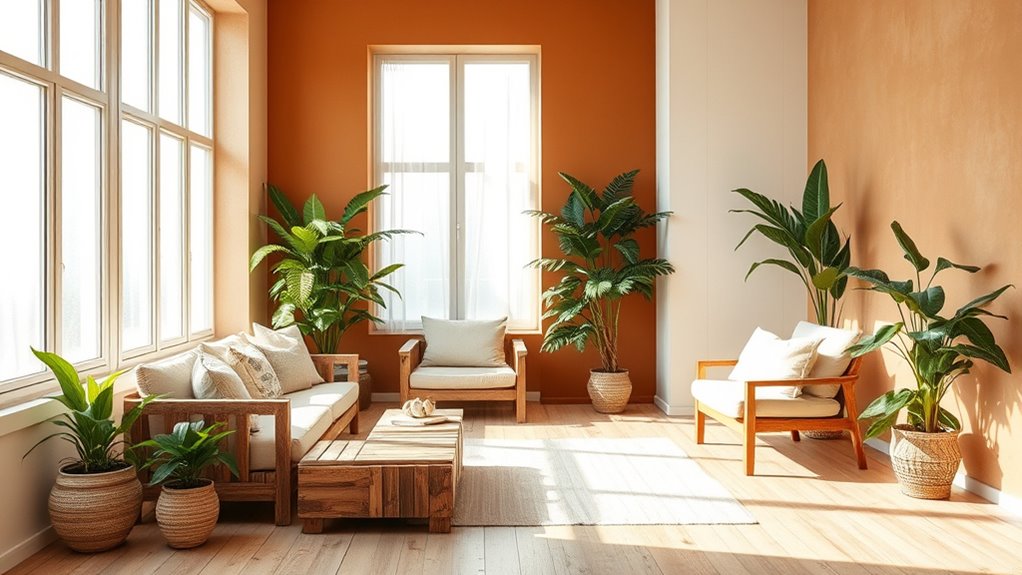

When choosing eco-friendly materials and colors for sustainable design, focus on using recyclable materials like recycled wood, metal, and glass to minimize waste and conserve resources. Opt for natural color palettes inspired by earth tones such as browns, greens, and beiges, which promote warmth and harmony. Combining these elements creates an eco-conscious yet stylish space that supports environmental goals. Keep exploring to discover more ways to integrate sustainability seamlessly into your design choices.
Key Takeaways
- Prioritize recyclable materials like recycled wood, metal, and glass to reduce waste and conserve resources.
- Use natural color palettes inspired by earth tones to create eco-friendly and inviting spaces.
- Incorporate eco-friendly dyes and pigments to minimize environmental harm from synthetic coloring agents.
- Combine recycled materials with natural hues for a cohesive, sustainable aesthetic.
- Support innovative technologies that enhance efficiency and promote environmentally responsible design practices.
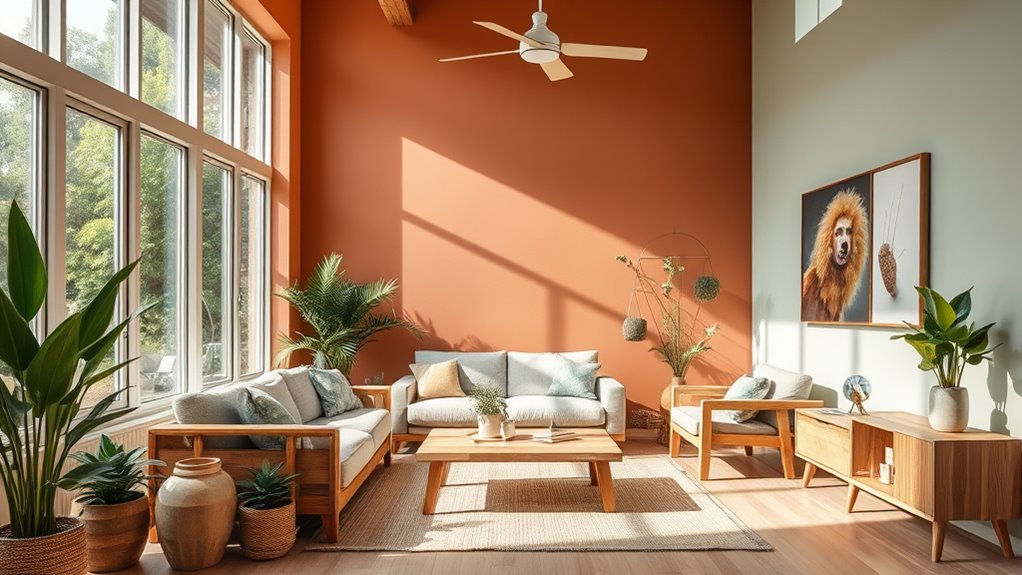
Have you ever wondered how design can help protect our planet? It’s a powerful question, especially when you realize how much your choices influence the environment. When you choose sustainable design, you’re not just creating beautiful spaces—you’re also making a statement about caring for the Earth. One of the most effective ways to do this is by selecting recyclable materials. These materials can be repurposed, reused, or recycled at the end of their lifespan, reducing waste and conserving resources. Think about using recycled wood, metal, or glass in your projects. Not only do these options minimize the demand for new raw materials, but they also add unique character to your designs. You’ll find that many manufacturers now produce furniture and finishes made from recycled content, making it easier for you to incorporate eco-friendly options without sacrificing style.
Choosing recycled materials like wood, metal, and glass helps create stylish, eco-friendly designs that protect our planet.
Alongside recyclable materials, natural color palettes play a significant role in sustainable design. These colors, inspired by earth tones like browns, greens, beiges, and muted blues, reflect the environment and promote a calming, organic aesthetic. When you use natural hues, you’re connecting your space with nature, which can help foster a sense of tranquility and well-being. Plus, natural colors often come from eco-friendly dyes and pigments, further reducing environmental impact. Choosing these palettes also means you’re less dependent on synthetic dyes that can be harmful to the environment. By embracing earthy tones, you create spaces that feel warm, inviting, and sustainable. This approach aligns with the broader goal of minimizing your ecological footprint while still achieving a stylish and timeless look.
Integrating recyclable materials with natural color palettes isn’t just about environmental benefits; it also enhances the overall aesthetic. Imagine furniture made from recycled wood finished in soft, earthy hues or fabrics crafted from sustainable fibers dyed with natural pigments. These combinations promote a cohesive, eco-conscious atmosphere that’s both beautiful and responsible. Furthermore, using recyclable materials encourages a circular economy, where products are designed for reuse and recycling rather than disposal. When you prioritize these choices, you’re supporting manufacturers committed to reducing waste and conserving resources. This mindset fosters innovation in sustainable materials, pushing the industry toward more environmentally friendly options.
Ultimately, sustainable design isn’t just a trend—it’s a way of thinking that respects the planet’s limits. By opting for recyclable materials and natural color palettes, you’re making conscious decisions that impact the environment positively. Your spaces can be both stylish and sustainable, showcasing that caring for the Earth can be seamlessly integrated into every design choice you make. This approach empowers you to create environments that are not only beautiful but also beneficial for future generations. Incorporating emerging technologies into sustainable design can further enhance efficiency and innovation, leading to smarter, more eco-friendly solutions.

WELLAND Reclaimed Wood Side Table, Round Hairpin Leg End Table, 16" L x 16" W x 20.5" H, Night Stand, Recycled Boat Wood for Living Room, Bedroom, Home Office, Patio
PURE HANDMADE – Each side table is crafted through a meticulous, multi-step process that includes recombination, polishing, painting,…
As an affiliate, we earn on qualifying purchases.
As an affiliate, we earn on qualifying purchases.
Frequently Asked Questions
How Do Eco-Friendly Materials Impact Indoor Air Quality?
Eco-friendly materials improve indoor air quality by reducing indoor air pollutants like volatile organic compounds (VOCs) and formaldehyde. When you choose sustainable building certifications, you guarantee these materials meet strict standards, minimizing harmful emissions. This creates a healthier environment for you, lowers allergy risks, and boosts overall well-being. You’ll notice fresher air and a more comfortable space, making eco-conscious choices a smart move for your health and the planet.
What Are the Most Sustainable Color Options for Different Climates?
Think of color choices as the soul of your space, guiding climate adaptation with harmony. Opt for natural pigments like clay, charcoal, or earth tones to reflect heat in hot climates and absorb warmth in colder areas. These sustainable colors not only blend seamlessly with nature but also reduce environmental impact, making your design both beautiful and eco-friendly. Embrace climate-responsive hues to create a balanced, inviting environment that respects the planet.
How Can I Verify the Sustainability Claims of Materials?
To verify the sustainability claims of materials, you should check for material certification from reputable organizations like FSC, LEED, or Green Seal. Look for sustainability labeling that indicates eco-friendly standards and third-party verification. Always review the certification details and confirm they align with recognized environmental criteria. Doing this helps you confidently choose genuinely sustainable materials and avoid greenwashing, ensuring your design supports environmental responsibility.
Are There Cost Differences Between Eco-Friendly and Traditional Materials?
You might notice that eco-friendly materials often have a higher initial cost, but consider a case where bamboo flooring lasts as long as hardwood, reducing replacement costs. The cost comparison varies, but eco-friendly choices can be cost-effective over time due to their durability and lower maintenance needs. While upfront expenses may be higher, their longevity and sustainability benefits often outweigh traditional materials.
How Do Color Choices Influence Energy Efficiency in Design?
Your color choices markedly impact energy efficiency through thermal regulation and color psychology. Light colors, like whites and pastels, reflect heat, helping keep spaces cooler and reducing cooling costs. Dark colors absorb heat, increasing cooling needs. By selecting colors thoughtfully, you can optimize indoor comfort and save energy. This eco-friendly approach aligns with sustainable design principles, making your space both visually appealing and environmentally responsible.
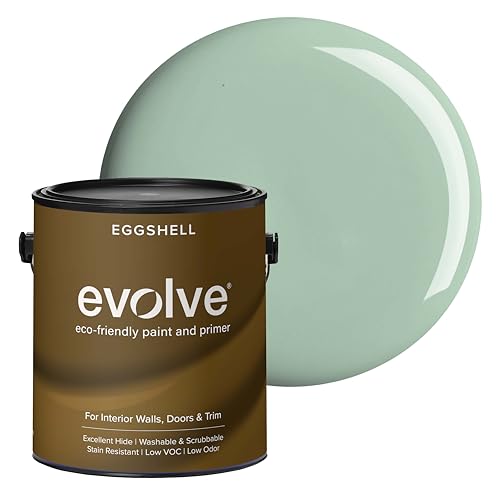
EVOLVE Paint & Primer: Environment-friendly, Low Sheen with One-coat Coverage for Interior & Exterior surfaces (Seafoam Green, 1-Gallon)
PAINT + PRIMER IN ONE: Evolve’s paint-and-primer formula helps you get great coverage from the start, sealing your…
As an affiliate, we earn on qualifying purchases.
As an affiliate, we earn on qualifying purchases.
Conclusion
Remember, you are shaping the world around you. By choosing eco-friendly materials and colors, you not only create beautiful spaces but also protect our planet for future generations. Sustainable design isn’t just a trend; it’s a responsibility. As the saying goes, “You are what you stand for.” So, stand for sustainability, make mindful choices, and inspire others to do the same. Together, your efforts can make a lasting, positive impact on our environment.

Jacquard iDye for Natural Fabrics .49 Oz – Olive
iDye comes in a dissolvable packet, so there are never any messy powders to handle: simply dissolve the…
As an affiliate, we earn on qualifying purchases.
As an affiliate, we earn on qualifying purchases.

Sweet Water Decor Salt & Sea Reed Diffuser Set – Sea Salt Citrus & Musk Amber Scent Diffuser – Reed Diffusers for Home with Long Lasting Fragrance – Non-Toxic Oil Reed Diffuser – Made in The USA
ELEVATE YOUR BATHROOM SANCTUARY – Immerse your bathroom in tranquility with our premium Sweet Water Decor Bathroom Reed…
As an affiliate, we earn on qualifying purchases.
As an affiliate, we earn on qualifying purchases.