
TL;DR

Get the little things that make your day delivered free with Prime
- Fast, free delivery on millions of items
- Prime Video, Amazon Music and more included
- Member-only deals all year
An ergonomic backpack distributes weight evenly, reducing strain and preventing back pain. Modern options include lightweight, adjustable, and tech-enabled designs, making health-conscious choices easier.
Imagine the heavy weight of a backpack pressing into your shoulders, making every step feel like a small burden. Now, picture a backpack that fits perfectly, feels light, and keeps your back happy. That’s what ergonomic backpacks aim to do for students.
In this article, you’ll learn how to spot a truly ergonomic backpack, explore the latest innovations, and discover practical tips to keep your back safe while carrying all those school essentials. Because a good backpack isn’t just about style — it’s about health, comfort, and smart design.
Choose backpacks with adjustable, padded straps and contoured back panels for the best fit.
Keep weight under 10-15% of your body weight to prevent back strain.
Look for lightweight, durable materials like recycled polyester to reduce overall load.
Modern backpacks with tech features like USB ports and RFID pockets boost convenience and security.
Replace worn or damaged backpacks promptly to maintain proper support and health.
What Makes an Ergonomic Backpack Truly Comfortable?
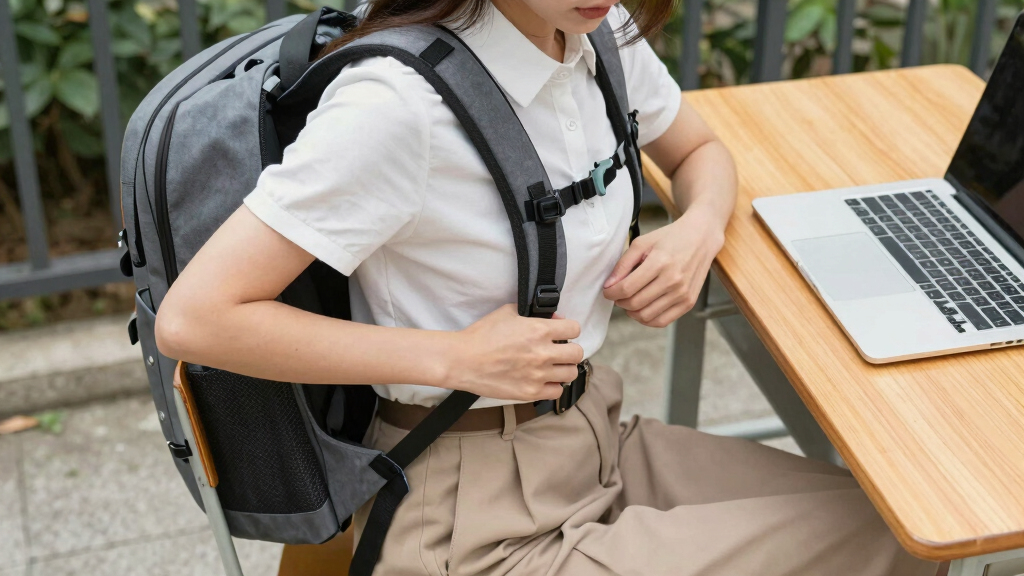
Ergonomic backpacks are designed to feel like a natural extension of your body. They distribute weight evenly across your shoulders and hips, rather than concentrating it on your spine. Think of it like a perfectly balanced scale — no part overburdened.
Look for features like adjustable straps, a contoured back panel that follows your spine’s curve, and padded shoulder straps that don’t dig into your skin. For example, a student named Lily switched to an ergonomic backpack with a padded, contoured back and found her shoulder aches vanished after just a week.
To sum it up, a truly ergonomic backpack offers:
- Proper weight distribution
- Adjustable straps for a customized fit
- Contoured back panels that follow your spine
ergonomic student backpack with adjustable straps
As an affiliate, we earn on qualifying purchases.
As an affiliate, we earn on qualifying purchases.
How to Pick the Perfect Ergonomic Backpack Step-by-Step
- Check the weight: It should feel lightweight, ideally under 2.5 pounds for a typical school bag.
- Look at the straps: They must be adjustable, padded, and able to fit snugly without cutting in.
- Inspect the back panel: Should be contoured, padded, and made of breathable mesh.
- Test the weight distribution: Load it with books and see if it sits comfortably on your shoulders and hips.
- Assess storage: It should have enough compartments to organize supplies, but not be bulky.
For example, Alex, a high school junior, followed these steps and found a backpack that felt like it was made just for him — no back pain after long days.
lightweight ergonomic school backpack
As an affiliate, we earn on qualifying purchases.
As an affiliate, we earn on qualifying purchases.
Compare Top Features of Leading Ergonomic Backpack Brands
| Feature | Brand A | Brand B | Brand C |
|---|---|---|---|
| Weight | 1.8 lbs | 2.2 lbs | 1.9 lbs |
| Adjustable straps | Yes, padded | Yes, contoured | Yes, ergonomic design |
| Back panel | Mesh, contoured | Padded, breathable | Memory foam, ventilated |
| Additional tech features | USB port, RFID pocket | Power bank pocket | Smart sensor alerts |
Choosing between these depends on your priorities—lightweight design, tech features, or durability. For example, if you commute a lot, a backpack with a built-in USB port might be a game-changer.
tech-enabled ergonomic backpack with USB port
As an affiliate, we earn on qualifying purchases.
As an affiliate, we earn on qualifying purchases.
Why Lightweight Materials Make a Big Difference
Heavy backpacks can turn a simple walk to school into a strain-fest. Using lightweight yet durable fabrics like nylon or polyester cuts down the load without sacrificing strength. For instance, a student carrying a 20-liter backpack made of recycled polyester reported feeling nearly 30% less fatigue at the end of the day.
Plus, lightweight backpacks are easier to carry on stairs or crowded hallways. They also leave room for essentials without becoming bulky, making daily commutes less stressful.
Remember, a backpack shouldn’t weigh more than 10-15% of your body weight — so keeping it light is smart. This is especially important because heavier backpacks force students to carry more weight than their bodies are designed to handle, leading to increased fatigue, poor posture, and potential musculoskeletal issues over time. Choosing lightweight materials balances durability and ease of carrying, which directly impacts daily comfort and long-term health.
contoured back panel backpack for back pain relief
As an affiliate, we earn on qualifying purchases.
As an affiliate, we earn on qualifying purchases.
Smart Features That Actually Make a Difference
Today’s ergonomic backpacks aren’t just about comfort — they add tech to simplify your life. Features like built-in USB charging ports mean you can juice up your phone during class breaks. RFID-blocking pockets keep your cards safe from digital pickpocketing.
Imagine a backpack with a removable power bank and a dedicated charging port — no more hunting for outlets or tangled cords. Or picture a slim, modular design that adapts to what you carry each day, like a backpack with removable compartments that transform based on your schedule.
These innovations aren’t just gadgets — they enhance convenience and security, making your backpack a smart extension of your daily routine. They can also reduce the hassle of managing multiple accessories, helping students stay organized and connected without sacrificing ergonomic support.
How Proper Fit Prevents Back Pain — Real Stories
Proper fit isn’t just about comfort — it’s about health. Take Sarah, who used to carry a backpack that sagged off one shoulder. After switching to an ergonomic model with adjustable straps and a contoured back, her back pain disappeared within weeks.
Research confirms that backpacks weighing more than 10-15% of body weight increase back pain risk. An ergonomic fit helps distribute weight evenly, reducing strain and promoting good posture. When a backpack fits properly, it minimizes pressure points and prevents uneven load distribution, which are common causes of discomfort and long-term musculoskeletal problems. For teens like Jake, who carries a 25-liter bag filled with textbooks, a well-fitted backpack can prevent long-term issues and promote healthy spinal development. Proper fit not only alleviates immediate discomfort but also fosters habits that support spinal health over years.
How Often Should Students Replace Their Backpack?
Most backpacks last about 2-3 years with regular use, but signs of wear merit an earlier replacement. Look for frayed seams, broken zippers, or cracks in the back panel. For example, Emily’s old backpack had a torn strap after just 18 months, risking uneven weight distribution.
Replacing a worn-out backpack is crucial because continued use of damaged gear can lead to poor support, uneven weight distribution, and increased risk of back pain or injury. Regularly inspecting your backpack for structural integrity ensures it continues to provide proper ergonomic support, which is vital for long-term musculoskeletal health. Additionally, investing in a high-quality, ergonomic model can extend its lifespan, but even the best backpacks need replacement when they show signs of deterioration. This proactive approach helps maintain optimal support and prevents the development of chronic issues over time.
Remember, a well-maintained, properly fitting backpack is a key part of a healthy daily routine for students.
Frequently Asked Questions
How do I know if my child’s backpack is too heavy?
If the backpack weighs more than 10-15% of your child’s body weight, it’s too heavy. For example, a 100-pound student shouldn’t carry more than 15 pounds in their bag. Regularly check the weight and adjust what they carry daily.
What features are most important in an ergonomic backpack?
Look for adjustable, padded straps, a contoured breathable back panel, lightweight yet durable materials, and enough compartments to stay organized. Tech features are a bonus but shouldn’t replace core ergonomic design.
Can ergonomic backpacks prevent back pain?
Yes. Properly designed ergonomic backpacks distribute weight evenly and promote good posture, significantly reducing the risk of back, neck, and shoulder pain — especially for students carrying heavy loads daily.
How often should a student replace their backpack?
Every 2-3 years on average. Watch for signs of wear like frayed straps or broken zippers. Replacing damaged backpacks ensures continued support and reduces injury risk.
Conclusion
Picking an ergonomic backpack isn’t just about style — it’s a simple step toward better posture and less pain. Focus on fit, weight, and features that serve your daily needs.
Remember, your backpack should work for you, not against you. A small investment in the right design can pay off in comfort and health for years to come.
Columbus Day / Indigenous Peoples' Day Picks
long weekend sales
As an affiliate, we earn on qualifying purchases.