

Co-creation means involving your members actively in shaping content and making decisions. By engaging diverse stakeholders through forums, surveys, and workshops, you foster collaboration and trust. This approach creates a more inclusive community, boosting engagement and ensuring content reflects genuine interests. When members share authority and contribute their ideas, the community becomes richer and more authentic. Want to discover how to implement these strategies effectively? Keep exploring to open the full potential of co-creation.
Key Takeaways
- Co-creation actively engages members in content development and decision-making, fostering authenticity and community ownership.
- Participatory governance shares authority with members, promoting inclusivity and transparent decision processes.
- Strategies like surveys, forums, and workshops facilitate continuous member involvement and valuable feedback.
- Recognizing members as active partners encourages collaboration, shared responsibility, and trust-building.
- Collective input from diverse stakeholders enhances content quality, community engagement, and shared purpose.
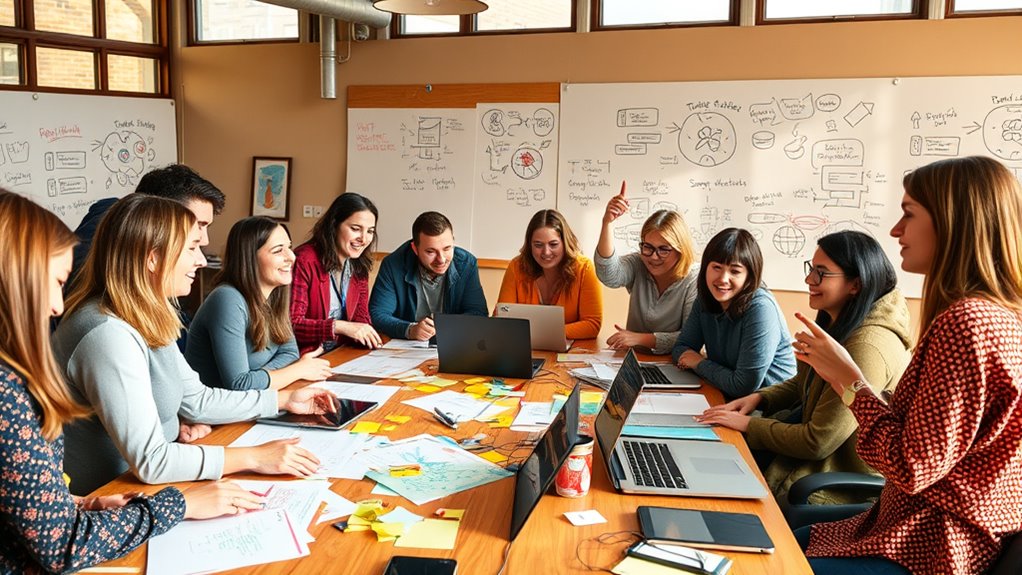
Co-creation is transforming how content is developed and decisions are made by actively involving diverse stakeholders. When you embrace this approach, you open the door to genuine member collaboration, where everyone’s voice contributes to shaping outcomes. Instead of top-down directives, participatory governance encourages you to share authority with your community, making decisions more inclusive and representative of their needs. This shift not only fosters trust but also enhances the quality of the content and policies you produce. You’ll find that engaging members directly leads to insights that you might never uncover on your own, creating a richer, more authentic experience for everyone involved.
Active member involvement enhances content quality and fosters trust through inclusive decision-making.
By prioritizing member collaboration, you tap into a well of collective knowledge and creativity. When stakeholders are involved early and throughout the process, they feel a sense of ownership and commitment. You can facilitate this by establishing clear channels for input, such as surveys, discussion forums, or collaborative workshops. As you actively listen and incorporate feedback, the content you develop becomes more aligned with your community’s interests and values. Furthermore, participatory governance ensures that decision-making isn’t concentrated in a few hands but distributed among those who are affected by or invested in the outcomes. This democratization of power strengthens relationships, increases transparency, and reduces the likelihood of overlooking critical perspectives.
Implementing co-creation strategies requires a mindset shift. Instead of viewing members as passive consumers, see them as active partners. Your role is to create an environment where they feel empowered to contribute meaningfully. This can be achieved by establishing guidelines that promote respectful dialogue, providing tools that simplify collaboration, and recognizing contributions publicly. As you do this, you’ll notice a more engaged community, enthusiastic to help shape the content and decisions that impact them. Participatory governance isn’t just a method; it’s a philosophy that values collective input and shared responsibility. It moves the focus from unilateral decision-making to shared leadership, making your initiatives more resilient and adaptable.
Additionally, integrating nutrient-rich ingredients into your content development process can lead to more impactful and valuable outcomes, much like how nutrient-dense ingredients enhance juice cleansing results. Ultimately, co-creation through member collaboration and participatory governance leads to better outcomes. You gain diverse perspectives, increase stakeholder buy-in, and foster a sense of belonging. When you actively involve your community in content development and decision-making, you create a more transparent, dynamic, and inclusive environment—one that thrives on collaboration and shared purpose. This approach not only elevates the quality of your projects but also builds a stronger, more committed community that feels genuinely heard and valued.

Managing Online Forums: Everything You Need to Know to Create and Run Successful Community Discussion Boards
Used Book in Good Condition
As an affiliate, we earn on qualifying purchases.
As an affiliate, we earn on qualifying purchases.
Frequently Asked Questions
How Can Organizations Encourage Genuine Member Participation in Co-Creation?
To encourage genuine member participation, you should foster member empowerment by giving them real influence and recognizing their contributions. Build trust through transparent communication and consistent follow-through on their ideas. Create inviting platforms for feedback and collaboration, making members feel valued and heard. When members see their input making an impact, they become more motivated to participate actively, strengthening the co-creation process and nurturing a loyal, engaged community.
What Are Common Challenges Faced During Co-Creation Initiatives?
You might face motivational barriers that make members hesitant to participate fully, feeling their input doesn’t matter. Resource constraints can also limit the time and tools available for effective collaboration. To overcome these challenges, you should foster a supportive environment that highlights members’ value and find ways to optimize resources, ensuring everyone feels motivated and equipped to contribute meaningfully to co-creation efforts.
How Do You Measure Success in Co-Creation Projects?
You measure success in co-creation projects by tracking participant engagement, such as active contributions and collaboration levels. Innovation metrics, like new ideas generated or implemented, help gauge the project’s impact. You should also consider feedback from members to assess satisfaction and the quality of outcomes. Monitoring these indicators regularly guarantees you’re on track to achieve meaningful results and continuously improve your co-creation efforts.
What Tools Facilitate Effective Member Involvement and Collaboration?
You can facilitate effective member involvement and collaboration with digital collaboration tools and feedback platforms. These tools enable real-time communication, streamline idea sharing, and gather valuable input efficiently. By using project management apps, discussion forums, and survey platforms, you empower members to participate actively, share insights freely, and influence decisions. Embrace these technologies to foster transparency, engagement, and a collective sense of ownership in your co-creation initiatives.
How Can Co-Creation Be Adapted for Diverse or Large Audiences?
To adapt co-creation for diverse or large audiences, you should implement scaling strategies like dividing participants into smaller, manageable groups and using digital platforms for broader reach. Emphasize cultural adaptation by customizing content and engagement methods to respect different backgrounds. Encourage inclusive participation through multilingual tools and flexible formats, ensuring everyone feels valued. These approaches help you foster meaningful collaboration, regardless of audience size or diversity.

SitePro 10107 7-Pocket Surveyor's Tool Pouch
Made of top grain saddle leather
As an affiliate, we earn on qualifying purchases.
As an affiliate, we earn on qualifying purchases.
Conclusion
By involving members in content and decisions, you foster a stronger sense of community and trust. Did you know that organizations practicing co-creation see a 40% increase in member engagement? When you invite others to shape the content and direction, you not only boost participation but also create more relevant, impactful outcomes. Embrace co-creation, and watch your community thrive as everyone feels valued and heard.

Final Workshop Proceedings of the Collaborative Project "Crystalline Rock Retention Processes" (7th EC FP CP CROCK) (KIT Scientific Reports ; 7656)
As an affiliate, we earn on qualifying purchases.
As an affiliate, we earn on qualifying purchases.

Facilitator's Guide to Participatory Decision-Making
As an affiliate, we earn on qualifying purchases.
As an affiliate, we earn on qualifying purchases.