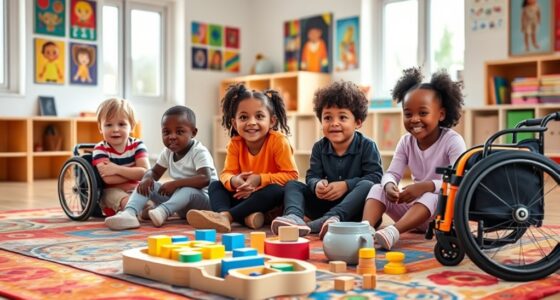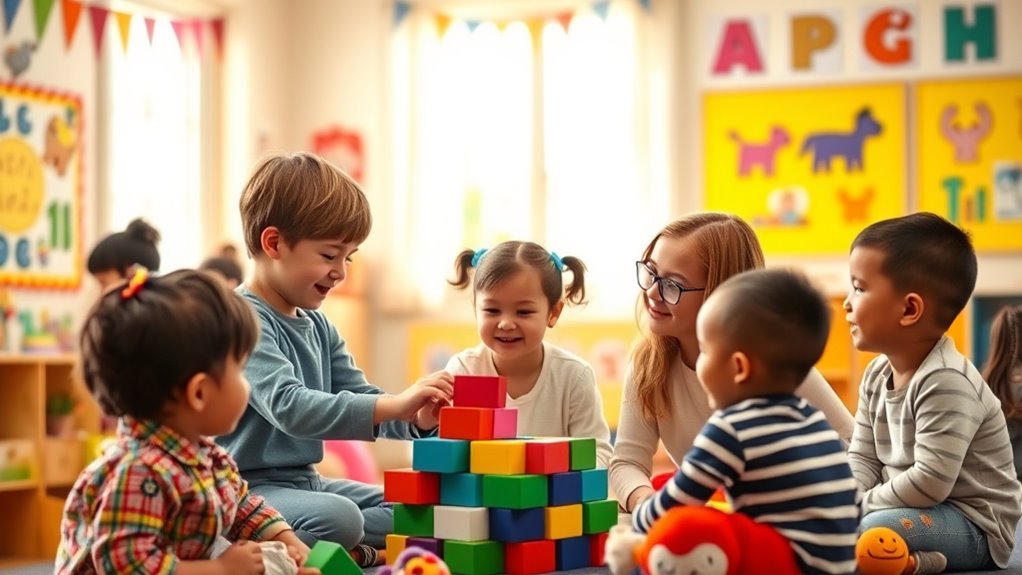

Helping preschoolers develop social skills is key to their growth. You can do this by encouraging positive interactions during play, guiding them to share and take turns, and modeling polite behaviors. Teaching them to express their feelings calmly and understand others helps build empathy and conflict resolution skills. Supporting these social behaviors creates confident, cooperative children. Keep exploring ways to foster social development, and you’ll find plenty of effective strategies to support their future success.
Key Takeaways
- Playground interactions allow preschoolers to practice cooperation, negotiation, and empathy in natural social settings.
- Teaching sharing strategies, such as taking turns and polite requests, fosters friendship and cooperation among children.
- Modeling positive social behaviors and providing consistent reinforcement help internalize respectful interactions.
- Guiding children to express emotions calmly and listen empathetically promotes emotional understanding and conflict resolution.
- Facilitating real-time social experiences builds children’s confidence and social skills essential for their overall growth.
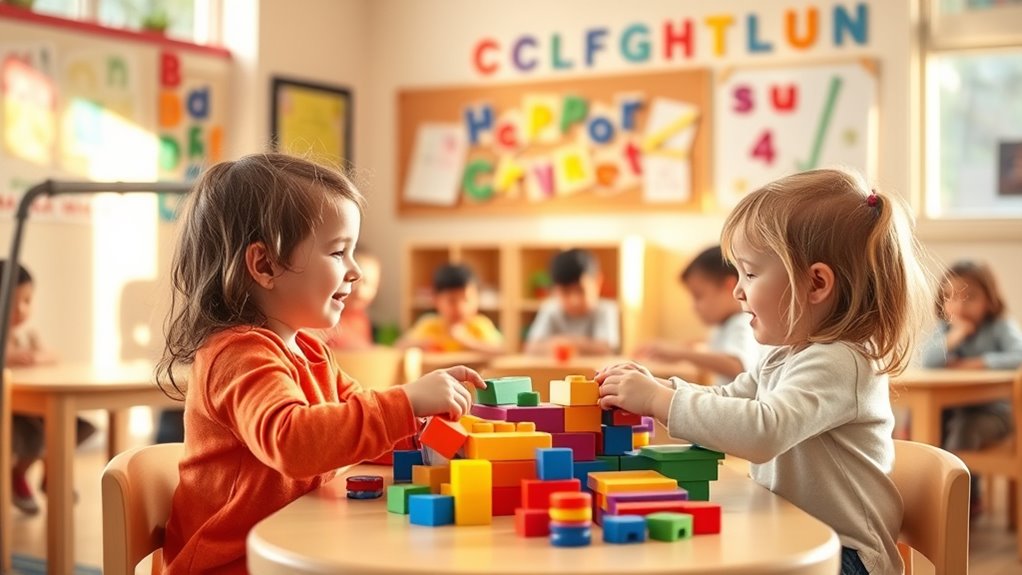
Developing social skills in preschoolers is essential for their overall growth and future success. As you observe young children on the playground, you’ll notice how they navigate interactions with peers, learning critical skills like cooperation, negotiation, and empathy. Playground interactions serve as a natural setting where preschoolers practice these skills in real time, helping them understand social norms and build friendships. Your role is indispensable in guiding children through these moments, encouraging positive behaviors, and helping them develop confidence in their social abilities.
Supporting preschoolers’ social growth through playground interactions fosters cooperation, empathy, and confidence in building friendships.
One effective way to support social skills development during playground interactions is by teaching sharing strategies. Sharing is often a challenging concept for preschoolers, but it forms the foundation for many social interactions. You can introduce simple sharing strategies, such as taking turns, using words to express needs, or offering items willingly. For example, you might suggest that a child asks politely if they can have a turn on the swing or shares their toy with a friend. Reinforcing these behaviors helps children understand that sharing fosters friendship and cooperation, making playtime more enjoyable for everyone.
Incorporating sharing strategies into daily routines isn’t just about telling children what to do; it’s about modeling and practicing these behaviors consistently. When you see a child hesitating to share, you can step in with gentle prompts like, “Can you ask your friend if they’d like to play with that?” or “What can you say to show you’re happy to share?” These cues help children internalize polite and empathetic ways to interact. Praising their efforts when they succeed in sharing encourages them to continue practicing these skills and reinforces positive social behaviors.
Furthermore, nurturing social skills during playground interactions involves helping children understand their emotions and those of others. When conflicts arise, guiding children to express their feelings calmly and listen to their peers fosters emotional intelligence. You might help a child articulate, “I feel upset because I was waiting my turn,” or encourage them to respond kindly, “Can I have a chance next time?” These conversations teach children to resolve disagreements constructively and develop empathy. Additionally, understanding behavioral expectations and how they influence social interactions can further support children’s social growth.
Frequently Asked Questions
How Can Parents Effectively Model Social Behaviors for Preschoolers?
You can effectively model social behaviors for preschoolers by demonstrating positive interactions, like sharing, listening, and using kind words. Reinforce social cues by showing how to read body language and facial expressions, and respond appropriately. Your consistent behavior teaches them valuable lessons, so always use polite conversation and show empathy. When you make social skills a priority, your child learns by example and naturally begins to develop strong, healthy relationships.
What Are Early Signs of Social Skill Delays in Preschoolers?
Imagine a lively playground suddenly quiet; that’s how social withdrawal might appear in your child. Early signs of social skill delays include difficulty making friends, limited eye contact, and struggles with emotional regulation. If your preschooler avoids group activities or becomes easily upset, these could be red flags. Recognizing these cues early helps you support their social growth and seek guidance when needed, fostering healthier interactions down the line.
How Does Screen Time Impact Social Skills Development?
Screen time can hinder your child’s social skills development by reducing face-to-face interactions, which are essential for learning social cues. Excessive digital interactions may impair their emotional regulation, making it harder for them to manage feelings and respond appropriately in social settings. Limiting screen time encourages your child to engage more with peers and adults, fostering better communication, empathy, and emotional understanding essential for healthy social development.
Which Activities Best Promote Sharing and Cooperation?
Think of group play and cooperative games as the seeds that bloom into social skills. You should encourage your preschooler to join activities where they work together, share toys, and solve problems as a team. These experiences teach essential skills like patience, empathy, and turn-taking. By fostering these interactions, you help your child build a sturdy foundation for healthy relationships and social confidence that lasts a lifetime.
How Do Cultural Differences Influence Social Skills Expectations?
Cultural differences shape your preschooler’s social skills expectations through varying cultural norms and social expectations. You might notice that in some cultures, children are encouraged to show independence early, while others emphasize cooperation and respect. These norms influence how children learn to interact, share, and cooperate. By understanding these cultural influences, you can better support your child’s social development, respecting their background and helping them adapt to diverse social settings.
Conclusion
So, congratulations! You’re now officially a social skills guru for preschoolers. Who knew that teaching sharing, turn-taking, and saying “please” could be the secret to world peace? Just remember, your little one’s social skills are a work in progress—kind of like assembling furniture without the instructions. So, keep guiding, keep smiling, and maybe one day, they’ll be running the world… or at least a very polite coffee shop.