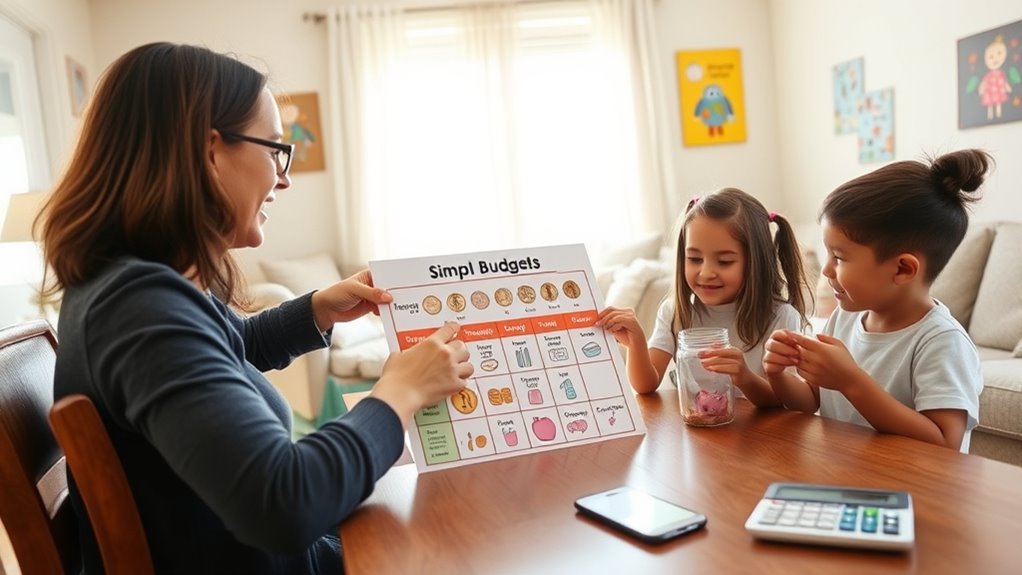

To teach your kids budgeting and financial responsibility, start by giving them regular allowances tied to specific tasks to emphasize earning. Divide their allowance into categories like saving, spending, and giving, and encourage consistent practice. Show them how to set goals, manage limits, and make thoughtful decisions. By involving them in family budgeting and demonstrating responsible spending, you’ll help build lifelong healthy money habits. Keep exploring for more ways to make budgeting fun and educational.

Get the little things that make your day delivered free — and shop member deals
- Fast, free delivery on millions of items
- Access to Prime Big Deal Days deals on October 6–7
- Prime Video, Amazon Music and more included
Key Takeaways
- Use allowances to teach kids how to divide money into saving, spending, and giving categories.
- Involve children in family budgeting discussions to demonstrate real-world financial planning.
- Set clear goals for savings and spending to encourage responsible money management habits.
- Turn saving into interactive challenges or games to boost engagement and develop discipline.
- Model thoughtful spending and budgeting decisions through your own actions to provide practical lessons.
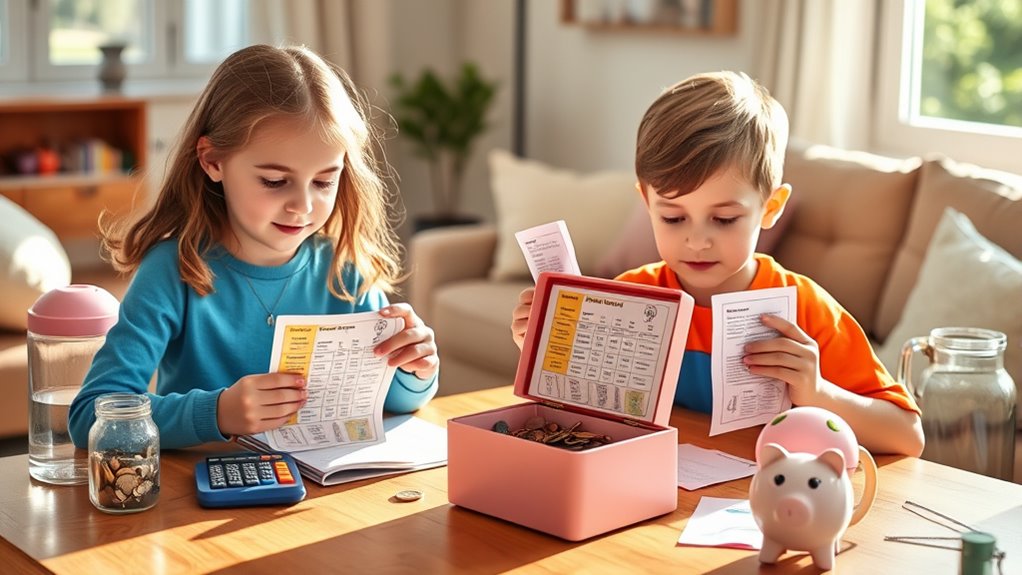
Have you ever wondered how to teach your kids about money in a way that’s both fun and practical? Starting early with clear lessons on budgeting helps your children develop healthy financial habits that last a lifetime. One effective way is through allowance strategies. Instead of giving lump sums with no expectations, consider setting up regular allowances tied to specific tasks or responsibilities. This approach teaches kids the value of earning money and helps them understand how work correlates with income. When you establish consistent allowances, you also open opportunities to discuss budgeting right from the start. For example, you might give a weekly allowance and then guide them on dividing it into different categories: saving, spending, and giving. This not only makes budgeting tangible but also encourages disciplined spending and the importance of saving habits.
Encourage your kids to set aside a portion of their allowance for savings. You can make this fun by turning it into a challenge or game—like aiming to save a certain amount each month or watch their savings grow over time. Reinforcing the idea that saving isn’t just about setting money aside but about planning for future needs helps them understand financial priorities early. You could even introduce a piggy bank or a simple digital account if they’re older. The key is to make saving a regular part of their routine, so it becomes second nature.
Another strategy is to involve your children in family budgeting discussions. Show them how you plan for expenses, set financial goals, and prioritize spending. When they see you making thoughtful decisions, they learn by example. You might also give them a small budget for a personal project or a treat, which teaches them to make choices within limits. This helps them grasp the importance of balancing wants and needs, reinforcing budgeting skills in everyday life.
Frequently Asked Questions
How Early Can I Start Teaching Kids About Budgeting?
You can start teaching kids about budgeting as early as age three. Use simple saving goals and allowance strategies to introduce basic concepts. Encourage them to set small goals, like saving for a toy, and reward their progress. Keep lessons fun and age-appropriate, gradually increasing complexity. This early practice helps kids develop healthy financial habits and understand the value of money, setting a strong foundation for future financial responsibility.
What Tools Can Help Kids Learn About Money Management?
Think of money management as steering a treasure map. Digital apps and interactive games are your compass and tools, guiding your kids through financial terrain. These tools make learning fun, helping them understand saving, spending, and budgeting in an engaging way. By exploring these resources together, you equip your children with essential skills, turning financial lessons into exciting adventures that prepare them for future financial independence.
How Do I Handle Disagreements Over Spending Limits?
You handle disagreements over spending limits by setting clear boundaries from the start and encouraging open dialogue. Explain the reasons behind the limits and listen to your kid’s perspective. Stay calm and patient, and work together to find a compromise that respects their needs while maintaining financial boundaries. Consistent communication helps your child understand the importance of responsible spending and builds trust in managing money effectively.
What Age Is Appropriate for Kids to Manage Their Own Allowance?
Coincidentally, many parents find that children as young as five can handle a small allowance. At this age, you can teach about allowance amounts and spending restrictions through simple choices, like saving or spending. As they grow, you increase responsibility gradually, helping them develop financial awareness. By age eight or nine, kids can manage their allowance more independently, understanding limits and making decisions within set boundaries.
How Can I Make Budgeting Lessons Engaging for Children?
You can make budgeting lessons engaging by using interactive games and real-life simulations. These activities help kids grasp financial concepts in a fun, memorable way. For example, create a mock store where they manage virtual money or simulate a monthly budget for a family. Such hands-on experiences keep children interested, reinforce lessons, and develop practical money skills that stick with them long-term.
Conclusion
Now that you’ve started teaching your kids about budgeting, the real challenge begins. Will they grasp the importance of saving, spending wisely, or fall back into old habits? The choices they make now could shape their financial future in ways you never imagined. Keep guiding, stay involved, and watch as they grow into confident money managers. But remember, the journey to financial responsibility isn’t over yet—you’ll want to see what surprises lie ahead.
Fall Picks
fall essentials
As an affiliate, we earn on qualifying purchases.