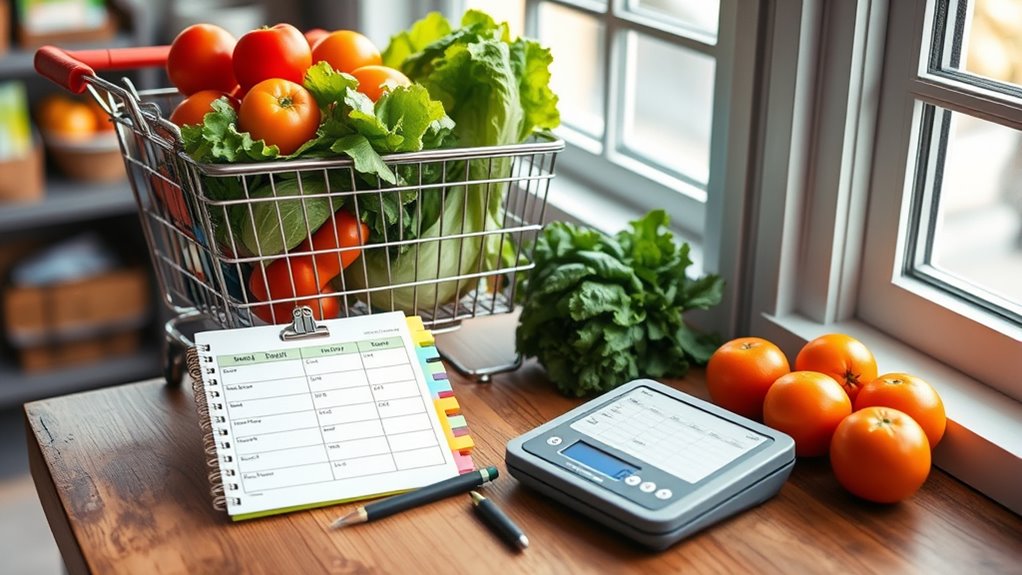

To plan budget-friendly meals and shop smart, start by focusing on versatile pantry staples like rice, beans, and canned tomatoes. Prepare meals in advance and buy in bulk to save money and time. Stick to a shopping list to avoid impulse buys and take advantage of sales and discounts. Proper storage prevents waste, helping your groceries last longer. Keep these tips in mind to maximize savings and enjoy nutritious, satisfying meals on a budget—more helpful ideas await you.

Get the little things that make your day delivered free with Prime
- Fast, free delivery on millions of items
- Prime Video, Amazon Music and more included
- Member-only deals all year
Key Takeaways
- Plan meals around pantry staples and nutritious, cost-effective ingredients to reduce shopping trips and expenses.
- Prepare meals in advance by batching and portioning to save time and prevent last-minute takeout.
- Buy in bulk and store items properly to lower unit costs and extend shelf life.
- Compare prices and take advantage of sales to maximize savings on essential ingredients.
- Dedicate regular meal prep sessions to create a routine that minimizes impulse purchases and food waste.

Are you tired of overspending on groceries and meals that don’t quite fit your budget? If so, it’s time to rethink how you approach meal planning and grocery shopping. One of the most effective strategies is to focus on meal prep and building your pantry staples. When you plan your meals ahead of time, you can buy exactly what you need, avoiding impulse purchases that add up quickly. Meal prep also saves you time during busy weekdays, so you’re not scrambling for last-minute takeout or expensive convenience foods. By dedicating a little time each week to prepare ingredients or entire meals, you stay on top of your budget and reduce food waste.
Start by creating a list of versatile pantry staples. These are ingredients that can be used in numerous recipes, helping you stretch your dollar further. Think rice, pasta, canned beans, lentils, canned tomatoes, and spices. Having these essentials on hand means you can whip up a variety of meals without needing to buy fresh ingredients for every dish. When you know your go-to pantry staples, you can plan meals around what’s already available. This reduces the temptation to buy extra items just because they look appealing at the store—saving both money and space in your pantry.
Create a pantry of versatile staples like rice, beans, and canned tomatoes to save money and simplify meal planning.
Meal prep enables you to prepare larger quantities of food and portion it out for several meals. For example, cooking a big batch of chili or roasted vegetables can provide multiple lunches or dinners. When you have ready-made meals, you’re less likely to resort to costly takeout or convenience foods. Plus, prepped ingredients make it easier to assemble meals quickly during busy days, which keeps you from spending more on last-minute options. The key is to develop a routine that works for you, whether you prep on Sundays or chop vegetables as soon as you get home from shopping. Incorporating proper storage techniques ensures your prepped ingredients stay fresh longer and reduces waste.
Another tip is to buy in bulk when possible, especially for pantry staples. Bulk buying often reduces the unit cost of items like rice, oats, and dried beans. Just make sure you have proper storage to keep these items fresh. Also, compare prices at different stores or online to find the best deals. Keep an eye out for sales and discounts on your essential items, and stock up when prices are low. This way, you’re not only saving money in the long run, but you’re also ensuring you always have the ingredients you need for budget-friendly meals.
budget-friendly pantry staples set
As an affiliate, we earn on qualifying purchases.
As an affiliate, we earn on qualifying purchases.
Frequently Asked Questions
How Can I Reduce Food Waste During Meal Prep?
To reduce food waste during meal prep, you should practice proper food storage tips like using airtight containers and keeping produce at the right temperature. Plan meals to use leftovers creatively and avoid overbuying. Compost food scraps instead of discarding them, which minimizes waste and benefits your garden. Stay organized with your ingredients, and use smaller portions when cooking to prevent excess leftovers, ensuring nothing goes to waste.
Are There Specific Apps for Budget Grocery Shopping?
Think of meal planning apps and grocery budget tools as your personal financial GPS—they guide you straight to savings. Apps like Flipp, Yummly, and Grocery Pal help you find deals and plan meals efficiently. Using these tools, you can track prices, create shopping lists, and avoid impulse buys, making your grocery trips smarter and more budget-friendly. They turn saving money into a simple, everyday habit.
How to Plan Meals for Large Families Affordably?
To plan meals for large families affordably, focus on meal prep strategies like batch cooking and using versatile ingredients. Incorporate family meal ideas that are cost-effective, such as casseroles, soups, and pasta dishes. Plan your weekly menus around sales and seasonal produce. Make a shopping list to avoid impulse buys, and cook in bulk to save time and money, ensuring everyone gets satisfying, budget-friendly meals.
What Are Some Cheap, Nutritious Snack Options?
Imagine a busy afternoon with your kids craving a quick snack. You can offer healthy snacks like apple slices with peanut butter, which is both nutritious and kid-friendly. These options are affordable, easy to prepare, and satisfy hunger without costing much. Opt for whole fruits, veggie sticks, or homemade trail mix to keep your kids energized and healthy while sticking to your budget.
How to Shop for Organic on a Tight Budget?
To shop for organic on a tight budget, focus on versatile organic options like carrots, kale, and apples, which are often more affordable. Buy in bulk when possible and visit local farmers’ markets for deals. Prioritize organic for produce with thin skins or those on the Dirty Dozen list, saving money without sacrificing quality. Use coupons and sales to stretch your budget further.
meal prep containers with portion control
As an affiliate, we earn on qualifying purchases.
As an affiliate, we earn on qualifying purchases.
Conclusion
By planning your meals and shopping smartly, you’ll save money and enjoy tasty, nutritious food without breaking the bank. Think of it like sailing smoothly through a calm sea—you stay on course and avoid unnecessary expenses. Keep a list, stick to your budget, and look for deals. With these simple tips, you’ll make grocery shopping feel easy and even fun, turning your kitchen into a budget-friendly haven every time you shop.
As an affiliate, we earn on qualifying purchases.
food storage containers for leftovers
As an affiliate, we earn on qualifying purchases.
As an affiliate, we earn on qualifying purchases.
Columbus Day / Indigenous Peoples' Day Picks
long weekend sales
As an affiliate, we earn on qualifying purchases.