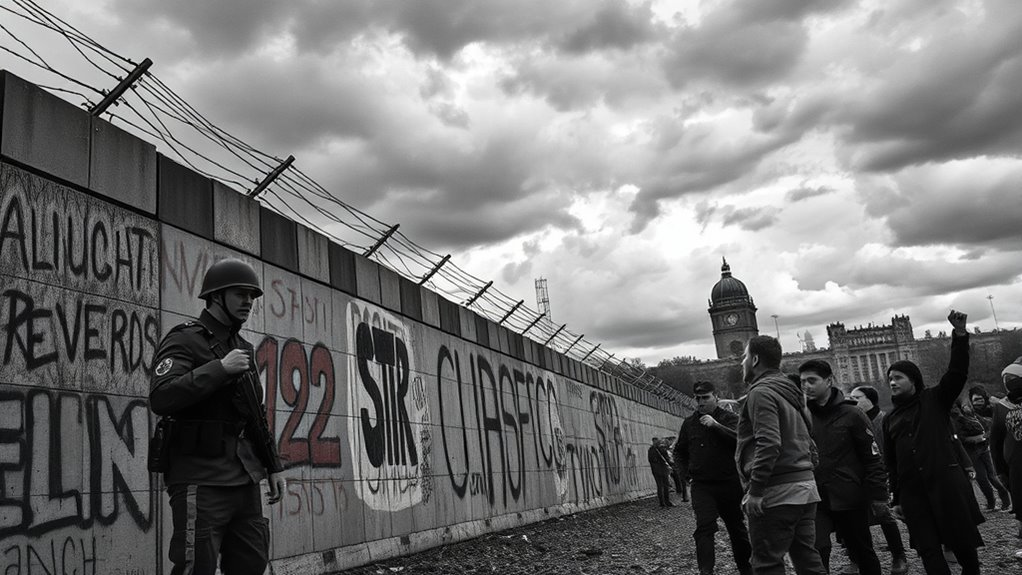

During the Cold War, you saw intense ideological battles between the U.S. and USSR, fueled by the nuclear arms race and the space race. The nuclear arms race led to stockpiling powerful weapons and the fear of mutual destruction. The space race started with Sputnik’s launch, pushing the U.S. to create NASA and aim for the moon. These key events shaped the rivalry’s power struggles—explore further to understand how they defined this tense era.

Get the little things that make your day delivered free with Prime
- Fast, free delivery on millions of items
- Prime Video, Amazon Music and more included
- Member-only deals all year
Key Takeaways
- The nuclear arms race between the U.S. and USSR heightened Cold War tensions through stockpiling and technological competition.
- The Space Race, marked by Sputnik and the moon landing, symbolized ideological and technological supremacy.
- The development and potential use of nuclear weapons created a strategic deterrent that prevented direct superpower conflict.
- Cold War diplomacy was shaped by the competition for influence, military strength, and technological innovation.
- Key events like the Berlin Blockade and Cuban Missile Crisis exemplified ideological battles and geopolitical rivalry.
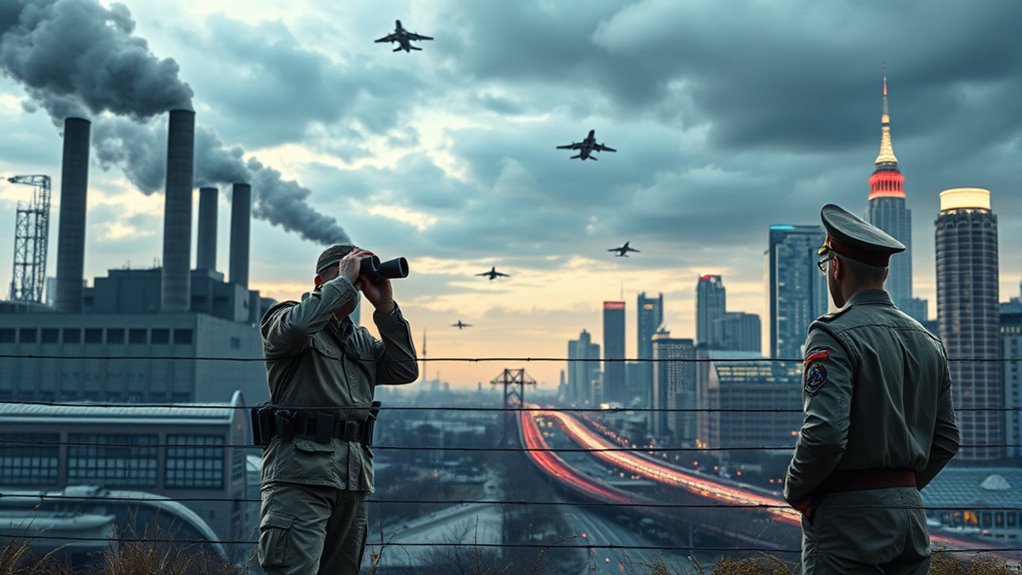
The Cold War was shaped by a series of pivotal events that defined the rivalry between the United States and the Soviet Union. One of the earliest and most significant aspects of this competition was the race to develop nuclear arms. After World War II, both superpowers quickly realized that nuclear weapons would serve as the ultimate deterrent, preventing any direct military confrontation. The U.S. had already dropped atomic bombs on Hiroshima and Nagasaki, showcasing its destructive power, but the Soviets soon caught up with their own nuclear program. By 1949, the USSR tested its first atomic bomb, igniting fears of an all-out nuclear war. This nuclear arms race created a tense standoff, with each side stockpiling increasingly powerful weapons to maintain strategic superiority. You could say that the threat of mutual destruction kept the superpowers from engaging in direct conflict, but it also fueled a constant sense of paranoia and escalation. Nuclear deterrent was central to maintaining a fragile peace during this period.
Simultaneously, the space race emerged as a symbol of technological and ideological competition. The Soviet Union stunned the world in 1957 when it launched Sputnik, the first artificial satellite, into orbit. This achievement signaled that the Soviets had gained a lead in space technology, which was seen as a critical indicator of scientific and military strength. The United States responded swiftly, establishing NASA and pouring resources into space exploration. By 1961, President John F. Kennedy announced the goal of landing a man on the moon, which became a powerful symbol of American ingenuity and determination. You’d see this competition as more than just technological; it was a battle for ideological supremacy, demonstrating which superpower could lead in science and innovation. The space race also had military implications, as advancements in rocketry and satellite technology directly affected missile capabilities and intelligence gathering.
Throughout these events, the development of nuclear arms and the space race reinforced each superpower’s desire to assert dominance while avoiding direct conflict. These efforts created a climate of mutual suspicion, with each side constantly trying to outdo the other. You can understand how these pivotal moments helped define the Cold War’s underlying tensions—an ongoing struggle for influence, power, and ideological superiority. The nuclear arms buildup kept the world on edge, knowing that a single misstep could lead to catastrophic consequences. Meanwhile, the space race became a symbol of national pride and technological dominance. These key events shaped the Cold War’s chapter in history, highlighting the intense rivalry that defined a generation.
Popular right now

Vitamix Propel Series 510 Professional-Grade Blender, 3 Programs, Black

KitchenAid Artisan 5-Quart Tilt-Head Stand Mixer, Almond Cream

Samsung 48-Inch S90H OLED 4K Smart TV (2026)
As an affiliate, we earn on qualifying purchases.
Frequently Asked Questions
How Did the Cold War Influence Modern International Relations?
The Cold War shaped modern international relations by teaching you the importance of diplomatic strategies and economic policies. You see, countries now prioritize alliances, intelligence sharing, and strategic negotiations to ensure security. Economic policies, like sanctions and aid, became tools to influence global behavior. This era’s lessons make you realize that power struggles and ideological differences still impact diplomacy today, guiding how nations interact and compete on the world stage.
What Role Did Espionage Play During the Cold War?
You see espionage played a crucial role during the Cold War, with spies acting like shadows in the night. You’d use espionage tactics and advanced spy technology to gather intelligence, sabotage, and influence global events. These covert operations often determined the balance of power, making espionage a essential tool for both sides. It’s like walking a tightrope—dangerous but essential to stay ahead in the game of international politics.
How Did the Cold War Impact Civilian Populations Worldwide?
During the Cold War, you see civilian populations worldwide experience significant suffering due to conflicts, nuclear threats, and economic pressures. Propaganda campaigns fueled tensions and shaped public opinion, often intensifying fears and mistrust. Civilians faced disruptions in daily life, with some regions experiencing shortages, violence, or military presence. The Cold War’s ideological battles affected everyday people, creating lasting impacts on societies, families, and national identities across the globe.
Were There Any Covert Military Interventions During the Cold War?
Yes, there were covert military interventions during the Cold War. You see, nations carried out clandestine operations and secret missions to influence other countries’ politics and prevent the spread of opposing ideologies. These actions often involved espionage, sabotage, and supporting rebel groups or puppet governments. Such covert efforts played a pivotal role in shaping events without public knowledge, highlighting the secretive and strategic nature of Cold War conflicts.
How Did Cultural Exchanges Shape Cold War Diplomacy?
Cultural exchanges played a vital role in Cold War diplomacy by promoting cultural diplomacy and fostering mutual understanding. You see, these exchanges allowed both sides to showcase their culture, arts, and ideas, softening tensions. Propaganda campaigns often supported these efforts, aiming to win hearts and minds. By sharing music, film, and educational programs, you helped build bridges, making diplomacy more effective and less confrontational, ultimately reducing the risk of conflict.
Conclusion
As you reflect on the Cold War’s tumultuous history, you’ll realize it shaped the very fabric of global politics more profoundly than any other conflict. The ideological battles, nuclear brinkmanship, and espionage wars didn’t just influence nations—they redefined humanity’s destiny itself. This era’s events, like a thunderclap echoing through time, serve as a reminder that humanity’s capacity for both destruction and ingenuity knows no bounds. Truly, it was a clash for the ages, echoing forever in history’s halls.