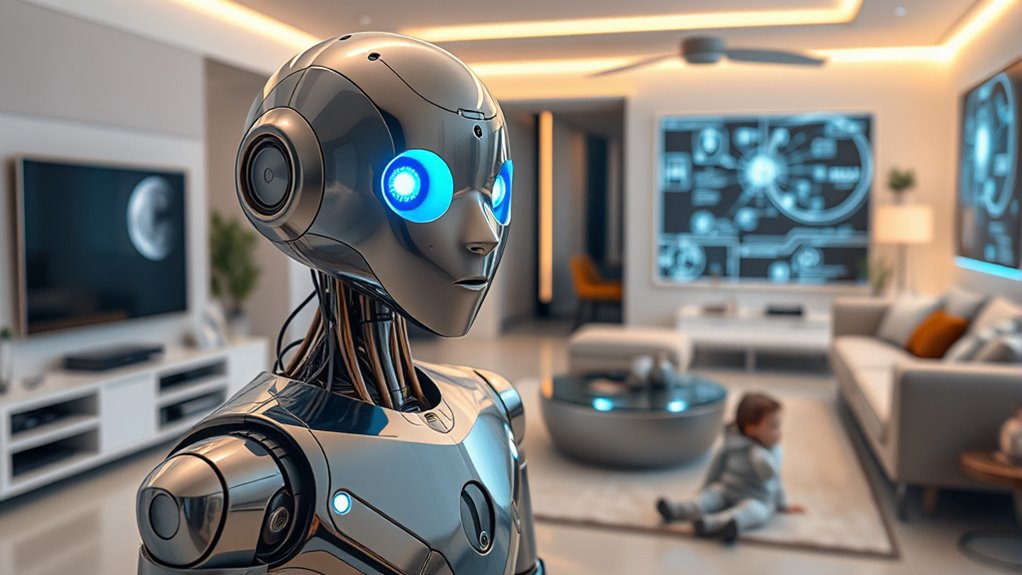

The future of robotics is shifting from factory automation to becoming personal and social partners in your daily life. As robots gain autonomy and better decision-making, they’ll help with tasks at home, in neighborhoods, or during errands. Ethical considerations and transparency will guide their responsible integration, ensuring safety and trust. If you keep exploring, you’ll discover how these advancements will reshape everyday interactions and redefine what it means to coexist with intelligent machines.

Get the little things that make your day delivered free — and shop member deals
- Fast, free delivery on millions of items
- Access to Prime Big Deal Days deals on October 6–7
- Prime Video, Amazon Music and more included
Key Takeaways
- Robots are increasingly transitioning from industrial settings to personal and social environments, enhancing daily life.
- Autonomous movement and decision-making enable robots to navigate complex, dynamic personal spaces effectively.
- Ethical frameworks and transparency are crucial for responsible integration and building user trust in personal robots.
- Advances in algorithms and standards ensure safe, reliable, and socially acceptable robot behaviors at home.
- The future of robotics hinges on balancing technological innovation with moral responsibility for seamless human-robot coexistence.

Have you ever wondered what the future holds for robotics? As technology advances, robots are becoming more integrated into our daily lives, moving beyond industrial settings into personal and social spheres. One key area shaping this future is robot ethics, which addresses how robots should behave and interact with humans responsibly. As robots gain autonomy, especially with developments in autonomous movement, questions about safety, decision-making, and moral responsibility become increasingly important. You’ll see robots that can steer through complex environments on their own, whether guiding autonomous vehicles through busy streets or assisting in homes. This capability relies heavily on sophisticated algorithms that allow robots to interpret their surroundings, make real-time decisions, and adapt to changing conditions.
With autonomous movement, robots can perform tasks more efficiently and safely, reducing human error and increasing productivity. Imagine a robot delivering packages in your neighborhood or helping elderly people by traversing their homes independently. But as these robots become more autonomous, society must grapple with issues of robot ethics. For example, should a delivery robot be programmed to prioritize its safety over a pedestrian’s? How do we guarantee robots make morally sound choices when faced with dilemmas? These questions highlight the importance of establishing clear ethical frameworks to guide robot behavior, ensuring they act in ways that align with societal values.
You’ll also notice that as robots take on more complex roles, transparency becomes essential. People need to understand how decisions are made, especially in situations where the robot’s actions could impact safety or well-being. Developers are working to create standards and regulations that govern robot ethics, promoting responsible innovation. This includes programming robots with safety protocols, fail-safes, and ethical decision-making algorithms to prevent harm and foster trust.
Furthermore, the development of color accuracy and contrast ratio in projectors can serve as an analogy for the importance of transparency and calibrated decision-making in autonomous robots, ensuring they operate with clarity and reliability. Looking ahead, the integration of robot ethics into autonomous movement systems will be indispensable for widespread acceptance. As robots become more autonomous, your confidence in their ability to act ethically and safely will influence how quickly they’re adopted in everyday life. The future of robotics hinges on balancing technological innovation with ethical responsibility, ensuring that these machines complement human endeavors without compromising safety or moral standards. So, as you witness robots steering through your world more seamlessly, remember that ongoing discussions about robot ethics are essential to shaping a future where humans and robots coexist harmoniously.
Frequently Asked Questions
How Affordable Will Personal Robots Become for Everyday Consumers?
Personal robots will become more affordable for everyday consumers as technology advances and production costs decrease. You’ll see robot affordability improve considerably, making them more accessible for household chores, companionship, and assistance. As a result, consumer adoption will rise rapidly, especially with competitive pricing and innovative features. You’ll likely find personal robots within your budget soon, transforming daily life and making automation part of your routine.
What Safety Measures Are in Place for Autonomous Robotic Systems?
You can trust that robot safety is prioritized through strict autonomous protocols that guarantee safe operation. These systems include obstacle detection, emergency stop features, and real-time monitoring to prevent accidents. Manufacturers continuously update security measures to address potential risks. By adhering to safety standards, autonomous robotic systems are designed to protect you and those around you, making them reliable companions in both homes and workplaces.
How Will Robotics Impact Employment Across Various Industries?
Robotics will reshape employment like a tidal wave, pushing you to adapt your skills or risk being left behind. A growing robot workforce might replace repetitive tasks but also creates new roles requiring advanced skills. Embrace continuous learning to stay afloat, as industries evolve and demand more tech-savvy workers. Your ability to adapt will determine whether you ride the wave or drown in its wake.
What Ethical Considerations Arise From Human-Robot Interactions?
You should consider privacy concerns and emotional boundaries when interacting with robots. As robots become more personal, they might collect sensitive data, risking your privacy. You also need to set clear emotional boundaries, ensuring you’re not overly dependent on machines for companionship. Ethical considerations include respecting your privacy rights and maintaining human connection, so you stay in control and avoid potential emotional manipulation or harm from overly human-like interactions.
Will Robots Be Able to Understand and Replicate Human Emotions?
Did you know that by 2030, AI systems are expected to display advanced emotional intelligence? Robots are increasingly capable of understanding and replicating human emotions through empathy development algorithms. While they may not fully grasp feelings like humans do, they can recognize emotional cues and respond appropriately. This progress helps improve human-robot interactions, making robots more empathetic partners in personal and professional settings.
Conclusion
As you journey into the jubilant and transformative world of robotics, remember that innovation ignites infinite possibilities. From industrial automation to intimate personal assistance, robots revolutionize your routines and reshape your reality. Embrace the evolution enthusiastically, as technology teases a tomorrow where tools transform into trusted teammates. Let’s look forward to a future filled with fantastic feats, fearless advancements, and friendly machines that make your life more manageable, meaningful, and marvelously modern.
NFL season / tailgating Picks
team gear
As an affiliate, we earn on qualifying purchases.