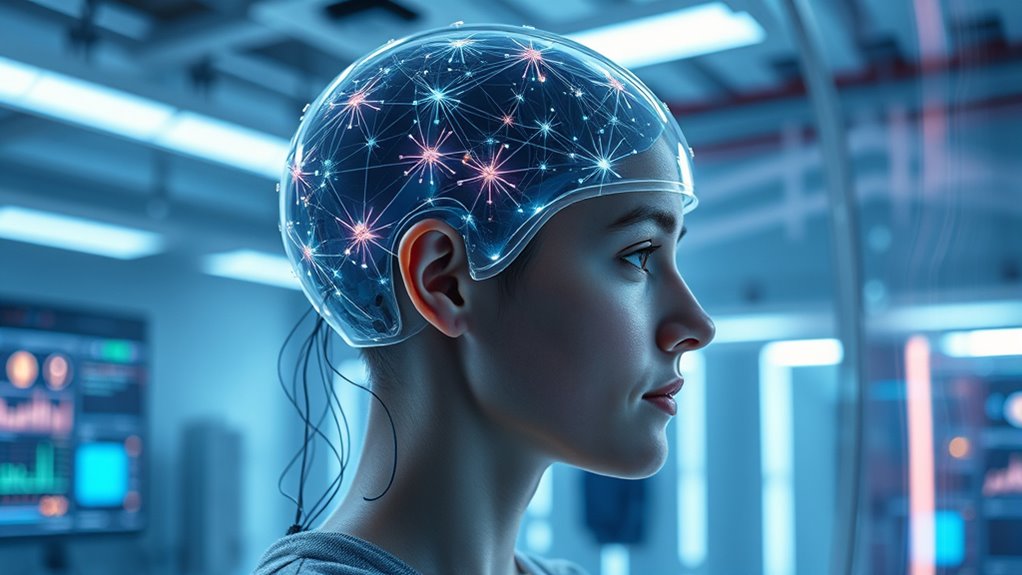

Neural interfaces are revolutionizing how you connect with technology by translating your brain signals into commands, enabling seamless communication and control of prosthetics or computers. They promise more natural, real-time interactions, but also raise ethical questions about privacy, consent, and long-term societal impacts. As these systems advance, they could enhance cognitive abilities or create disparities. Exploring this rapidly evolving field reveals both incredible potential and important challenges you should understand.

Get the little things that make your day delivered free with Prime
- Fast, free delivery on millions of items
- Prime Video, Amazon Music and more included
- Member-only deals all year
Key Takeaways
- Neural interfaces enable direct brain-computer communication, allowing seamless control of prosthetics and external devices.
- Advances in neural decoding algorithms improve real-time interpretation of complex brain signals.
- Ethical considerations, including privacy and consent, are critical for responsible development of neural interface technology.
- Future neural interfaces may enhance cognitive functions and restore lost abilities, raising societal and ethical questions.
- Responsible innovation ensures technological progress aligns with human rights, safety, and societal well-being.
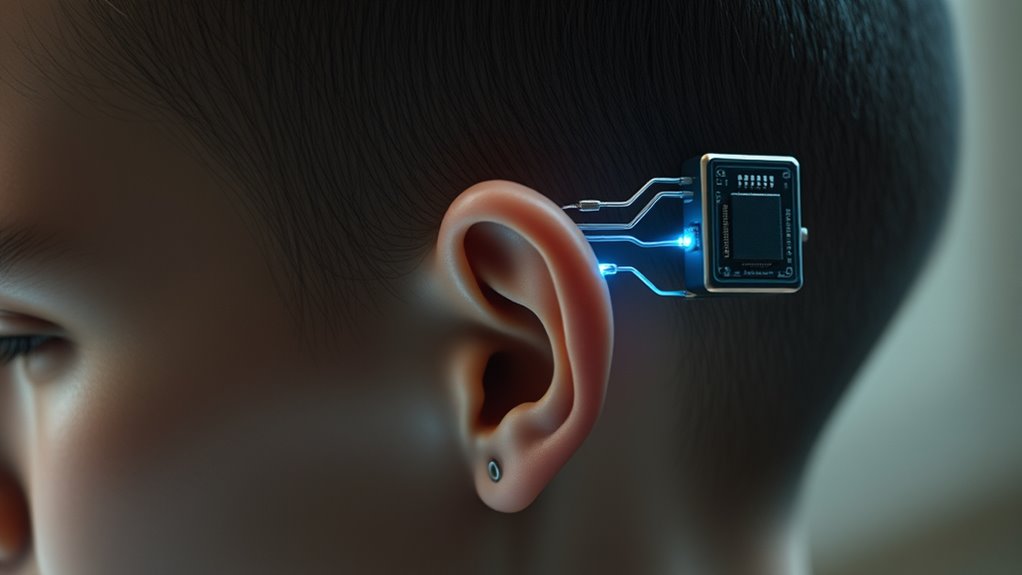
Neural interfaces are devices that connect the human brain directly to computers or other electronic systems, enabling seamless communication between the two. At the heart of this technology lies neural signal decoding, which involves translating complex electrical signals generated by neurons into meaningful data that computers can interpret. When you think about controlling a prosthetic limb with your mind or communicating silently via a brain-computer interface, neural signal decoding makes this possible by interpreting your brain’s activity in real time. This process requires sophisticated algorithms that can filter out noise, identify patterns, and accurately map neural signals to intended actions. As you explore these systems, you’ll see how vital precise neural decoding is to ensuring smooth and intuitive interactions, making neural interfaces more natural and effective.
However, as you delve deeper into neural interfaces, ethical considerations come into sharp focus. These devices hold immense promise, but they also raise questions about privacy, consent, and autonomy. For instance, decoding neural signals involves accessing very personal information—the thoughts, feelings, or intentions stored within your brain. Who owns this data? How securely is it protected? You might worry about potential misuse or hacking, which could lead to unauthorized access to your neural information. Furthermore, as neural interfaces become more integrated into daily life, issues of informed consent become critical. Will users fully understand the implications of sharing their brain data? Could there be pressure or coercion to adopt such technology, especially in sensitive contexts like military or corporate environments? These ethical challenges demand careful regulation and transparent practices to prevent exploitation and protect individual rights.
In addition, the prospect of altering or enhancing brain functions raises concerns about the boundaries between therapy and augmentation. While neural interfaces might help treat neurological disorders, their application for cognitive enhancement could blur ethical lines, creating disparities between those with access to such technology and those without. You must also consider the long-term societal impacts—how widespread neural interface use could reshape concepts of identity, agency, and human experience. It’s essential that developers, policymakers, and users work together to establish ethical guidelines that prioritize safety, privacy, and respect for personal autonomy. As you contemplate the future of neural interfaces, remember that responsible innovation isn’t just about technological breakthroughs but also about safeguarding fundamental human values. Balancing progress with ethical integrity will ensure this exciting field benefits everyone without compromising individual rights or societal norms.
Popular right now

Vitamix 5200 Professional-Grade Blender, 64 oz. Container, Black

Bose QuietComfort Wireless Noise-Cancelling Over-Ear Headphones, Black

Roborock Robot Vacuum and Mop with LiDAR Navigation and 10,000 Pa Suction
As an affiliate, we earn on qualifying purchases.
Frequently Asked Questions
Can Neural Interfaces Enhance Human Cognitive Abilities Permanently?
Yes, neural interfaces can enhance your cognitive abilities permanently through mental augmentation and cognitive enhancement. By directly connecting to your brain, these interfaces can improve memory, focus, and problem-solving skills over time. While some effects might be lasting, ongoing research aims to guarantee safety and durability. With advancements, you could experience significant, lasting boosts in mental performance, transforming how you learn and process information daily.
What Are the Risks of Long-Term Neural Interface Implantation?
Long-term neural interface implantation poses significant risks; studies show that biocompatibility issues occur in up to 30% of cases, leading to inflammation or device failure. You might face challenges with device longevity, as implants can degrade or become less effective over time. These risks mean you should carefully consider potential complications, including tissue damage and immune responses, before opting for permanent brain-computer interfaces.
How Affordable Will Neural Interface Technology Become in the Future?
You’ll likely see neural interface technology become more affordable as cost reduction efforts improve manufacturing processes and materials. This will expand accessibility, allowing more people to benefit from brain-computer communication devices. As demand grows and innovation continues, prices should drop, making neural interfaces a realistic option for a broader population. In the future, expect these devices to be more mainstream, affordable, and easier to access, transforming how we connect with technology.
Will Neural Interfaces Enable Direct Mind-To-Mind Communication?
Yes, neural interfaces could enable direct mind-to-mind communication, allowing you to share thoughts or emotions instantly. Imagine a case where two people transmit feelings of happiness or sadness directly, bypassing words. This thought transmission and emotional sharing could revolutionize relationships and understanding. As technology advances, neural interfaces will likely become sophisticated enough to facilitate seamless, real-time communication between brains, transforming how humans connect and empathize.
Are There Ethical Concerns Regarding Neural Data Privacy?
Yes, there are significant ethical concerns about neural data privacy. You need to guarantee informed consent, so users truly understand what data is collected and how it’s used. Data security is essential to protect sensitive neural information from hacking or misuse. As neural interfaces develop, you must prioritize transparency and strong safeguards to prevent privacy breaches and maintain trust in this emerging technology.
Conclusion
Imagine your mind as a vast, uncharted ocean, and neural interfaces as the lighthouse guiding your thoughts safely ashore. As you embrace this technology, you become the sailor steering new horizons of connection and understanding. These interfaces are the beacon illuminating the depths of human potential, transforming the way you communicate with machines—and perhaps, someday, with each other. With each step forward, you’re charting a course toward a future where mind and machine unite seamlessly.