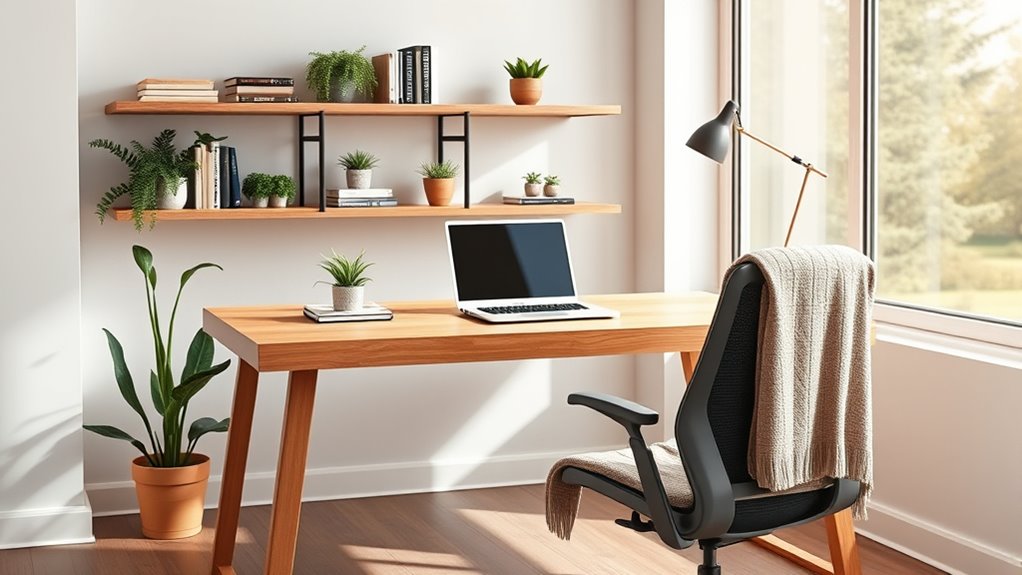

To create a productive home office, focus on ergonomic furniture that supports proper posture and comfort throughout the day. Enhance your space with good lighting, preferably natural light, and adjustable artificial lights to reduce eye strain. Keep your workspace organized, placing essential tools within easy reach and minimizing clutter for mental clarity. Guarantee a comfortable environment by managing noise and temperature, making your home office inviting and efficient. Keep exploring for more tips to optimize your remote work setup.

Get the little things that make your day delivered free — and shop member deals
- Fast, free delivery on millions of items
- Access to Prime Big Deal Days deals on October 6–7
- Prime Video, Amazon Music and more included
Key Takeaways
- Invest in ergonomic furniture to support proper posture and reduce physical strain during long work sessions.
- Maximize natural light and use adjustable artificial lighting to enhance focus and reduce eye fatigue.
- Organize essential tools within arm’s reach and keep the workspace tidy to minimize distractions and boost efficiency.
- Maintain a comfortable environment with proper ventilation and noise control for sustained concentration.
- Incorporate personal touches and a balanced layout to create an inviting space that promotes motivation and well-being.

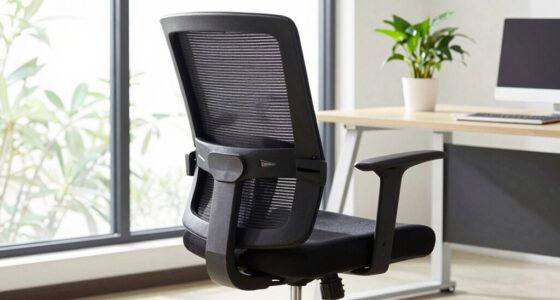
Working from home can boost your productivity and work-life balance, but only if your space is set up effectively. The foundation of a successful home office starts with choosing the right ergonomic furniture. Investing in a good chair and desk can make all the difference in maintaining comfort and preventing strain during long work sessions. An ergonomic chair supports your lower back and encourages proper posture, reducing the risk of discomfort or injury. Your desk should be at a height that allows your arms to rest comfortably and your feet to touch the floor or a footrest. When your furniture fits your body, you’ll stay focused longer and experience fewer interruptions caused by pain or fatigue.
Choosing ergonomic furniture helps you stay comfortable, focused, and injury-free during long work sessions at home.
Lighting solutions are equally important for creating a productive workspace. Natural light is ideal, so position your desk near a window if possible. Sunlight boosts your mood and helps regulate your circadian rhythm, making you feel more alert during the day. If natural light isn’t enough or isn’t available, supplement with well-designed artificial lighting. Use a combination of overhead lights and task lighting, such as a desk lamp, to ensure your workspace is evenly illuminated. Avoid harsh fluorescent lights or overly dim settings, as they can cause eye strain and fatigue. Adjustable lighting allows you to customize your environment based on the time of day and your specific needs, keeping you comfortable and focused.
Arrange your workspace to minimize distractions and optimize efficiency. Keep your essential tools within arm’s reach—your computer, notepad, and any frequently used supplies—so you aren’t constantly getting up or searching for items. Clear clutter from your desk to promote a sense of order and calm. A tidy environment helps your mind stay clear and focused on your tasks. Consider adding personal touches, like plants or artwork, to make the space inviting without overwhelming it. These small elements can boost your mood and make you more motivated to work. Additionally, understanding city dynamics can help you create a workspace that aligns with your daily routine and neighborhood environment.
Finally, pay attention to your overall environment. Sound can be distracting, so consider noise-canceling headphones or a white noise machine if your home isn’t quiet. Temperature and ventilation also matter; a comfortable climate keeps you energized and prevents sluggishness. By thoughtfully combining ergonomic furniture, effective lighting solutions, and a well-organized setup, you create a home office that promotes productivity and supports your well-being. When your workspace is tailored to your needs, you’ll find it easier to stay motivated, efficient, and balanced in your remote work journey.
As an affiliate, we earn on qualifying purchases.
Frequently Asked Questions
How Can I Reduce Distractions in My Home Office?
To reduce distractions in your home office, focus on noise control by adding rugs, curtains, or noise-canceling headphones. Implement organizational strategies like decluttering your workspace and using storage solutions to keep your area tidy. Establish boundaries with family or roommates during work hours, and set specific times to check emails and social media. These steps help create a focused environment, boosting your productivity and minimizing interruptions.
What Are the Best Ergonomic Tools for Remote Work?
You should invest in ergonomic accessories like adjustable chairs, keyboard and mouse supports, and monitor stands to improve your posture and reduce strain. These tools help you maintain proper alignment, preventing discomfort during long work sessions. Prioritize items designed for posture improvement, ensuring your workspace supports healthy ergonomics. This not only boosts comfort but also enhances productivity and focus throughout your remote workday.
How Do I Balance Work and Personal Life at Home?
To balance work and personal life at home, prioritize time management by setting clear schedules and sticking to them. Establish strong boundaries by designating specific work hours and a dedicated workspace, so you can disconnect after hours. Communicate these boundaries to colleagues and family, ensuring they respect your work time. This approach helps you stay productive while also enjoying personal moments, creating a healthier work-life balance.
What Lighting Options Improve Productivity in a Home Office?
You’ll feel like a productivity superhero with the right lighting! Maximize natural lighting to flood your space with energizing brightness, making your tasks seem effortless. Add smart bulbs to customize your environment, shifting from dull to dynamic with just a tap. These lighting options boost focus and mood, turning your home office into a powerhouse of efficiency. Say goodbye to eye strain and hello to endless motivation!
How Can I Personalize My Workspace Without Clutter?
You can personalize your workspace by incorporating personal decor that reflects your style, like photos or small art pieces, while keeping decor organization in mind. Use stylish storage solutions to hide clutter and maintain a clean look. Add a few meaningful items that motivate you, but avoid overcrowding. This balance creates a personalized, inspiring environment that stays tidy and boosts your productivity.
adjustable desk lamp for workspace
As an affiliate, we earn on qualifying purchases.
As an affiliate, we earn on qualifying purchases.
Conclusion
Your home office is more than just a workspace; it’s a reflection of your dedication and balance. By creating a space that inspires you, you plant the seeds of productivity and well-being. Remember, a well-designed office is like a compass guiding you toward success, reminding you that your environment shapes your mindset. When you nurture this space, you nurture your growth—turning everyday effort into a journey of achievement and fulfillment.
standing desk with height adjustment
As an affiliate, we earn on qualifying purchases.
As an affiliate, we earn on qualifying purchases.
desk organizer for office supplies
As an affiliate, we earn on qualifying purchases.
As an affiliate, we earn on qualifying purchases.
Fall Picks
fall essentials
As an affiliate, we earn on qualifying purchases.