
Phygital experiences blend physical and digital design to create immersive, multisensory interactions. You interact with digital elements layered seamlessly onto the real world, using touch, sight, and sound to deepen your connection. These environments are intuitive and fluid, making you feel more present and engaged. By combining sensory cues and intelligent design, they transform perception and interaction. Keep exploring, and you’ll discover how this innovative approach is shaping the future of seamless, engaging experiences.
Key Takeaways
- Phygital experiences integrate digital elements with physical spaces to create seamless, immersive interactions.
- Sensory engagement, including touch, sight, and sound, enhances the connection between physical and digital environments.
- Designing intuitive AR environments involves complementing physical spaces with digital cues and multisensory feedback.
- Multisensory cues in phygital design boost emotional impact, memorability, and user engagement.
- Future trends focus on blending digital innovation with sensory experiences to transform perception across various industries.
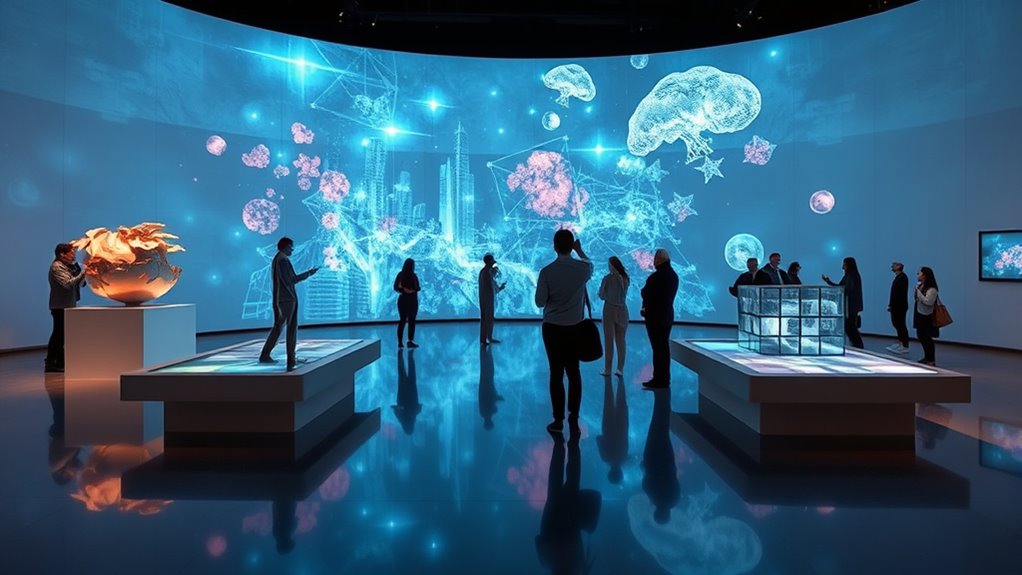
Have you ever wondered how the line between the physical and digital worlds is blurring? Today, you’re at the forefront of a revolution where Augmented Reality (AR) transforms everyday experiences, making them more immersive and engaging. With AR, digital elements are layered onto the real world, allowing you to see, hear,, and interact with virtual objects as if they’re part of your physical environment. This blending isn’t just about viewing; it’s about sensory engagement—stimulating multiple senses to create a seamless, enthralling experience. Imagine walking through a store where products come alive with interactive displays, or exploring a museum where exhibits tell stories through AR overlays. These are no longer distant possibilities but realities shaping how you perceive and interact with your surroundings.
The power of sensory engagement in phygital experiences enhances your connection with both the physical and digital worlds. When you use AR, your senses become the bridge, enriching your perception and making interactions feel more natural. Touch, sight, sound—these elements work together to deepen your engagement. For example, when trying on virtual clothes, you don’t just see how they look; you might also hear the rustle of fabric or feel as if you’re physically interacting with the material. This multisensory approach heightens your emotional response, making digital interactions more memorable and meaningful. It’s about creating a sense of presence, so that digital enhancements don’t feel alien but integrated into your real-world experiences.
Designing phygital environments with AR involves careful attention to how digital elements complement physical spaces. It’s about crafting experiences that are intuitive and fluid, removing barriers between the virtual and tangible. When you step into a retail store with AR features, you’re not just browsing; you’re engaging in an interactive journey where digital cues guide your decisions effortlessly. Sensory engagement plays a vital role here—haptic feedback, spatial audio, and visual cues work together to make the experience feel organic, not contrived. As a user, you become an active participant rather than a passive observer, which increases your immersion and satisfaction. Additionally, the integration of multisensory engagement can elevate these experiences, making them even more compelling and memorable.
In essence, the success of phygital experiences hinges on how well designers can fuse digital innovation with sensory engagement. When done right, AR doesn’t just add a layer of information; it transforms your perception, making digital and physical worlds feel like a cohesive whole. This fusion opens up endless possibilities for entertainment, commerce, education, and beyond. It’s about creating environments where you don’t just observe but truly feel connected—where the line between real and virtual dissolves, and you become part of a seamless, interactive universe.

RayNeo Air 4 Pro AR/XR Glasses, HDR10 201" Virtual Display, 120Hz 3D Movie & Gaming Video Display, USB-C Plug & Play for iPhone 17/16/15, Android, Switch 2, PS5, Steam Deck
HDR10 AR Glasses with 201” Virtual Screen – Experience over 10 billion colors and ultra-deep contrast on a…
As an affiliate, we earn on qualifying purchases.
As an affiliate, we earn on qualifying purchases.
Frequently Asked Questions
How Do Companies Measure Success in Phygital Experiences?
You measure success in phygital experiences by tracking customer engagement and brand loyalty. If customers interact more with your brand across both physical and digital channels, it shows increased engagement. Additionally, higher repeat visits, positive feedback, and loyalty program participation indicate strong brand loyalty. These metrics help you understand if your phygital initiatives effectively create seamless, memorable experiences that resonate with your audience.
What Are the Biggest Challenges in Integrating Physical and Digital Elements?
You face challenges like sensor integration, making certain digital elements seamlessly connect with physical ones. User engagement can drop if interactions feel clunky or disconnected. To succeed, you need to focus on smooth technology integration, intuitive design, and creating immersive experiences that captivate users. Overcoming these hurdles ensures your phygital experience feels natural, engaging, and valuable, encouraging users to interact more deeply with both physical and digital components.
How Can Small Businesses Implement Effective Phygital Strategies?
To implement effective phygital strategies, focus on retail innovation that enhances customer engagement. You can start by integrating simple digital tools like QR codes or mobile apps into your physical space, making interactions seamless. Personalize experiences based on customer data and preferences, and train staff to support digital interactions. These steps will help you create a unified experience, boost loyalty, and stand out in a competitive market.
What Emerging Technologies Are Shaping the Future of Phygital Design?
Imagine stepping through a doorway into a new world—augmented reality and the Internet of Things are making this possible. These emerging technologies shape the future of phygital design by seamlessly blending physical and digital layers, creating immersive experiences. You’ll see AR enhance retail displays and IoT connect devices for smarter interactions. Embrace these innovations to captivate your audience and stay ahead in the evolving landscape of experiential design.
How Do Privacy Concerns Impact Phygital Experience Development?
Privacy concerns greatly impact phygital experience development because you need to prioritize data security and obtain clear user consent. If you don’t, users may distrust your platform, leading to reduced engagement and potential legal issues. By implementing robust security measures and transparent consent processes, you build trust, ensuring users feel safe sharing their data. This approach not only complies with regulations but also enhances their overall experience, fostering loyalty and confidence.

Logitech MX Master 4, Ergonomic Wireless Mouse with Advanced Performance Haptic Feedback, Ultra-Fast Scrolling, USB-C Charging, Bluetooth, Windows, MacOS – Graphite
Precision you can feel with the Haptic Sense Panel; customizable (1) haptic feedback on specific actions, shortcuts, notifications…
As an affiliate, we earn on qualifying purchases.
As an affiliate, we earn on qualifying purchases.
Conclusion
By blending physical and digital design, you create experiences that feel seamless and immersive—like a bridge connecting two universes. Don’t underestimate the power of phygital experiences; they’re the gateway to deeper engagement and innovation. As you venture into this domain, remember: the future isn’t just digital or physical—it’s the magic that happens when they unite. Embrace the possibilities, and watch your creations come alive in ways you never imagined.

Soundcore Motion X600 Portable Bluetooth Speaker, Hi-Res Spatial Audio with Wireless 50W Sound, IPX7 Waterproof, Pro EQ, AUX-in, Portable Speaker for Home, Office, Backyard and Bathroom Use
Immersive Spatial Audio: Inspired by theater acoustics, Motion X600 has 5 drivers and 5 amplifiers that are positioned…
As an affiliate, we earn on qualifying purchases.
As an affiliate, we earn on qualifying purchases.

YCKJNB 43 inch Indoor Digital Signage LCD Screen IPS Floor Standing Digital Kiosks Interactive Displays with WiFi HDMI/USB Input Auto AD Player, Android OS Black
Dynamic Multi-Screen Design: The upgraded screen playback design perfectly solves the problem of playing pictures and videos at…
As an affiliate, we earn on qualifying purchases.
As an affiliate, we earn on qualifying purchases.