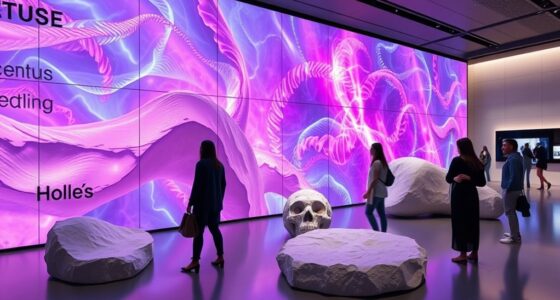
Parallax scrolling makes your website more engaging by adding depth and motion that draw users in. By moving background and foreground layers at different speeds, it creates a sense of immersive storytelling and visual interest. This technique guides attention, evokes emotions, and transforms passive browsing into active exploration. When used thoughtfully, it helps your site stand out and keeps visitors interested longer. Stick around, and you’ll discover how to tap into this powerful design tool effectively.
Key Takeaways
- Parallax scrolling creates depth by moving background and foreground layers at different speeds, enhancing visual engagement.
- It transforms static pages into interactive storytelling tools, guiding user attention and emotional connection.
- Layer effects allow for mood setting, from tranquility to excitement, by controlling movement and layer responses.
- Parallax adds a creative, immersive dimension to layouts, breaking traditional grid limitations and encouraging innovative designs.
- When used thoughtfully, it improves user experience by making scrolling more dynamic, memorable, and emotionally resonant.

Parallax scrolling is a popular web design technique that creates a sense of depth and immersion by moving background and foreground layers at different speeds as you scroll. This method leverages layer effects to craft a dynamic, engaging experience that feels more like an interactive story than a static webpage. When you incorporate parallax, you’re not just adding movement; you’re shaping how users perceive your content, guiding their attention and enhancing your visual storytelling. The layered approach allows you to create a multi-dimensional environment, making your site stand out in a crowded digital landscape.
As you design with parallax, you can experiment with various layer effects to achieve different moods and effects. For example, a subtle shift in background layers can evoke tranquility, while more pronounced movements can generate excitement or curiosity. By carefully controlling how each layer responds to scrolling, you can emphasize specific elements or narratives within your site. This technique provides a tangible sense of depth, making users feel like they’re exploring a world rather than simply scrolling through information. It transforms passive reading into an active experience, encouraging visitors to linger, explore, and engage with your content more deeply.
Using parallax for visual storytelling allows you to communicate complex ideas or narratives seamlessly. You can layer images, text, and interactive elements to lead users through a journey, revealing information gradually and in context. For instance, a product showcase can benefit from parallax by highlighting features as viewers scroll, with background effects adding context or emotion. This storytelling approach isn’t just about aesthetics; it’s about creating an emotional connection. When users experience movement and depth in a way that feels intuitive, they’re more likely to remember your message and associate positive feelings with your brand or content.
Furthermore, parallax scrolling encourages creativity in your layout design. You’re not confined to traditional grid systems; instead, you can craft immersive scenes that unfold as users navigate your site. Layer effects can be synchronized with user actions, making the experience feel more personalized and responsive. This technique also offers opportunities to optimize storytelling for different devices, ensuring that the visual effects enhance rather than hinder usability. When implemented thoughtfully, parallax becomes a powerful tool to communicate your ideas visually, creating a memorable journey that captures attention and sustains interest. Additionally, understanding home theatre projectors can inspire immersive visual elements within your site, elevating the overall user experience.

Citylife 17QT Clear Craft Organizers and Storage Box with Removable Tray
- Multi-layer separation design: Removable tray with 5 compartments
- 17-Quart Capacity: Large storage for various supplies
- Versatile storage solution: Ideal for crafts, tools, and medicines
As an affiliate, we earn on qualifying purchases.
Frequently Asked Questions
How Does Parallax Scrolling Impact Website SEO Performance?
Parallax scrolling can positively impact your website’s SEO performance by boosting user engagement, which search engines favor. When visitors stay longer and interact more with your content, it signals relevance and quality. However, verify your parallax effects are optimized for fast loading and mobile devices. Proper implementation can enhance user experience, leading to increased time on site and better SEO benefits, ultimately helping your site rank higher.
What Are the Best Tools for Creating Parallax Effects?
Imagine you’re crafting a compelling website; you’ll want the best tools. For creating parallax effects, you should explore popular parallax plugins like ScrollMagic and Stellar.js, which simplify implementation. Additionally, animation software like Adobe After Effects or Lottie can help create engaging animations that enhance your design. These tools enable you to produce mesmerizing depth and motion, making your site stand out and keeping users engaged.
Can Parallax Scrolling Be Used Effectively on Mobile Devices?
Yes, you can use parallax scrolling effectively on mobile devices. Focus on mobile responsiveness by optimizing images and animations for smaller screens. Keep touch interaction smooth and intuitive, avoiding overly complex effects that hinder navigation. By simplifying design and ensuring fast load times, you create an engaging experience that maintains depth and motion without overwhelming mobile users. This approach boosts user engagement while maintaining accessibility across all devices.
How Does Parallax Influence Website Load Times?
Parallax scrolling can slow your website load times by up to 20%, making it vital to focus on image optimization and script efficiency. When you optimize images, you reduce file sizes, speeding up load times. Additionally, streamlining scripts ensures smoother motion without sacrificing performance. By balancing visual effects with technical efficiency, you create an engaging experience that loads faster and keeps users engaged.
Are There Accessibility Concerns With Parallax Scrolling?
Yes, parallax scrolling can raise accessibility concerns. If you have a visual impairment, the motion and depth effects might make it harder to focus or navigate your website. Additionally, users can get distracted or overwhelmed by the moving visuals, leading to frustration. To make your site more accessible, consider offering options to disable parallax effects or provide a simpler, static version for those who need it.
Conclusion
By embracing parallax scrolling, you create depth, evoke emotion, and capture attention all at once. You add movement that guides users, foster immersion that keeps visitors engaged, and deliver storytelling that leaves lasting impressions. With each layered element, you enhance experience, inspire curiosity, and elevate your website’s appeal. So, harness the power of parallax scrolling to transform your site into a dynamic journey — where users explore, connect, and stay captivated at every scroll.