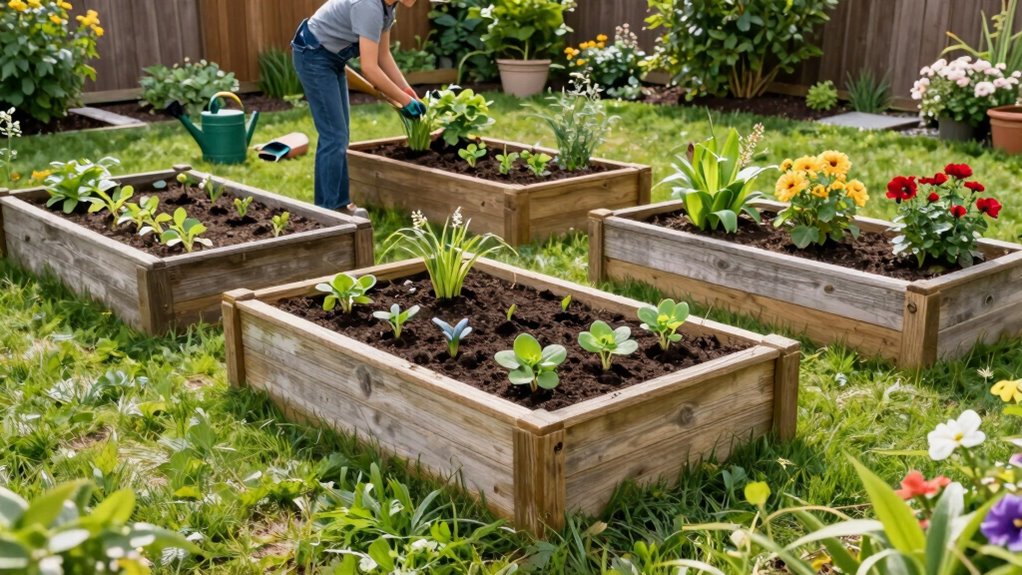
Raised garden beds make gardening easier for beginners by controlling soil quality and reducing the need for soil amendments. They improve drainage, extend your growing season, and act as natural pest barriers. Plus, they’re more accessible, lowering the need to bend or kneel and helping you keep your garden neat and manageable. With better organization and protection, you’ll find gardening less overwhelming and more rewarding. Want to discover more ways they can help you succeed?
Key Takeaways
- Simplifies soil preparation by allowing control over soil quality and composition.
- Provides better pest and weed management through defined borders and elevated height.
- Extends the growing season by warming soil earlier and improving drainage.
- Enhances accessibility, reducing bending and making gardening more comfortable.
- Promotes organized planting, crop rotation, and easier maintenance for beginners.

If you’re new to gardening, raised beds are a great way to get started easily and successfully. They simplify soil preparation since you get to control the quality and composition of the soil from the start. Instead of battling poor native soil, you fill the beds with a mix of compost, peat, and other amendments tailored to your plants’ needs. This means your plants will have better drainage, more nutrients, and less risk of soil-borne diseases, giving you a stronger foundation for a healthy garden. Plus, because the beds are elevated, you won’t have to bend or kneel as much, making gardening more comfortable and accessible.
One of the biggest advantages you’ll notice with raised beds is how they change pest control. The height acts as a natural barrier that can deter common pests like slugs, snails, and even some rodents. You can also add protective coverings, like row covers or netting, more easily around a contained space. This added layer of defense helps reduce the need for chemical pest control, which is better for your plants and the environment. Additionally, since the soil in raised beds warms up faster in the spring, you’ll be able to start planting earlier and enjoy a longer growing season. This quicker start means you can get fresh produce sooner, and it encourages healthier plant growth overall.
Raised beds improve pest control and extend your growing season with faster soil warming.
Another way raised beds benefit beginners is by giving you more control over your garden’s environment. Because you’re filling the beds yourself, you can choose the soil mixture that best suits your plants. This level of control also helps prevent issues like waterlogging or drought stress, which can be tricky to manage in traditional in-ground gardens. Raised beds typically drain better, so you won’t drown your plants during heavy rain, and you can add mulch or other moisture-retaining materials to keep the soil consistently moist. Moreover, they can help improve biodiversity by creating a more manageable environment for beneficial insects and soil microbes. Creating a controlled environment is one of the key benefits that makes raised beds a popular choice among beginner gardeners. Adding soil amendments to improve soil quality further enhances plant health and growth. Additionally, the controlled environment allows for easier microclimate management, which can be especially helpful for sensitive plant varieties.
Furthermore, raised beds make garden maintenance simpler. It’s easier to keep weeds at bay since the defined borders limit their spread, and you can regularly check for pests or diseases without having to navigate dense or overgrown areas. The neat, contained space also encourages you to stay organized with your planting schedule, crop rotation, and soil enrichment practices. Because you’re actively involved in soil preparation and pest control from the beginning, you develop a better understanding of plant needs and how to care for them effectively. All these factors combine to make gardening less overwhelming and more rewarding for beginners.

Meberam 2 Pack 6x3x1FT Galvanized Raised Garden Beds Kit Outdoor Metal Gardening Planter Box for Vegetable Elevated Flower Herbs,Silver
Size: Accessories for 2 complete garden beds in one box!!! 72"(L) x 36"(W) x 12"(H), growing area of…
As an affiliate, we earn on qualifying purchases.
As an affiliate, we earn on qualifying purchases.
Frequently Asked Questions
How Deep Should Raised Garden Beds Be for Optimal Plant Growth?
You should make your raised garden beds at least 12 to 24 inches deep for ideal plant growth. This depth allows enough space for compost enrichment and root development. Consider bed height considerations to guarantee easy access and proper drainage. If you’re growing deep-rooted plants, opt for the taller end of this range. Adequate depth helps maintain soil warmth and moisture, giving your plants a healthier environment to thrive.
Can Raised Beds Be Used for Growing Root Vegetables Effectively?
They say “good things come to those who wait,” and with raised beds, you’re set to grow root vegetables effectively. Raised beds are ideal for cultivating root vegetable varieties because they offer excellent soil drainage, preventing waterlogging that can harm roots. By filling your beds with loose, well-draining soil, you create the perfect environment for healthy, flavorful carrots, beets, and radishes, making your garden a root vegetable haven.
What Materials Are Best for Building Durable Raised Garden Beds?
You should choose durable materials like cedar, composite, or recycled plastic for building your raised garden bed. These materials offer excellent garden bed aesthetics and stand up well to weather, ensuring longevity. While cedar may cost more upfront, it’s naturally rot-resistant, saving you money long-term. Recycled plastics are affordable and eco-friendly. Always consider material cost considerations, balancing affordability with durability for a garden bed that lasts through seasons.
How Do I Prevent Pests From Entering My Raised Garden Beds?
You can effectively prevent pests by installing pest-proof barriers like fine mesh or row covers over your raised garden beds, blocking insects and small critters. Additionally, using natural repellents such as neem oil or garlic spray deters pests without chemicals. While some worry about the effectiveness, combining barriers and repellents creates a strong defense, ensuring your plants stay healthy and protected throughout the growing season.
What Is the Ideal Soil Mixture for Raised Garden Beds?
The ideal soil mixture for raised garden beds combines organic compost with soil amendments like peat moss or vermiculite. You should aim for a loose, well-draining blend that retains moisture but doesn’t stay soggy. Mix in these amendments to boost fertility and aeration, ensuring healthy plant growth. Regularly top up with organic compost to maintain nutrient levels, helping your garden thrive throughout the season.

Espoma Organic Raised Bed Mix – All Natural and Organic Potting Soil Mix for Growing Vegetables and Herbs in Raised Garden Beds. for Organic Gardening.1.5 Cubic Foot Bag
FOR USE: Ideal for raised garden beds and outdoor containers.
As an affiliate, we earn on qualifying purchases.
As an affiliate, we earn on qualifying purchases.
Conclusion
Embracing raised garden beds transforms your outdoor space into a fertile canvas, where your gardening dreams take root and flourish. They’re like welcoming arms, lifting you above weeds and poor soil, turning gardening into a joyful dance of growth. With each planted seed, you’re not just tending to plants—you’re nurturing a sanctuary, a vibrant tapestry of life. So, step into this new chapter with confidence, and watch your garden bloom like a storybook come to life.

2 Pcs Garden Netting Pest Barrier for Raised Garden Beds, Garden Insect Mesh Netting Raised Bed Cover Screen Protection for Protecting Vegetables Fruits Flowers (Netting, for Cover a 4x2x1ft)
【Premium Material】Our 2 PCS bird netting for raised garden bed 51.2 x 27.6 x 17.7in size is perfect…
As an affiliate, we earn on qualifying purchases.
As an affiliate, we earn on qualifying purchases.

2 Pack Garden Netting for Raised Beds, 4x2FT Raised Bed Plant Covers for Garden Protection, Fine Mesh Bird Netting Pest Barrier Screen with Drawstring and Clips for Protecting Vegetables Fruits Crops
Garden Covers for Raised Beds: Includes 2 rectangular mesh garden nettings (garden bed is not included!) 55.1 *…
As an affiliate, we earn on qualifying purchases.
As an affiliate, we earn on qualifying purchases.