

Sustainable choices often start with convenience because when actions fit easily into your daily routine, you’re more likely to stick with them. Simple habits like reusable bags or tap water require less effort and don’t feel overwhelming. Accessible options reduce barriers, making eco-friendly decisions effortless and more habitual. When sustainability feels convenient, it becomes a natural part of your life. If you keep exploring, you’ll discover even more ways to make eco-friendly choices effortless and impactful.
Key Takeaways
- Convenient options lower the effort barrier, making it easier to adopt eco-friendly habits consistently.
- Easy access to sustainable products increases the likelihood of initial adoption.
- Small, manageable actions fit seamlessly into daily routines, encouraging habit formation.
- Infrastructure improvements make sustainable choices more accessible and less time-consuming.
- People are more motivated to choose eco-friendly options when they are simple and readily available.
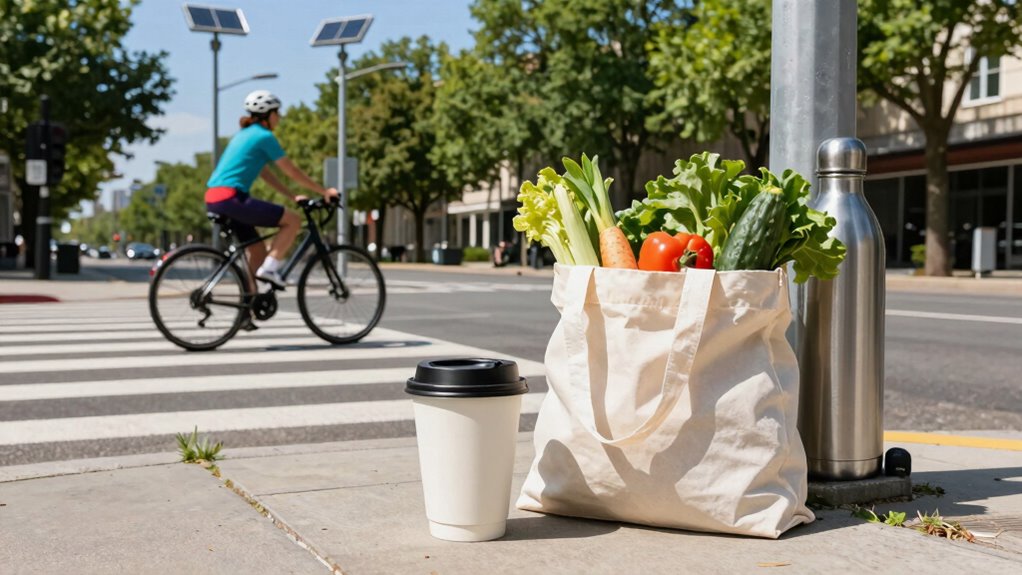
Many of us want to live more sustainably, but often, the easiest way to get started is by choosing what’s most convenient. It’s natural to gravitate toward solutions that fit seamlessly into your daily routine, especially when making a change feels overwhelming. That’s where eco-friendly habits come into play—they often start with small, manageable steps that don’t require overhauling your entire lifestyle. For example, using reusable bags or opting for tap water instead of bottled drinks can feel like simple adjustments. These choices don’t just save the environment; they also make sustainability feel accessible and achievable. Recognizing these small, sustainable actions can help build confidence and motivation to pursue more impactful changes.
However, accessibility challenges can influence how easy it is for you to adopt these eco-friendly habits. Not everyone has the same resources or infrastructure to support sustainable living. Living in a neighborhood without nearby recycling centers or access to affordable organic groceries can make it tough to stick to eco-conscious routines. These barriers can discourage even the most motivated individuals from maintaining consistent sustainable habits. Recognizing these challenges is essential because it helps you understand that what seems like a simple choice might be complicated by external factors. It’s not about failing but about steering obstacles that aren’t always visible at first glance. Infrastructure plays a significant role in shaping sustainable behaviors, and improving it can make a real difference. Additionally, understanding accessibility barriers can help communities prioritize equitable solutions that support everyone’s efforts toward sustainability. Addressing these issues can also promote equitable access to sustainable resources, ensuring everyone has the opportunity to participate in eco-friendly living.
Convenience often dictates your daily decisions, and that’s not inherently a bad thing. When sustainable options are convenient, they’re more likely to become ingrained habits. For instance, if your local store offers a variety of eco-friendly products and makes recycling straightforward, you’re more inclined to buy those items and dispose of waste responsibly. Conversely, when eco-friendly choices require extra effort—like traveling farther to find sustainable goods or searching for specialized recycling centers—they can fall by the wayside. This is why making sustainable choices convenient is critical; it lowers the effort barrier and encourages more consistent eco-friendly habits. Promoting accessible infrastructure and community support can further ease this transition. Additionally, raising awareness about sustainable practices can motivate communities to prioritize improvements that support eco-friendly living.
Ultimately, understanding the relationship between convenience and sustainability helps you realize that small, accessible actions can add up over time. Overcoming accessibility challenges might require looking for creative solutions or advocating for better infrastructure in your community. But in the meantime, focusing on what’s easy and accessible allows you to build momentum without feeling overwhelmed. By starting with simple, convenient steps, you set yourself up for long-term habits that support a more sustainable lifestyle—because when sustainable choices are as easy as reaching for a reusable bag, you’re more likely to stick with them.

Noilk Reusable Grocery Bags, 6 Pack 50Lbs Foldable Fashion Washable Shopping Bags, Large Boho Tote Bags For Groceries, Bulk Market Cloth Storage Bags, Utility Aesthetic Personalized Gifts For Women
1. lightweight, long handles and comfortable carrying: Our reusable grocery bags can hold up to 50+ pounds of…
As an affiliate, we earn on qualifying purchases.
As an affiliate, we earn on qualifying purchases.
Frequently Asked Questions
How Can I Make Sustainable Choices Without Sacrificing Convenience?
You can make sustainable choices without sacrificing convenience by adopting eco-friendly habits that fit into your daily routine. Opt for reusable bags, bottles, and containers to simplify conscious consumption. Choose products with minimal packaging or those made from eco-friendly materials. Automate recycling and composting at home, and support local, sustainable businesses. These small, convenient steps make a significant impact without complicating your life, making sustainability an effortless part of your routine.
What Are Simple Ways to Integrate Sustainability Into Daily Routines?
Did you know that switching to eco-friendly habits can reduce your carbon footprint by up to 30%? To integrate sustainability into your daily routine, start with minimal impact choices like carrying reusable bags, using a refillable water bottle, or choosing walkable routes. These small, convenient actions make a big difference, helping you live sustainably without hassle. Over time, they become seamless parts of your everyday life.
Does Choosing Convenience Always Harm the Environment?
Choosing convenience doesn’t always harm the environment. Opting for eco-friendly packaging reduces waste, while switching to renewable energy sources cuts carbon emissions. When you prioritize these sustainable options, convenience aligns with eco-consciousness. For example, using reusable containers simplifies daily routines without sacrificing environmental responsibility. By making mindful choices, you can enjoy convenience and help protect the planet, proving that sustainability and ease can go hand in hand.
How Do Companies Promote Sustainable Options That Are Also Convenient?
Companies promote sustainable options that are convenient by leveraging corporate incentives and boosting consumer awareness. They design easy-to-use products, like reusable containers or energy-efficient appliances, that fit seamlessly into your daily routine. By highlighting environmental benefits and offering incentives, such as discounts or loyalty rewards, they make sustainable choices more attractive and accessible. This approach encourages you to adopt eco-friendly habits naturally, making sustainability a simple part of your everyday life.
What Role Does Technology Play in Making Sustainable Choices Easier?
Technology plays a crucial role in making sustainable choices easier by enabling eco-friendly packaging solutions and promoting renewable energy use. You can access apps that track your energy consumption or suggest eco-friendly products, simplifying greener decisions. Smart systems in homes help optimize energy efficiency, reducing waste. By integrating these innovations, technology removes barriers, making it more convenient for you to adopt sustainable habits effortlessly.

Brita Large Water Filter Pitcher for Tap and Drinking Water, Includes 1 Standard Filter, BPA-Free, Lasts Two Months, 10-Cup Capacity, Bright White
The BPA-free Everyday water pitcher with filter holds 10 cups of water, enough to fill 3 24-ounce reusable…
As an affiliate, we earn on qualifying purchases.
As an affiliate, we earn on qualifying purchases.
Conclusion
You might find it surprising how often convenience and sustainability unexpectedly align. Sometimes, taking the easiest route—like choosing reusable bags or energy-efficient appliances—just happens to be the right choice for the planet too. It’s almost as if the universe nudges us toward smarter habits when they’re simplest to adopt. So, next time convenience leads you to a better choice, remember, it’s more than just luck—sometimes, it’s the universe working in your favor.

Isshah Plant-Based Kitchen Sponges – FSC Certified and PETA Approved, Natural, Eco-Friendly, Biodegradable Sisal Hemp Sponges for Dishes, Cleaning Sponge for Kitchen, Bathroom, Household – 12 Count
Natural and Eco-Friendly – Our Kitchen Sponges are made from wood cellulose and the other side made from…
As an affiliate, we earn on qualifying purchases.
As an affiliate, we earn on qualifying purchases.

United Solutions 23 Gallon Highboy Plastic Recycling Bin Kitchen Trash Can with Lid, Pass Through Handles, and Dustpan Edge, Blue
Space Saving Profile – The Highboy bin is perfect for tight or compact spaces; its narrow design and…
As an affiliate, we earn on qualifying purchases.
As an affiliate, we earn on qualifying purchases.