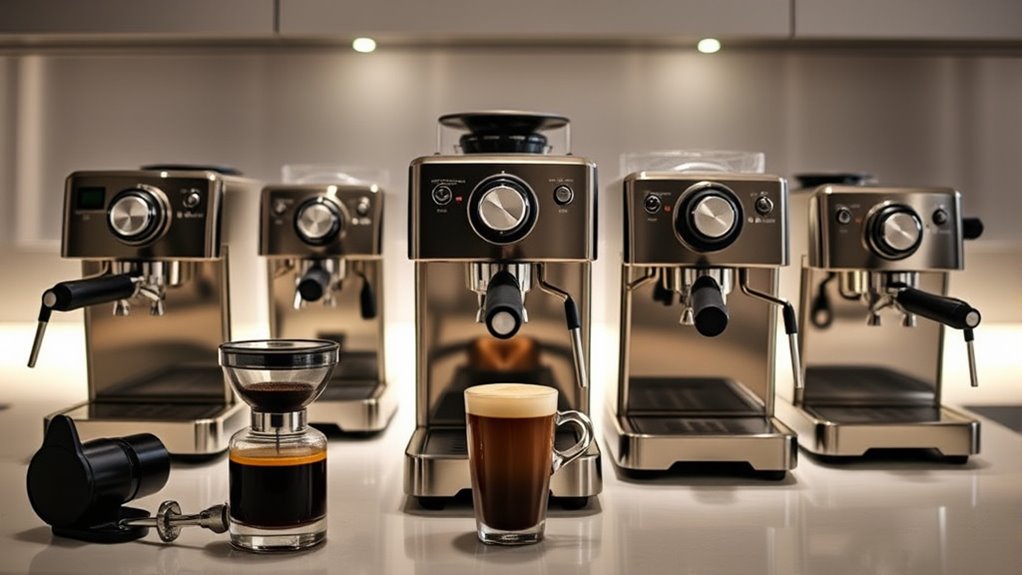

If you’re looking to brew like a pro at home, I recommend checking out the Breville Barista Express, De’Longhi Classic, HIBREW H10A, Neretva, and De’Longhi Stilosa. These machines are user-friendly, compact, and come with features like built-in milk frothers and precise temperature controls. They’re perfect for beginners wanting quality results without fuss. Keep going to discover how each of these models can help you master your espresso game.
Key Takeaways
- Focus on machines with intuitive controls, preset options, and user-friendly interfaces for easy operation by beginners.
- Choose compact, space-saving models suitable for small kitchens or limited counter space.
- Prioritize machines with integrated or automatic milk frothers to simplify creating milk-based drinks.
- Consider models with consistent temperature control and reliable brewing systems like 15-20 bar pumps.
- Balance features and budget, selecting affordable options that offer essential functions to help beginners brew like pros.

Breville Barista Express Espresso Machine BES870XL, Brushed Stainless Steel
The Breville Barista Express delivers third wave specialty coffee at home using the 4 keys formula and is...
As an affiliate, we earn on qualifying purchases.
Breville Barista Express Espresso Machine BES870XL, Brushed Stainless Steel

If you’re just starting out with espresso at home, the Breville Barista Express BES870XL is an excellent choice because it combines an integrated grinder with precise control features, making it easier for beginners to craft high-quality coffee. Its dose control conical burr grinder delivers fresh grounds directly into the portafilter, ensuring peak flavor. The grind size dial and grind amount adjustment help you customize each shot. Plus, the low-pressure pre-infusion and digital temperature control (PID) ensure consistent extraction and perfect temperature. With manual microfoam milk texturing and included accessories, this machine lets you experiment and improve your barista skills easily.
Best For: Beginners and home baristas looking for an all-in-one espresso machine that offers precise control and easy operation to craft high-quality coffee.
Pros:
- Integrated conical burr grinder with dose control for fresh grounds and enhanced flavor
- Adjustable grind size and grind amount for customized shots
- Digital temperature control (PID) and pre-infusion ensure consistent extraction and optimal flavor
Cons:
- Slightly larger footprint may require dedicated counter space
- Manual milk texturing may require practice for perfect microfoam
- Limited to home use with a one-year warranty, not designed for heavy commercial use

De'Longhi Classic Signature Espresso Machine
OPTIMAL EXTRACTION: Achieve expertly extracted espresso with a 15-bar Italian professional pump delivering the perfect pressure for lattes,...
As an affiliate, we earn on qualifying purchases.
De’Longhi Classic Espresso Machine with Milk Frother

The De’Longhi Classic Espresso Machine with Milk Frother stands out as an excellent choice for beginners who want a stylish, compact, and easy-to-use espresso maker. Its sleek Italian stainless steel design fits seamlessly into any kitchen, measuring 11.14D x 8.89W x 12H inches and weighing just 9 pounds. The machine features a powerful 15-bar pump for rich, flavorful espresso and a thermoblock system for quick, stable temperature control. With a customizable preset and an adjustable steam wand, it allows you to craft everything from espresso shots to frothy lattes, making it perfect for home baristas enthusiastic to brew like pros.
Best For: beginners and home baristas seeking a stylish, compact, and versatile espresso machine with milk frothing capabilities.
Pros:
- Sleek Italian stainless steel design that complements modern kitchens
- 15-bar professional pump for rich, flavorful espresso
- Adjustable steam wand and customizable presets for personalized drinks
Cons:
- Weighs only 9 pounds, which may impact durability over time with frequent use
- Limited to semi-automatic operation, requiring some manual skill
- First available date listed as February 11, 2025, indicating potential availability delays

HIBREW H10A - 58mm Espresso Machine, Stainless Steel Body with Milk Frother, Customizable Settings, Smart Display + 20 Bar Pressure Gauge.
UP to 20 Bar Pressure and Stainless Steel Body: The HiBREW espresso machine utilizes a powerful high-pressure pump...
As an affiliate, we earn on qualifying purchases.
HIBREW H10A Espresso Machine with Milk Frother
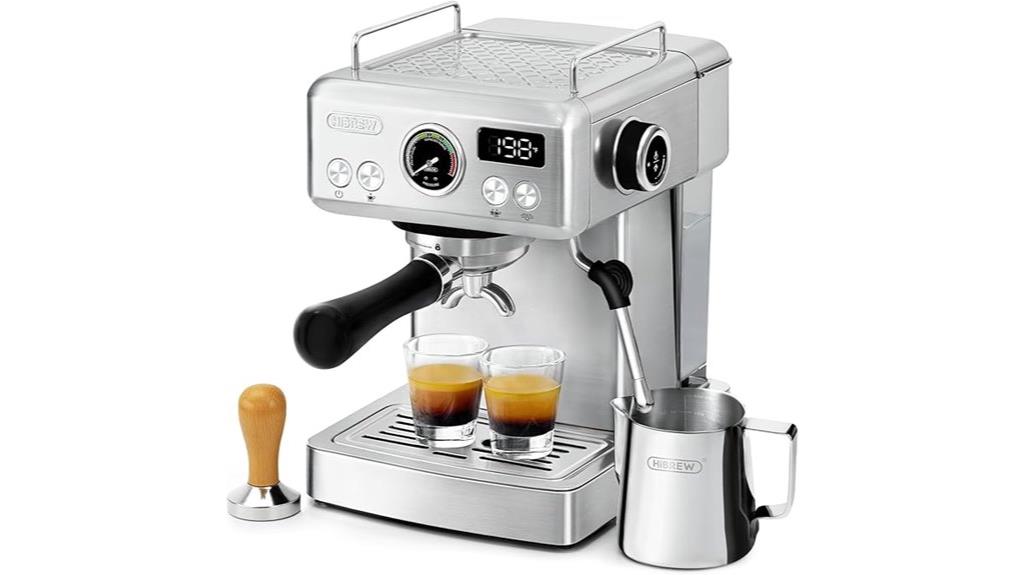
For beginners looking for an easy-to-use espresso machine, the HIBREW H10A stands out with its smart display and customizable settings, making it simple to craft their perfect cup. Its sleek stainless steel body and 58mm portafilter give it a professional look, while the built-in milk frother helps create creamy lattes and cappuccinos. With a 20 bar pressure gauge, I can easily monitor extraction pressure, ensuring ideal results. Weighing just 9.6 pounds, it’s compact enough for most kitchens. Although not dishwasher safe, its durable design and manual cleaning are straightforward. Overall, the H10A offers beginner-friendly features combined with high-quality performance.
Best For: Beginners seeking an easy-to-use, stylish espresso machine with customizable settings and milk frothing capabilities for making café-quality drinks at home.
Pros:
- User-friendly smart display simplifies brewing process for novices
- Sleek stainless steel design offers a professional appearance and durability
- Built-in milk frother enables creating creamy lattes and cappuccinos easily
Cons:
- Not dishwasher safe, requiring manual cleaning
- First available in 2025, so limited long-term user reviews and experience
- Compact size may limit capacity for frequent, large-scale brewing

Neretva Espresso Machine 20 Bar, Super Compact Espresso Maker Stainless Steel Professional Coffee Machine Espresso with Power Steam & LED Display for Home Barista Latte and Cappuccino Maker-Silver
✅PROFESSIONAL 20 BAR PRESSURE - Embrace barista-style brewing with Neretva espresso machine! With a 20-bar pressure system and...
As an affiliate, we earn on qualifying purchases.
Neretva Espresso Machine 20 Bar
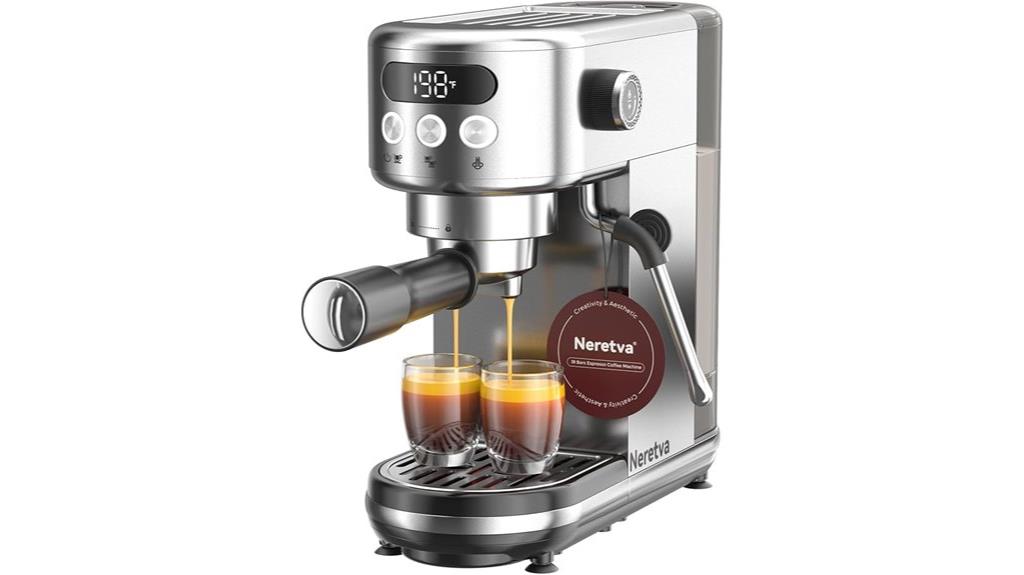
With its professional 20-bar pressure system and powerful 1350W boiler, the Neretva Espresso Machine delivers exceptional extraction quality, making it an ideal choice for beginners enthusiastic to create barista-style drinks at home. Its pre-infusion feature gradually increases pressure at the start, reducing air bubbles and ensuring balanced flavor extraction. Precise temperature control and a built-in display help maintain consistent brewing and steaming conditions. The powerful steam wand creates rich milk foam for lattes and cappuccinos, while the sleek stainless steel design fits nicely into any kitchen. Including essential accessories and backed by responsive customer support, the Neretva offers a reliable, easy-to-use experience for aspiring home baristas.
Best For: beginner to intermediate home baristas seeking a durable, high-performance espresso machine with professional features.
Pros:
- Professional 20-bar pressure system ensures high-quality extraction for rich espresso drinks
- Precise temperature control with built-in display maintains consistent brewing and steaming conditions
- Powerful steam wand creates rich milk foam ideal for lattes, cappuccinos, and latte art
Cons:
- The 1350W boiler may require longer heat-up times compared to smaller models
- Compact stainless steel design, while sleek, might have limited water and coffee bean capacity for frequent use
- Includes only basic accessories, which may necessitate additional purchases for advanced barista techniques
De’Longhi Stilosa Manual Espresso Machine

If you’re new to making espresso and want a machine that combines simplicity with solid performance, the De’Longhi Stilosa Manual Espresso Machine is an excellent choice. Its contemporary, compact design fits easily on modern countertops, saving space and adding style. The 15 BAR pump guarantees rich, flavorful shots every time, and the included portafilter offers options for single or double espresso. The manual steam wand textures milk perfectly for cappuccinos and lattes. Built with a stainless steel boiler, it’s durable and reliable for long-term use. Plus, features like the adjustable cup holder and tamper make it user-friendly, even for beginners.
Best For: beginners and home baristas seeking an easy-to-use, stylish espresso machine with reliable performance.
Pros:
- Compact and modern design fits well in small kitchens and enhances aesthetics
- 15 BAR pump ensures rich, flavorful espresso shots
- Manual steam wand allows for authentic milk frothing for cappuccinos and lattes
Cons:
- Manual operation may require some practice to perfect technique
- Limited to two cup sizes due to the adjustable cup holder
- No automatic features, which might be less convenient for quick brewing
Factors to Consider When Choosing an Espresso Machine for Beginners
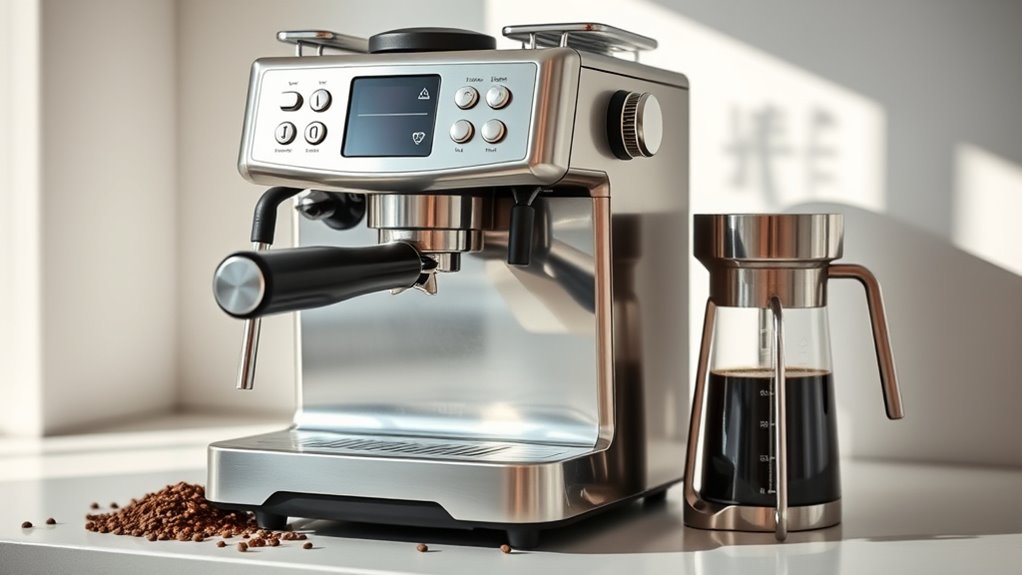
When choosing an espresso machine as a beginner, I consider factors like ease of use and size to make sure it fits my space and skill level. I also look at maintenance requirements and brewing versatility to match my coffee preferences, all within my budget. These points help me find a machine that’s simple to operate and suits my needs.
Ease of Use
Choosing an espresso machine that’s easy to operate is essential for beginners, as it helps build confidence and makes the learning process more enjoyable. Look for machines with simple controls, like single or double buttons, to reduce confusion. Features like preset brewing options and automatic milk frothing make the process straightforward without sacrificing quality. Clear pressure gauges and indicator lights help you monitor and adjust brewing with ease, giving you confidence to perfect your shot. An intuitive interface minimizes manual adjustments, speeding up the learning curve. Additionally, lightweight and compact designs make handling, setup, and storage less intimidating. When an espresso machine is user-friendly, it encourages experimentation and improves your skills faster, ultimately making your coffee journey more satisfying.
Machine Size
Selecting the right size for your espresso machine is essential, especially if space is limited in your kitchen. A compact machine helps you maximize your counter space without feeling cramped. Look for models with adjustable drip trays so you can use different cup sizes and glassware comfortably. It’s also important to choose a machine with dimensions that fit well on your countertop, leaving enough room for other appliances. Avoid bulky or overly complex designs that can be intimidating for beginners. Instead, opt for a size that balances functionality with ease of use. A smaller, well-designed machine can simplify your brewing process and make your space more organized. Ultimately, choosing the right size guarantees your setup is practical and enjoyable as you learn to craft great espresso.
Maintenance Needs
Maintaining your espresso machine doesn’t have to be complicated if you pick a model designed with ease of cleaning in mind. Look for machines with clear, simple instructions for cleaning and descaling—this makes routine upkeep straightforward. Removable water tanks and drip trays are a big plus, as they allow quick cleaning and help prevent buildup. Machines with automatic cleaning cycles or built-in cleaning programs reduce manual effort, keeping maintenance hassle-free. Regularly replacing filters and gaskets is essential for maintaining flavor and performance. Also, choose models made from durable materials and with fewer internal parts, which can mean fewer repairs and less intensive cleaning over time. These features make keeping your machine in top shape simple, so you can focus on brewing great espresso.
Brewing Versatility
When it comes to brewing versatility, I look for an espresso machine that can handle a variety of drinks and customization options. Supporting both single and double shots is essential, so I can easily make a shot for myself or a larger coffee. Adjustable grind size and dose controls let me tailor the brew to different beans and taste preferences. Programmable presets are a big plus, allowing quick preparation of my favorite espresso-based drinks without fuss. I also value a steam wand that can produce quality milk froth for lattes and cappuccinos, expanding my drink options. Lastly, compatibility with ground coffee and pods offers flexibility, ensuring I can switch between brewing methods effortlessly. These features help me create a range of beverages, just like a professional barista.
Price Range
You can find beginner espresso machines priced anywhere from $100 to $500, making it important to balance your budget with the features you want. At the lower end, models typically offer basic brewing functions with limited customization, ideal for those new to espresso. Mid-range machines, costing around $200 to $400, often include extras like manual steam wands or preset recipes, providing more control and convenience. High-end beginner machines, which can exceed $500, may feature advanced temperature control and integrated grinders, but they come at a higher price. When choosing, consider your budget alongside the features that matter most to you. Finding a machine that offers good value without overspending guarantees you get a quality product suited for your skill level and goals.
Design Features
Selecting an espresso machine that fits your space and style can make all the difference for a beginner. A compact, user-friendly design guarantees it won’t overwhelm your kitchen and makes operation straightforward. Look for machines with intuitive controls and clear indicators—these help you learn and operate with confidence. Adjustable features like grind size, brew strength, and steam wand settings allow room for experimentation and customization as you improve. Accessories such as tampers, filters, and milk frothers are valuable additions that expand your drink options. Durability and easy maintenance are also key; machines made of stainless steel are sturdy and simple to clean, saving you time and effort. Prioritizing these design features will make your brewing experience enjoyable and hassle-free.
Frequently Asked Questions
How Much Should I Expect to Spend on a Beginner Espresso Machine?
You should expect to spend between $100 and $300 on a beginner espresso machine. I’ve found that machines in this range offer great value, balancing ease of use with decent quality shots. While cheaper models might lack features, investing around $200 gives you a solid machine that’s simple enough for beginners yet capable of brewing good espresso. Don’t forget to budget a little extra for accessories like a grinder or milk frother.
Can I Make Specialty Drinks Like Lattes and Cappuccinos Easily?
With a beginner espresso machine, making specialty drinks like lattes and cappuccinos is as easy as pie. Many machines come with built-in frothers, turning milk into creamy clouds with a flick of a switch. I’ve found that once you master the basics, creating barista-quality drinks becomes second nature. So don’t worry—your kitchen can become your personal coffee shop, serving up café favorites anytime you like.
How Much Maintenance Is Required for These Machines?
Maintenance for these machines is pretty manageable. I clean mine regularly by descaling and rinsing the water reservoir, which takes just a few minutes. The removable parts, like the drip tray and portafilter, are easy to clean. I also wipe down the machine to keep it looking new. With consistent upkeep, it runs smoothly and lasts longer. Overall, I find it’s a straightforward process that fits easily into my routine.
Are These Machines Suitable for Small Kitchen Spaces?
Yes, these machines are perfect for small kitchen spaces. I love how compact they are, fitting easily on countertops without cluttering. They’re designed with space-saving features, so you don’t have to sacrifice style or functionality. If you’re worried about room, I recommend checking dimensions first, but overall, these espresso machines make brewing café-quality coffee convenient, even in tight spots.
What Is the Typical Learning Curve for New Espresso Enthusiasts?
I found the learning curve for new espresso enthusiasts to be moderate. At first, it’s a bit tricky to master the grind size, tamping, and timing, but with patience and practice, it becomes easier. I recommend starting with simple recipes and gradually experimenting. Don’t get discouraged if your first few shots aren’t perfect—practice makes perfect, and soon you’ll be brewing delicious, cafe-quality espresso at home.
Conclusion
Choosing the right espresso machine doesn’t have to be as intimidating as deciphering Da Vinci’s sketches. Whether you’re after the all-in-one convenience of the Breville or the classic charm of De’Longhi, there’s a perfect match out there. Remember, even a humble beginner can craft a barista-quality brew—just like the finest artisans of yore. So go ahead, pick your machine, and brew like a true maestro. The espresso awaits!