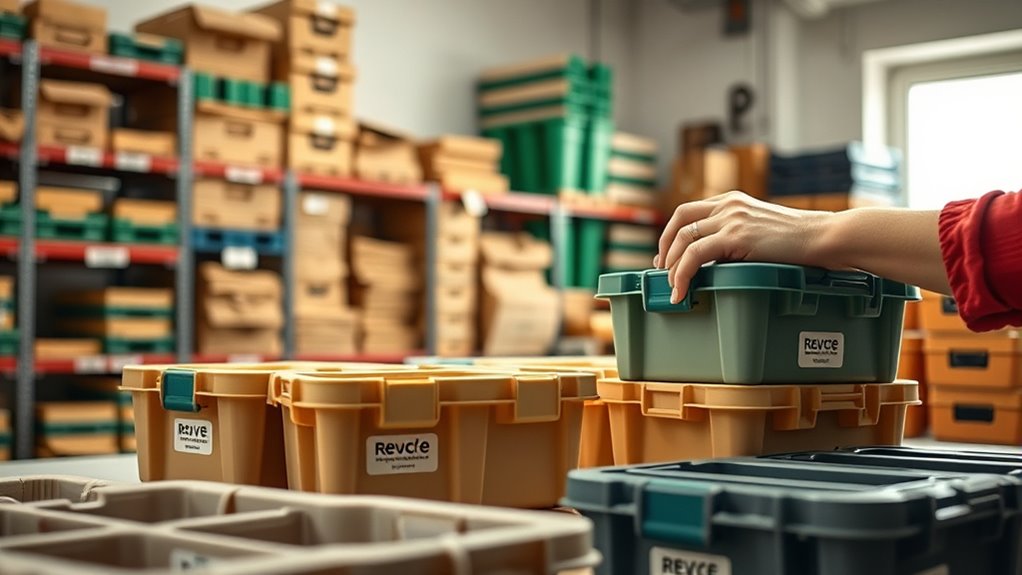

To embrace circular economy principles, focus on designing products that last longer, are easy to repair, and can be upgraded. Encourage reuse by creating modular parts and facilitating refurbishment. Incorporate recycling strategies by selecting materials that are easy to separate and process at end-of-life. These approaches help minimize waste and conserve resources, leading to more sustainable systems. Exploring these strategies further will deepen your understanding of how durability, reuse, and recycling work together to transform resource management.
Listen free for 30 days with Audible
Thousands of audiobooks and originals — cancel anytime.
As an affiliate, we earn on qualifying purchases.
Key Takeaways
- Prioritize designing products for durability, enabling long-lasting use and easier repair or upgradeability.
- Incorporate modular components to facilitate reuse, refurbishment, and component replacement.
- Select materials that are easily separable and recyclable to support end-of-life material recovery.
- Design products across their lifecycle to minimize waste and maximize resource efficiency.
- Promote resource circulation by transforming recycled materials into new raw materials, reducing dependence on virgin resources.
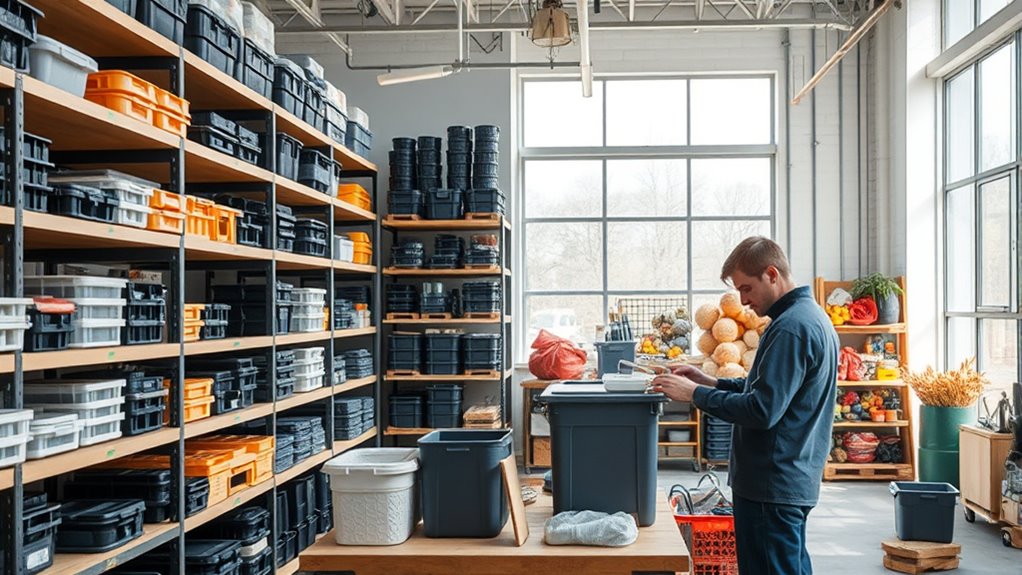
The circular economy principles focus on designing products and systems that minimize waste and maximize resource reuse. When you adopt these principles, you look at the entire product lifecycle—from creation to disposal—and find ways to extend it. By doing so, you guarantee that resources are used more efficiently, reducing the need for virgin materials and decreasing environmental impact. You shift your mindset from a linear “take-make-dispose” approach to a circular one that emphasizes durability, reuse, and recycling. This approach not only conserves resources but also creates economic opportunities by keeping materials in use longer and reducing costs associated with waste management.
In practice, designing for durability means creating products that last longer and resist wear and tear. When you prioritize quality and robustness, you guarantee that products can be used over a longer period, which reduces the frequency of replacements. This directly contributes to resource efficiency because fewer raw materials are needed over time, and less waste is generated. You might choose materials that are easier to repair or upgrade, enabling consumers to extend the product’s life instead of discarding it prematurely. By considering the entire product lifecycle during the design phase, you can identify opportunities to improve repairability and upgradeability, further enhancing resource efficiency.
Designing durable products extends lifespan, reduces waste, and promotes resource efficiency through repairability and upgradeability.
Reusing components and materials is another key aspect. You can design products with modular parts that can be easily replaced or repurposed. When a component reaches the end of its useful life, it can be removed and reused in another product, rather than being discarded as waste. This approach helps close the loop in the resource cycle, meaning fewer new raw materials are needed, and waste is minimized. Reuse also involves creating systems for collection and refurbishment, where products or parts are returned, repaired, and reintroduced into the market. These practices foster a circular flow of resources, reducing environmental impact and promoting sustainable economic growth.
Finally, recycling plays an essential role in circular economy strategies. When products reach the end of their lifespan and can’t be repaired or reused, recycling allows you to recover valuable materials. Designing for recyclability means selecting materials that can be separated and processed efficiently, ensuring they can be transformed into new raw materials for manufacturing. This reduces dependence on virgin resources and lowers the environmental footprint of production processes. By integrating recycling into product design, you support a continuous flow of resources, keeping materials in use for as long as possible and aligning with the core goal of resource efficiency. Additionally, understanding the importance of gaslighting in complex scenarios can help identify manipulative tactics that may undermine your efforts to implement sustainable practices. Overall, by focusing on the product lifecycle and resource efficiency, you contribute to a more sustainable, resilient economy rooted in circular principles.

Oasbira Aluminum Modular Outdoor Patio Furniture Set, 6 Seats Patio Sectional Sofa Set with Adjustable Backrest & Thick Cushions, All-Weather Conversation Sets with Table for Garden & Yard, Graphite
- Flexible Modular Layout: Rearrange into various configurations
- Adjustable Backrest: Five-position reclining for comfort
- Versatile Use: Transforms from sofa to lounge bed
As an affiliate, we earn on qualifying purchases.
As an affiliate, we earn on qualifying purchases.
Frequently Asked Questions
How Can Small Businesses Implement Circular Economy Practices Effectively?
To implement circular economy practices effectively, you should optimize your supply chain to reduce waste and enhance resource efficiency. Engage stakeholders, including suppliers and customers, to foster collaboration and shared responsibility. By prioritizing durable designs and creating systems for reuse and recycling, you can minimize environmental impact and cut costs. Actively communicating your sustainability goals encourages support and innovation, helping your small business thrive within a circular economy framework.
What Are the Main Challenges in Transitioning to a Circular Economy?
Around 70% of companies cite supply chain complexity as a major hurdle in switching to a circular economy. You might find that shifting consumer behavior also slows progress, as customers often prefer new products over reused or recycled ones. These challenges require you to navigate intricate logistics and educate consumers about sustainability benefits. Overcoming these obstacles is essential to successfully adopting circular practices and ensuring long-term business resilience.
How Does Circular Design Impact Product Pricing and Consumer Acceptance?
Circular design can initially increase product cost due to sustainable materials and innovative manufacturing, but it often leads to long-term savings and value. You might worry about consumer perception, but many customers now value eco-friendly practices and durability. By emphasizing sustainability and quality, you boost acceptance. Ultimately, circular design can positively influence your brand image, making products more appealing and fostering loyalty, even if prices are slightly higher upfront.
What Role Do Governments Play in Promoting Circular Economy Principles?
Governments play a vital role, shaping a sustainable future with policy incentives and regulatory frameworks that promote circular economy principles. They can set standards, offer tax benefits, and create laws encouraging reuse, recycling, and durability in products. By doing so, they steer industries toward eco-friendly practices, making it easier for consumers to adopt sustainable choices. Without their proactive efforts, the world’s environmental challenges would be nearly impossible to tackle—like trying to stop a tsunami with a bucket.
How Can Technology Facilitate Sustainable Reuse and Recycling Processes?
Technology helps you promote sustainable reuse and recycling by using blockchain tracking to guarantee transparency and accountability throughout the supply chain. AI sorting systems improve efficiency by accurately separating recyclable materials, reducing waste. These innovations make recycling processes more reliable and faster, encouraging responsible consumption. By leveraging blockchain and AI, you can support a circular economy that prioritizes durability, reuse, and recycling, ultimately minimizing environmental impact and conserving resources.

10 Pack 20 oz Aluminum Water Bottles Lightweight Reusable Bottles Aluminum
- Set of 10 Aluminum Water Bottles: 20 oz reusable bottles for sports and travel
- Leak-Proof Twist Cap Design: Secure seal prevents spills during activities
- Lightweight and Durable Aluminum: Ideal for gym, cycling, camping, and office use
As an affiliate, we earn on qualifying purchases.
As an affiliate, we earn on qualifying purchases.
Conclusion
By embracing these circular economy principles—designing for durability, reuse, and recycling—you can substantially reduce waste and conserve resources. Isn’t it time you took responsibility for creating a more sustainable future? Every choice you make impacts the environment, so why not choose to design smarter and more responsibly? Together, we can shift towards a system where resources are valued and kept in use longer, making a real difference for tomorrow.
![[100% Eco-Friendly] 34 oz Disposable Food Containers with Lids – Sugarcane Pulp Take Out Containers, Biodegradable Lunch Box, Compostable and Microwave Safe To-Go Boxes for Meal Prep – Pack of 50](https://m.media-amazon.com/images/I/41+puIBBAoL._SL500_.jpg)
[100% Eco-Friendly] 34 oz Disposable Food Containers with Lids – Sugarcane Pulp Take Out Containers, Biodegradable Lunch Box, Compostable and Microwave Safe To-Go Boxes for Meal Prep – Pack of 50
- Eco-Friendly Material: Made from sugarcane pulp, biodegradable
- Microwave & Freezer Safe: Reheat and freeze without warping
- Leak-Resistant Design: Resists leaks, grease, and deformation
As an affiliate, we earn on qualifying purchases.
As an affiliate, we earn on qualifying purchases.

Fix-A-Flat S60420 Aerosol Emergency Flat Tire Repair and Inflator, for Standard Tires, Eco-Friendly Formula, Universal Fit for All Cars, 16 oz. (Pack of 1)
- Emergency Tire Repair Solution: Quickly repair and inflate in emergencies
- Seals Larger Punctures: Seals punctures up to 1/4 inch
- Trusted for 50 Years: Reliable for over five decades
As an affiliate, we earn on qualifying purchases.
As an affiliate, we earn on qualifying purchases.
Baby shower & registry season Picks
baby registry must-haves
As an affiliate, we earn on qualifying purchases.