
In small spaces like elevators, practicing good etiquette makes a big difference in safety and comfort. Wait for others to exit before entering, avoid rushing or blocking doors, and keep hands clear of closing panels. Respect weight limits and never force doors open. Being mindful of your behavior helps prevent malfunctions and injuries. By understanding these simple rules, you’ll contribute to a safer, smoother ride for everyone—discover more tips for respectful elevator use below.

Get the little things that make your day delivered free with Prime
- Fast, free delivery on millions of items
- Prime Video, Amazon Music and more included
- Member-only deals all year
Key Takeaways
- Allow passengers to exit before entering to prevent congestion and ensure smooth flow.
- Avoid blocking doors or leaning against them to maintain safety and proper operation.
- Keep conversations quiet and limit phone use to respect others’ comfort in tight spaces.
- Follow posted capacity limits and wait for the next elevator if crowded to prevent overloading.
- Report any door malfunctions or safety concerns immediately to maintain a safe environment.
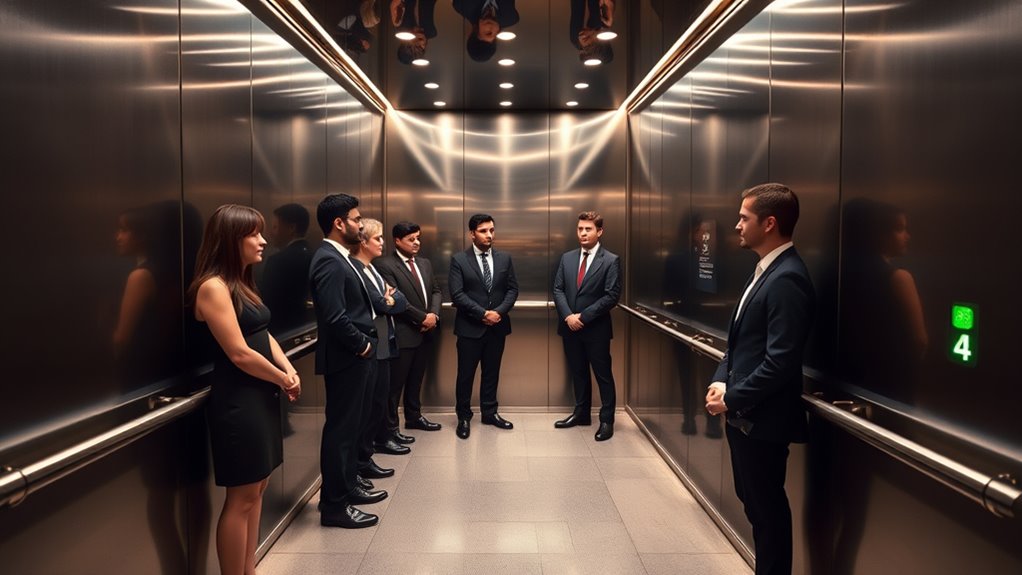
Elevator etiquette helps guarantee that everyone feels comfortable and safe when using this common mode of transportation. One of the most important aspects of proper elevator behavior involves managing door behavior. You should always be mindful of how you approach and interact with the doors to ensure smooth operation and prevent accidents. For example, if the doors are opening, avoid rushing in recklessly or blocking their path. Let others exit before you step in, and if the doors are closing, resist the temptation to force them open with your hands or objects. Instead, wait patiently or press the door-open button if you need to enter or exit. This not only shows courtesy but also maintains safety standards, reducing the risk of injury or damage to the elevator mechanism.
Being aware of elevator safety when it comes to door behavior is vital. You should never lean against or push against the doors, as this can cause malfunctions or delay the elevator’s operation. If you notice the doors aren’t closing properly or seem stuck, report the issue to building management rather than trying to force them closed yourself. Additionally, avoid blocking the doorway with bags, briefcases, or other items. Doing so can obstruct the safe flow of passengers and create hazards for those trying to enter or exit the elevator. When exiting, step away from the doors promptly to allow the next group to enter without congestion. This simple act of patience minimizes crowding and keeps the elevator functioning smoothly.
Another key point is respecting the capacity limit. Overloading the elevator can compromise its safety systems, so always adhere to posted weight restrictions. If the elevator is crowded, wait for the next one rather than squeezing in and risking injury or malfunction. Keep your hands and arms clear of the closing doors to prevent pinching injuries, and be alert to any warning signals or alarms. If you see that the doors won’t close or hear an unusual noise, alert someone immediately rather than trying to troubleshoot on your own. Being aware of elevator safety and its importance can help prevent accidents and ensure everyone’s well-being.
Frequently Asked Questions
Is It Okay to Hold the Elevator Door Open for Others?
Yes, it’s okay to hold the elevator door open for others as a courtesy gesture. Door holding shows kindness and consideration, especially if someone is nearby or struggling to reach the door. However, be mindful not to hold it too long, as it can delay others. Use your judgment and communicate with a friendly gesture or eye contact. Your small act of courtesy can make everyone’s ride more comfortable.
What Should I Do if Someone Is Invading My Personal Space?
If someone invades your personal space, gently but firmly step back to maintain respectful distance—surveys show 85% of people prefer a comfortable personal space. Address the situation calmly, making it clear you value your boundaries. Use a polite tone to communicate your need for space, and if necessary, move away to protect your comfort. Remember, respecting personal space boundaries fosters a more comfortable and respectful elevator environment for everyone.
Are There Specific Gestures to Signal I Want to Get Off?
If you want to get off the elevator, use clear hand signals like raising your hand or pointing towards the door. Combine this with verbal cues such as saying, “Excuse me” or “I’m getting off here” to make certain your intentions are understood. Keep your gestures polite and visible, making it easier for others to recognize your desire to exit without confusion. This respectful communication helps maintain smooth, courteous elevator interactions.
How Should I Handle a Noisy or Disruptive Passenger?
Did you know that addressing noisy passengers effectively involves noise management and conflict resolution? When someone is disruptive, politely ask them to lower their volume or change their behavior. If needed, calmly explain how their noise affects others. Stay composed, avoid confrontation, and seek to resolve the issue amicably. Your calm approach helps maintain a respectful environment, ensuring everyone feels comfortable in tight spaces like elevators.
Is It Acceptable to Use My Phone Loudly Inside the Elevator?
No, it’s not acceptable to use your phone loudly in the elevator. The small space, limited elevator capacity, and shared environment make it important to keep noise levels respectful. Instead, listen to elevator music quietly or turn your phone to silent. Being considerate helps create a comfortable experience for everyone, ensuring the elevator remains a peaceful and pleasant environment for all passengers.
Conclusion
Remember, elevator etiquette is like a gentle dance in a tight space—you move smoothly and respectfully. By being polite, mindful of others’ personal space, and keeping conversations brief, you create a comfortable environment for everyone. When you follow these simple rules, you’re like a gust of fresh air in a crowded room. Small actions make a big difference, turning a potentially awkward moment into a quick, pleasant glide. Keep it courteous, and everyone will thank you.
NFL season / tailgating Picks
team gear
As an affiliate, we earn on qualifying purchases.