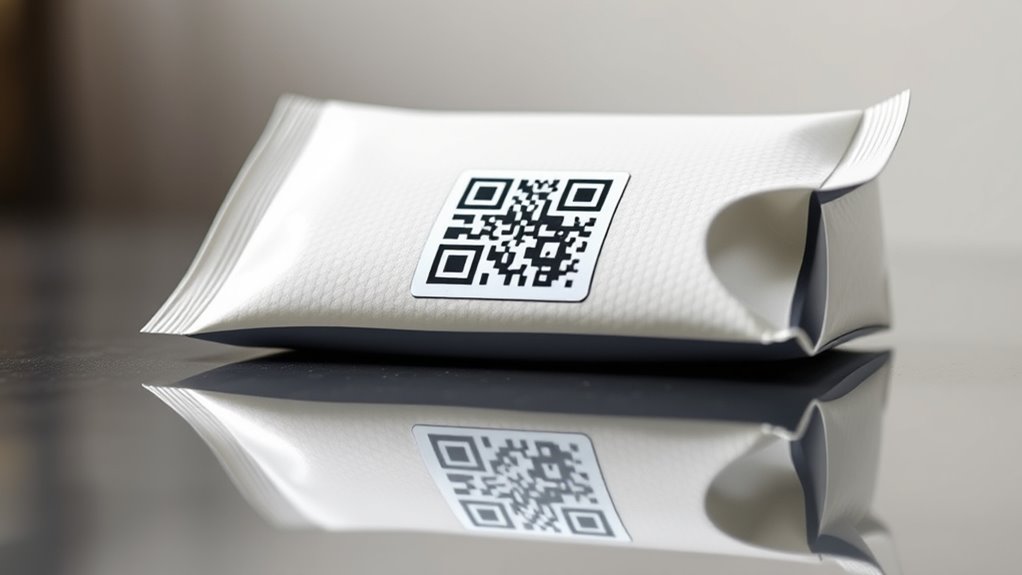

Smart packaging combines QR codes and NFC tags with eco-friendly materials to boost your connection with brands and access essential info quickly. You can scan codes to learn about a product’s origin, usage, or recycling instructions, making your shopping more transparent and responsible. These digital features not only enhance your experience but also support sustainability efforts. If you keep exploring, you’ll discover how these innovations are shaping a more engaging and eco-conscious packaging future.
Key Takeaways
- Smart packaging combines digital features like QR codes and NFC tags to enhance consumer engagement and communication.
- Integration of these technologies supports sustainability by enabling eco-friendly materials and reducing waste.
- QR codes and NFC tags provide instant access to product details, authenticity, and interactive content.
- Digital features encourage responsible consumer behavior, such as recycling guidance and transparent information.
- Future trends include augmented reality and personalized messages, deepening brand-customer connections through smart packaging.
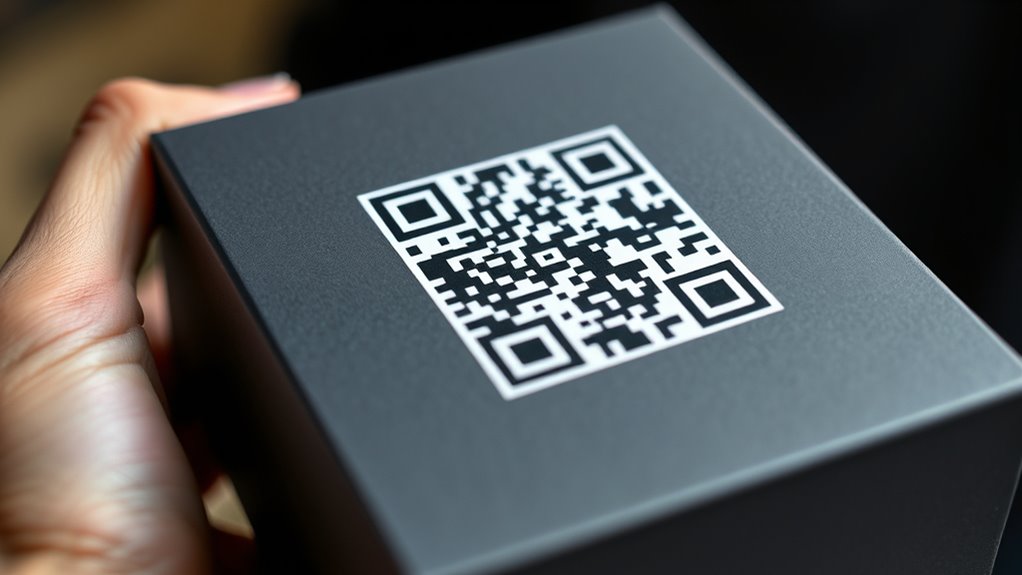
Have you ever wondered how packaging is evolving to meet modern needs? As technology advances, packaging no longer just protects products; it now plays an essential role in communication and sustainability. Smart packaging integrates digital features like QR codes and NFC tags, transforming simple containers into interactive experiences. This shift allows brands to connect directly with consumers, offering real-time information, product authenticity, and enhanced engagement. But for smart packaging to truly make an impact, it must also prioritize sustainable materials. By combining eco-friendly resources with innovative tech, companies can reduce environmental footprints while providing valuable digital content.
Using sustainable materials in smart packaging isn’t just a trend; it’s a necessity. Consumers are increasingly conscious of their environmental impact and seek brands that align with their values. When you see packaging made from biodegradable plastics, recycled paper, or plant-based fibers, you’re witnessing a commitment to sustainability. These materials not only cut down on waste but also serve as a foundation for integrating digital features. For instance, QR codes can be printed directly onto eco-friendly surfaces, ensuring that the packaging remains biodegradable or recyclable without losing its functionality. This blend of sustainability and technology encourages consumer engagement by making eco-conscious choices easier and more appealing.
Sustainable materials in smart packaging promote eco-conscious choices and seamless digital integration.
Your interaction with smart packaging goes beyond simple visuals. When you scan a QR code or tap an NFC tag, you gain instant access to a wealth of information—whether it’s details about the product’s origin, usage instructions, or interactive content like videos and promotions. This immediacy fosters a deeper connection with the brand, making you feel more informed and involved. It also enhances transparency, which is vital in today’s market where consumers demand honesty and authenticity. Brands that leverage these digital features show they value your engagement, making the shopping experience more personalized and trustworthy.
Moreover, smart packaging encourages sustainable consumer behavior. When you receive detailed information about the environmental impact of the packaging, you’re more likely to recycle or dispose of it responsibly. The digital interaction can guide you through proper disposal methods or suggest eco-friendly alternatives, reinforcing the brand’s commitment to sustainability. Incorporating raw food principles into packaging design can also promote healthier choices and inform consumers about product contents. This creates a cycle where consumer engagement is heightened, and environmental awareness is strengthened. As technology continues to advance, expect even more seamless integrations, such as augmented reality or personalized digital messages, further enriching your experience.
In essence, the future of packaging lies in its ability to combine sustainable materials with smart digital features. This synergy not only benefits the environment but also deepens your connection with brands, making your interactions more meaningful. As you encounter smarter packaging on shelves, remember that it’s designed to be both eco-friendly and engaging, offering you a richer, more responsible shopping experience.
Frequently Asked Questions
How Secure Are QR Codes and NFC Tags Against Counterfeiting?
QR codes and NFC tags offer decent counterfeit prevention but aren’t foolproof. You might encounter security vulnerabilities like cloning or tampering, making it essential to implement additional security measures. To improve protection, consider encryption, unique identifiers, or secure printing. While these technologies enhance authenticity, stay aware of potential risks and continuously update your security protocols to safeguard against counterfeiting attempts effectively.
Can Smart Packaging Be Reused or Recycled Effectively?
Ever wondered if smart packaging can be recycled or reused effectively? You can indeed, but recycling challenges like material separation and contamination exist. Reuse potential depends on durable, eco-friendly designs that withstand multiple uses. While integrating QR codes and NFC tags adds complexity, choosing sustainable materials and clear recycling instructions can boost effectiveness. Isn’t it worth exploring smarter solutions that reduce waste and maximize reuse?
What Is the Cost Difference Between QR Codes and NFC Tags?
The cost comparison shows QR codes are considerably cheaper than NFC tags, primarily due to manufacturing expenses. You’ll find that printing QR codes is inexpensive and straightforward, making them ideal for large-scale use. In contrast, NFC tags involve higher manufacturing costs because of their integrated electronics. If budget is a concern, QR codes offer a cost-effective solution, while NFC tags provide more advanced features at a higher price point.
How Durable Are NFC Tags in Harsh Environmental Conditions?
Imagine you’re tracking high-value electronics exposed to extreme conditions. NFC tags with high-quality, weatherproof materials can withstand harsh environmental conditions, including moisture, heat, and chemicals. Their environmental resilience relies on material durability, ensuring they stay functional despite harsh surroundings. You’ll find that sealing and choosing rugged materials considerably enhance their durability, making NFC tags a reliable solution even in the toughest environments.
Are There Privacy Concerns With Consumer Data Collection via Smart Packaging?
You should be aware that consumer privacy and data security are valid concerns with smart packaging. When companies collect data through QR codes or NFC tags, there’s a risk of exposing personal information if security measures aren’t robust. Always stay informed about how your data is used and protected, and look for brands that prioritize privacy. Being cautious helps you maintain control over your personal information and avoid potential misuse.
Conclusion
So, next time you scan a QR code or tap an NFC tag, remember—your smart packaging isn’t just about convenience. It’s quietly transforming the way you interact with products, all while you probably barely notice. Ironically, these tiny tech wonders make your everyday shopping smarter, yet they often go completely unnoticed. So, embrace the hidden magic in your packaging—you might just be surprised how much smarter your world really is.