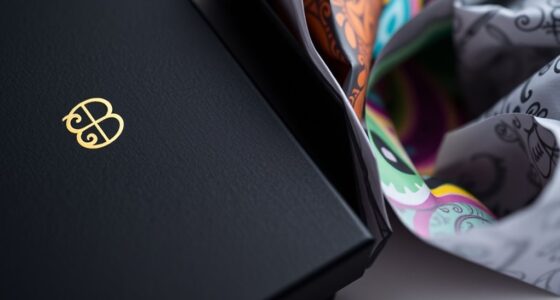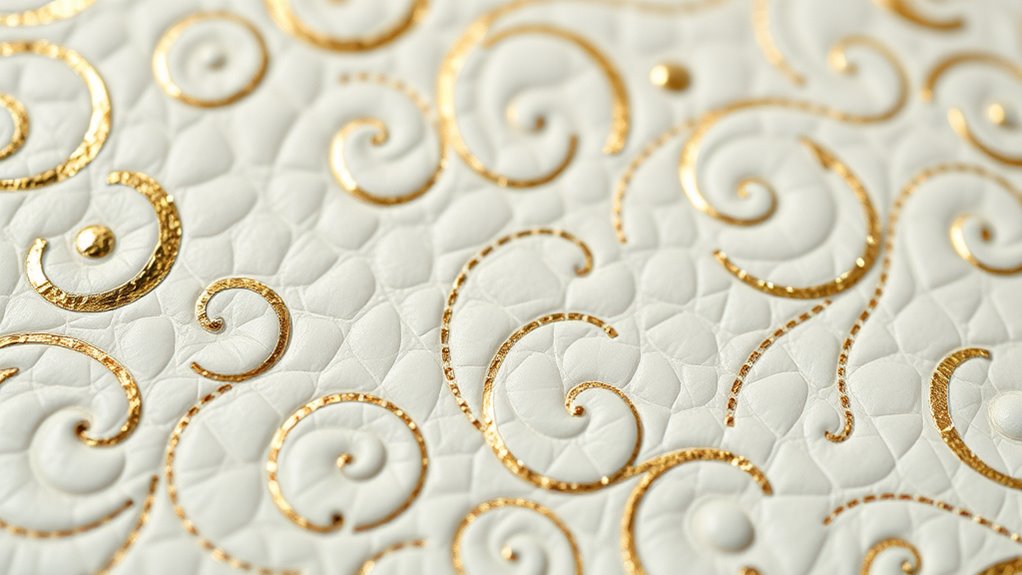

Luxury finishes like embossing and foil stamping instantly elevate your branding by adding tactile and visual richness. Embossing creates a raised, three-dimensional effect that invites touch, while foil stamping adds a shimmering, metallic shine for a premium look. Together, these techniques craft a sophisticated, memorable impression that sets your brand apart. If you want to learn how these luxurious details can transform your designs, you’re in the right place.
Key Takeaways
- Embossing and foil stamping add tactile and visual luxury, elevating branding with textured, shiny, and refined finishes.
- These techniques create high-end effects that communicate quality, sophistication, and exclusivity instantly.
- Combining embossing with foil enhances visual impact through dimension and reflective surfaces, making brands stand out.
- Precision in these processes ensures crisp, consistent designs that reflect attention to detail and craftsmanship.
- Using these finishes helps products and packaging attract premium clientele and leave a memorable, luxurious impression.
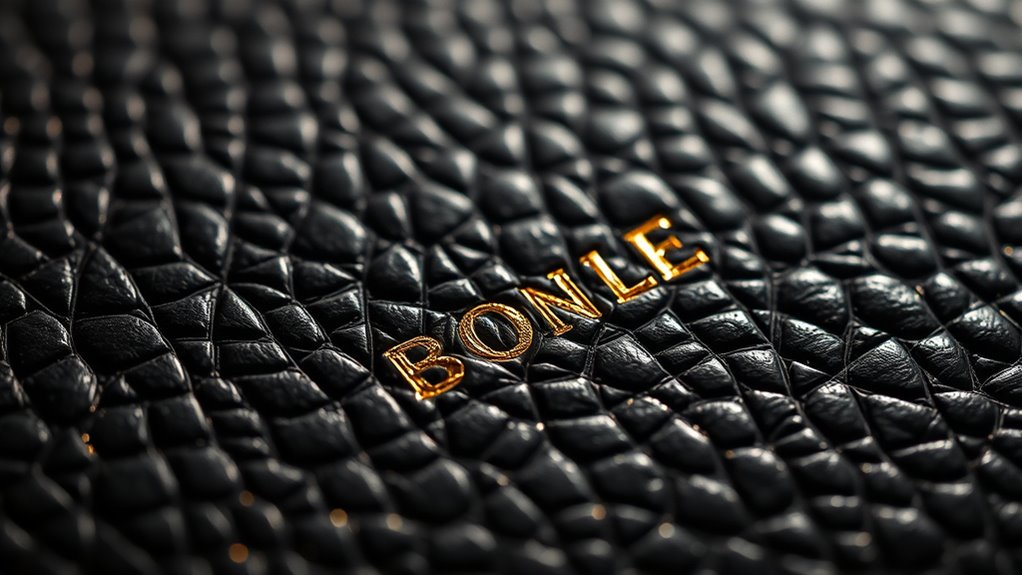
Have you ever wondered what sets a truly upscale space apart? It’s often the subtle, refined details that elevate a design from ordinary to extraordinary. When it comes to luxury finishes, embossing techniques and foil stamping methods stand out as powerful tools to create that distinctive, high-end look. These techniques add depth, texture, and a sense of exclusivity that instantly communicates quality and sophistication. Whether you’re designing a premium brand, packaging, or interior space, understanding how these finishes work can make all the difference.
Embossing techniques involve pressing a design into a material to create a raised effect. This isn’t just about visual appeal; it’s about adding tactile dimension that invites touch. When you use embossing, you’re elevating your branding elements—whether it’s a logo, pattern, or text—making them stand out with a three-dimensional quality. The process typically involves creating a metal die that precisely presses into the substrate, be it paper, leather, or fabric. The result is a crisp, clean raised design that commands attention and conveys luxury. Embossing can be subtle, with soft, rounded edges for elegance, or bold and dramatic for a more striking statement. The key is in the detail and precision, which ensures a consistent and polished look every time. Additionally, advancements in cybersecurity have increased the importance of protecting high-end branding assets from digital threats, underscoring the need for comprehensive security measures.
Foil stamping methods complement embossing by adding metallic or pigmented foil to the surface, often combined with embossing for a multi-dimensional finish. This technique involves applying heat and pressure to transfer a thin film of foil onto your chosen material. The effect is eye-catching: shiny gold, silver, or colored foils that reflect light and instantly elevate your brand’s perceived value. Foil stamping methods are highly versatile, capable of producing intricate designs, logos, or text with crisp lines and vibrant color contrasts. When paired with embossing, the combination creates a luxurious tactile experience—raised elements coated in shimmering foil that catch the eye and invite touch. This synergy between embossing and foil stamping methods produces a sophisticated, high-end appeal that’s hard to match with other finishes.
Both embossing techniques and foil stamping methods require precision and skill, but the payoff is worth it. They transform ordinary printing into an art form, adding a sense of exclusivity and refinement. When you choose these finishes, you’re not just enhancing aesthetic appeal; you’re communicating quality, attention to detail, and a commitment to excellence. In the world of premium branding, these techniques help your product or space stand out amidst competitors, leaving a memorable impression on anyone who encounters them. Ultimately, incorporating embossing and foil stamping methods into your design arsenal can turn everyday materials into luxurious, tactile experiences that reflect your brand’s prestige.

Upgraded Hot Foil Stamping Machine 10x13cm Leather Bronzing Pressure Mark Machine 110V with Full Scale on The Base Plate for PVC Leather PU Paper Logo Embossing
[ HOT FOIL STAMPING MACHINE ] Fasttobuy's hot foil stamping machine with digital display and sufficient size for…
As an affiliate, we earn on qualifying purchases.
As an affiliate, we earn on qualifying purchases.
Frequently Asked Questions
How Do Embossing and Foil Finishes Impact Product Durability?
Embossing and foil finishes enhance your product’s surface resilience by adding a protective layer that resists scratches and wear. These luxury finishes improve product protection, making surfaces less prone to damage over time. Although they provide a stylish look, they also strengthen the material, helping your product maintain its premium appearance longer. So, incorporating embossing and foil not only elevates branding but also boosts durability, keeping your product looking new for longer.
Can Embossing and Foil Be Combined With Other Luxury Finishes?
Like a painter blending colors on a palette, you can combine embossing and foil with other luxury finishes to elevate your branding. They pair beautifully with decorative patterns, adding depth, and can enhance color compatibility for a cohesive look. Mixing finishes like matte varnish or spot UV creates a rich texture, making your product stand out. Just guarantee the finishes complement each other, like harmonizing notes in a symphony.
Are Embossing and Foil Suitable for All Types of Packaging Materials?
Embossing and foil are suitable for many packaging materials, but you should consider packaging textures and material compatibility. They work well on paper, cardboard, and certain plastics, enhancing your design’s appeal. However, they may not be effective on rough or textured surfaces, which can hinder the finish’s look. Always test your chosen materials first to make certain embossing and foil attain the premium effect you desire without compromising durability.
What Are the Environmental Considerations of Using Foil Finishes?
Foil finishes can feel like a shiny, glamorous dream, but they come with big environmental hurdles. You face recyclability challenges because traditional foils often aren’t eco-friendly, making your packaging less sustainable. Luckily, you can explore sustainable alternatives like biodegradable or water-based foils. By choosing these options, you cut down on waste and help protect the planet, turning your packaging into a beautiful, eco-conscious statement that truly shines.
How Do Embossing and Foil Affect the Cost of Production?
Embossing and foil considerably impact your production costs. You’ll face higher manufacturing expenses due to the specialized equipment and materials required for these finishes. The complexity of embossing adds to labor costs, and foil application involves extra steps, increasing overall expenses. While these luxury finishes elevate your branding, they do require a careful balance between investment and desired premium quality, influencing your project’s budget and cost implications.

Professional, exquisitely crafted business cards. Made from premium materials with embossing and debossing techniques, featuring double-sided printing. Truly impressive. (500 grams Metallic silver)
1. Customization and Design Flexibility Upload your own design to create personalized standard-size business cards. Easily add your…
As an affiliate, we earn on qualifying purchases.
As an affiliate, we earn on qualifying purchases.
Conclusion
Incorporating embossing and foil into your branding elevates your product’s elegance, making it unmistakably luxurious. These finishes create a tactile and visual experience that speaks volumes about quality and attention to detail. Remember, as the ancients knew well, a touch of refinement leaves a lasting impression. So, embrace these premium finishes and turn your packaging into a timeless masterpiece—because in the world of luxury, it’s always about the art of the finish.

Briartw 20x29cm Hot Foil Paper 50 Sheets Pack Toner Reactive Foil Hot Stamping Foil Paper by Laser Printer and Laminator for Scrapbooking Craft Cardmaking DIY Album (16 Colors Mixed, 50 Sheets)
✅Size 20x29cm(7.9×11.4inch) approx per sheet
As an affiliate, we earn on qualifying purchases.
As an affiliate, we earn on qualifying purchases.

Custom Business Cards – 16pt – Made in the USA (50 to 10,000 Cards)
PERSONALIZED BUSINESS CARDS – Customize your business cards with your company logo and text. Perfect for business professionals,…
As an affiliate, we earn on qualifying purchases.
As an affiliate, we earn on qualifying purchases.