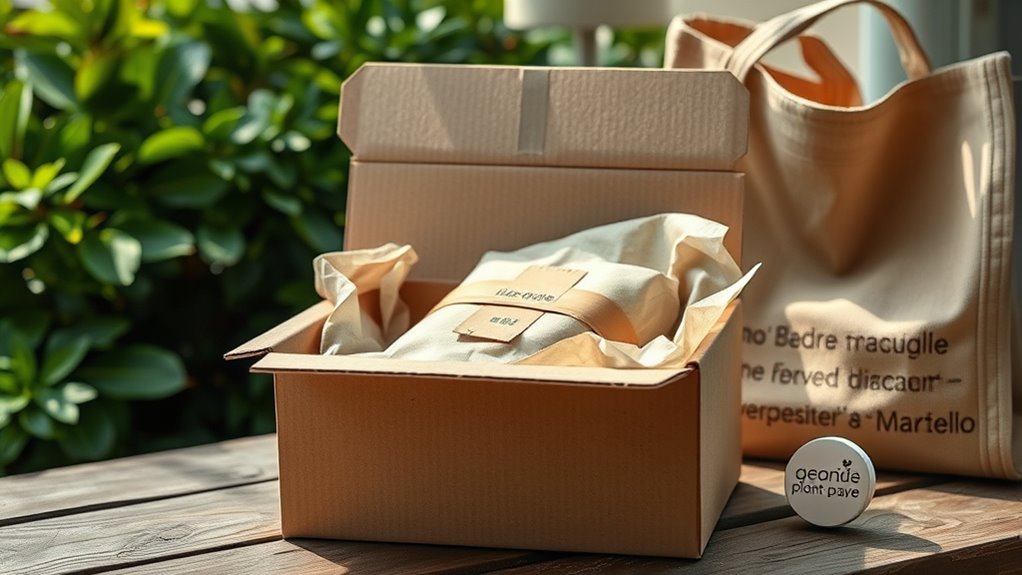

To design for e-commerce shipping sustainably, focus on using eco-friendly materials like recycled paper, biodegradable fillers, and plant-based plastics. Guarantee your packaging fits products precisely to reduce waste and minimize shipping weight. Incorporate innovative, protective structures like foldable, stackable, and modular designs that protect items during transit while cutting environmental impact. By choosing smarter packaging solutions, you can enhance customer satisfaction and sustainability—stay with us to discover more ways to optimize your shipping process.
Key Takeaways
- Utilize precise-fit, modular packaging designs to minimize excess space and material usage.
- Incorporate sustainable materials like biodegradable plastics and recycled paper for eco-friendly protection.
- Implement innovative cushioning solutions such as recycled plastic air cushions and biodegradable fillers.
- Design lightweight, minimalistic packaging to reduce shipping weight and environmental impact.
- Focus on durable, protective structures that ensure product safety while supporting sustainability goals.

Have you ever wondered what makes online shopping seamless from the moment you click “buy” to when your package arrives? A big part of that experience hinges on packaging design—how your items are protected during transit and how the process aligns with sustainability goals. Packaging innovation plays a vital role here, transforming traditional methods into smarter, more efficient solutions. Companies today are investing in innovative packaging that not only safeguards products but also reduces environmental impact. This means using designs that fit items precisely, minimizing excess space and materials, which helps prevent damage while decreasing waste. These innovations include the use of foldable, stackable, and modular packaging that adapts to different product sizes, making shipping more efficient and eco-friendly.
Packaging innovation ensures safe, eco-friendly delivery through smarter designs and sustainable materials.
Sustainable materials are at the heart of modern packaging strategies. Instead of relying on single-use plastics or bulky cardboard, brands are turning to biodegradable, recyclable, and compostable options. Think about using corrugated boxes made from recycled paper, plant-based bioplastics, or even mushroom-based packaging that naturally decomposes without leaving harmful residues. By choosing sustainable materials, you’re supporting eco-conscious shipping practices that align with global efforts to combat plastic pollution and reduce carbon footprints. Many companies now prioritize sourcing materials responsibly, ensuring that their packaging not only protects your products but also preserves the environment.
Innovations like air-filled cushions made from recycled plastics or biodegradable fillers further exemplify this shift. These materials provide excellent cushioning while promoting sustainability. Additionally, lightweight packaging reduces shipping weight, which cuts down on fuel consumption and greenhouse gas emissions during transit. You’ll notice more brands embracing minimalistic designs—using less material without compromising protection. This approach not only benefits the planet but also helps lower overall shipping costs, passing savings onto you.
Ultimately, the goal of integrating packaging innovation with sustainable materials is to create a seamless experience that respects the planet. When you receive a package, it should protect your purchase effectively and leave behind minimal environmental impact. As a consumer, your awareness and preference for eco-friendly packaging influence brands to adopt better practices. They’re now developing smarter, greener packaging solutions that safeguard products, reduce waste, and support sustainability efforts. So, next time you order online, remember that behind the scenes, thoughtful design—powered by packaging innovation and sustainable materials—is working to deliver your products safely and responsibly.
Frequently Asked Questions
How Does Eco-Friendly Packaging Impact Shipping Costs?
Eco-friendly packaging can sometimes increase shipping costs due to higher-quality materials, but it often reduces your carbon footprint and enhances brand perception. Customers appreciate sustainable practices, which can boost loyalty and sales. While initial expenses might be higher, the long-term benefits include a stronger reputation and potential savings on waste disposal. Overall, eco-friendly packaging positively impacts your brand and sustainability efforts, making it a smart investment despite some increased shipping costs.
What Materials Are Best for Sustainable Shipping Protection?
You should choose biodegradable fillers and recycled cardboard for sustainable shipping protection, as they’re both eco-friendly and effective. These materials help you hit two birds with one stone—reducing environmental impact and safeguarding products during transit. Recycled cardboard offers sturdy support, while biodegradable fillers cushion delicate items without harming the planet. By making these choices, you’re not just protecting your products but also showing your commitment to sustainability, which customers truly appreciate.
How Can Design Reduce Product Damage During Transit?
You can reduce product damage during transit by incorporating protective cushioning that absorbs shocks and vibrations, guaranteeing your items stay safe. Use structural reinforcement in your packaging design to strengthen weak points and prevent crushing or bending. Properly positioning cushioning materials and reinforcing critical areas help distribute impact forces evenly, minimizing damage. Combining these strategies ensures your products arrive intact, boosting customer satisfaction and reducing return costs.
Are There Industry Standards for Eco-Conscious Shipping Design?
Think of eco-conscious shipping design as planting seeds for a greener future. Industry standards now emphasize using recyclable materials and biodegradable solutions to minimize environmental impact. While specific regulations vary, many companies follow guidelines like ISO 14001 or adopt sustainable packaging certifications. By prioritizing these standards, you can guarantee your packaging reduces waste, protects products, and aligns with eco-friendly practices, making your shipping process both responsible and resilient.
How Does Sustainable Design Influence Customer Satisfaction?
Sustainable design boosts customer perception by showing you care about the environment, making shoppers feel good about choosing your brand. When you prioritize eco-friendly shipping, it builds trust and encourages brand loyalty, as customers appreciate your commitment to sustainability. This positive perception leads to repeat business and word-of-mouth referrals, strengthening your reputation. Overall, sustainable shipping design directly impacts customer satisfaction by aligning your brand with their values.
Conclusion
By designing for e-commerce shipping sustainably, you protect both your products and the planet. While durable, eco-friendly packaging safeguards items during transit, it also reduces waste and environmental harm. Think of each shipment as a gift to your customers and the Earth—carefully crafted, yet lightweight. In balancing protection with sustainability, you create a legacy of responsible commerce, proving that thoughtful design isn’t just about safeguarding products, but about safeguarding our future.