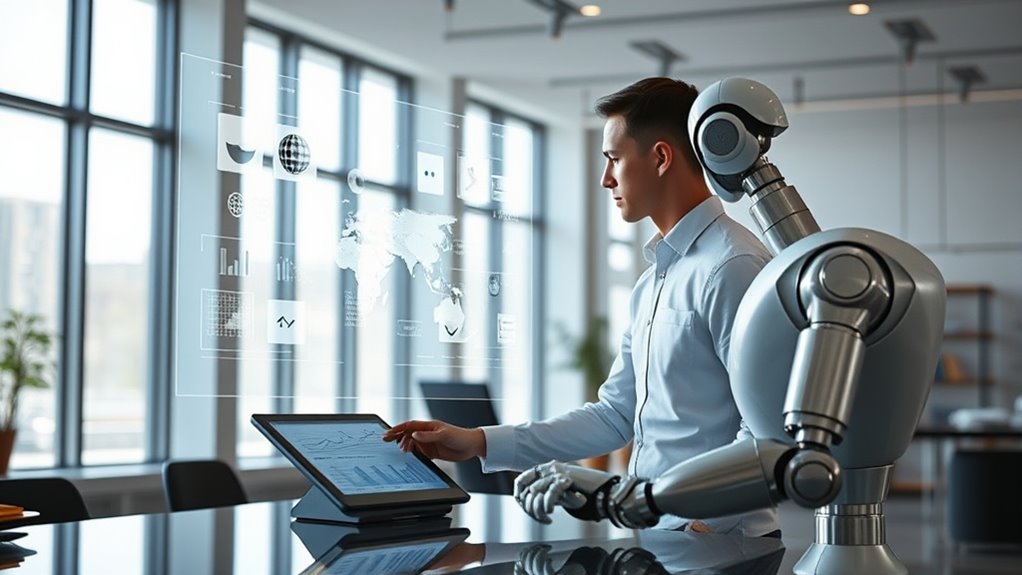

Human-machine collaboration models focus on integrating intelligent systems with human expertise to boost efficiency, innovation, and decision-making. These models enable machines to learn, adapt, and analyze data quickly, supporting humans without replacing their judgment. Ethical considerations like transparency, fairness, and privacy guide responsible deployment. By balancing AI’s capabilities with human intuition, you can foster trust and create a sustainable partnership. Keep exploring to discover how these models are transforming various industries and everyday tasks.
Key Takeaways
- Co-creative models where humans and AI jointly generate ideas and solutions, enhancing innovation.
- Complementary systems that leverage AI’s data-processing speed with human judgment for decision-making.
- Supervisory frameworks ensuring human oversight and ethical guidance in AI-driven processes.
- Adaptive collaboration models enabling real-time learning and task-sharing between humans and machines.
- Transparent interaction protocols fostering trust and understanding in human-AI partnerships.

As technology advances, human-machine collaboration models have become essential for increasing efficiency and innovation across industries. You now find yourself working alongside intelligent systems that augment your capabilities, streamline processes, and open new avenues for problem-solving. Central to this evolution is AI integration, which enables machines to understand, learn, and adapt to your needs in real time. When AI is seamlessly integrated into your workflow, tasks that once took hours can now be completed in minutes, freeing you to focus on strategic decision-making and creative pursuits. However, with this increased reliance on AI comes a critical need to address ethical considerations. You must guarantee that these systems are designed and deployed responsibly, respecting privacy, avoiding bias, and maintaining transparency. Ethical considerations act as a safeguard, guiding the development of human-machine collaboration models that are fair, trustworthy, and aligned with societal values.
Incorporating AI into your daily tasks isn’t just about automation; it’s about creating a symbiotic relationship where both humans and machines bring their strengths to the table. AI can analyze vast datasets rapidly, uncover patterns, and generate insights that might elude human cognition. Meanwhile, your judgment, intuition, and ethical reasoning serve as the compass that guides how these insights are applied. This partnership hinges on thoughtful AI integration—ensuring that the technology complements your skills without replacing your role entirely. As you work alongside these intelligent systems, you need to be mindful of ethical considerations, such as data privacy and bias mitigation. For example, if an AI system makes a decision affecting customer service, you must verify that the decision is fair and unbiased, avoiding unintended discrimination. Recognizing AI’s limitations** is essential to prevent overreliance and to ensure responsible** deployment.
Furthermore, transparency becomes a necessary factor in fostering trust between humans and machines. You should have clarity about how AI systems arrive at their conclusions, which helps you make informed decisions and maintain accountability. As AI becomes more embedded in your work environment, understanding its limitations and potential biases is essential to prevent overdependence or misuse. Ethical considerations also extend into ensuring that AI deployment respects human rights and promotes inclusivity. You’re responsible for advocating transparency and fairness, helping to shape collaboration models that are not only efficient but also ethically sound.
Ultimately, this balance between AI integration and ethical considerations ensures that human-machine collaboration remains beneficial and sustainable. By actively engaging with these principles, you help foster a work environment where technology enhances human potential without compromising moral standards. This approach not only boosts productivity but also cultivates trust, responsibility, and fairness, laying the foundation for future innovations rooted in ethical integrity.

Welcome to your Human-AI team!: The Acme Inc. handbook for human and AI collaboration
As an affiliate, we earn on qualifying purchases.
As an affiliate, we earn on qualifying purchases.
Frequently Asked Questions
How Do Collaboration Models Vary Across Different Industries?
You’ll find collaboration models vary across industries because industry-specific workflows and organizational structures shape how humans and machines work together. In manufacturing, automation and robotics are tightly integrated into workflows, while in healthcare, AI tools support decision-making within complex organizational hierarchies. In tech, agile teams often incorporate machine learning tools seamlessly, reflecting flexible structures. Understanding these differences helps you optimize collaboration, ensuring tools align with each industry’s unique processes and organizational needs.
What Are the Ethical Considerations in Human-Machine Partnerships?
When engaging in human-machine partnerships, you must prioritize AI transparency and data privacy. You should guarantee that AI systems are clear about their functions and decision-making processes, fostering trust. Additionally, safeguard sensitive data to prevent breaches and misuse. By addressing these ethical considerations, you create a responsible collaboration that respects privacy rights and promotes accountability, ultimately leading to more ethical and effective human-machine interactions.
How Is Success Measured in Human-Machine Collaboration Projects?
They say, “What gets measured gets managed,” and success in human-machine collaboration projects relies on performance metrics and user satisfaction. You gauge progress by analyzing system efficiency, accuracy, and adaptability, alongside how users feel about their experience. If both these factors improve, you can confidently say your collaboration is successful, fostering trust and productivity. Remember, the true test lies in the seamless integration of human judgment with machine precision.
What Skills Are Essential for Humans in These Collaboration Models?
You need emotional intelligence to understand and respond effectively to machine outputs and team dynamics. Creative problem solving helps you adapt to new tools and challenges, ensuring smooth collaboration. Being open to learning, communicating clearly, and balancing technical skills with empathy are essential. These skills enable you to work seamlessly with machines and humans, improving overall project success and fostering an innovative, productive environment.
How Do Collaboration Models Evolve With Emerging Technologies?
As emerging technologies develop, collaboration models evolve through automation integration and adaptive frameworks. You’ll see systems becoming more flexible, allowing humans to focus on strategic tasks while machines handle routine work. These models adapt by incorporating new tools and processes, enhancing efficiency and decision-making. You need to stay curious and adaptable, continuously learning to leverage automation integration and adaptive frameworks for ideal teamwork with machines.

HUMAN CENTERED ARTIFICIAL INTELLIGENCE SYSTEMS: Explainability ethical design and decision support engineering
As an affiliate, we earn on qualifying purchases.
As an affiliate, we earn on qualifying purchases.
Conclusion
You’ve seen how human-machine collaboration models are like a finely tuned orchestra, where each instrument plays a vital role. When you understand and optimize these models, you create a symphony of efficiency and innovation. Embrace the dance between human intuition and machine precision, and you’ll open new horizons of possibility. Remember, together, you and your technology can compose a masterpiece that transcends individual capabilities—creating harmony out of complexity.

AI for Data Analytics: A Practical Guide to Applying Machine Learning and Generative AI for Better Decisions
As an affiliate, we earn on qualifying purchases.
As an affiliate, we earn on qualifying purchases.

Human Machine Interface: Concepts and Projects
As an affiliate, we earn on qualifying purchases.
As an affiliate, we earn on qualifying purchases.