
Generative AI is transforming creative industries by enabling you to produce stunning visuals and art without needing traditional skills. It streamlines workflows, automating tasks like editing and animation, so you can focus on innovation. By offering instant variations and exploring new styles, it helps you push creative boundaries faster and more effortlessly. As these tools become more user-friendly, they make high-quality content accessible to everyone. Keep exploring to discover how these advances can further elevate your projects.
Key Takeaways
- Generative AI transforms creative workflows by enabling rapid visual content creation without traditional artistic skills.
- It democratizes access to high-quality art, expanding stylistic options and fostering innovative design exploration.
- AI automates repetitive tasks like editing and compositing, significantly increasing workflow efficiency and speed.
- It empowers users to generate multiple visual options instantly, facilitating rapid prototyping and experimentation.
- Generative AI acts as a creative partner, enhancing human creativity and helping industries stay competitive in a fast-evolving landscape.
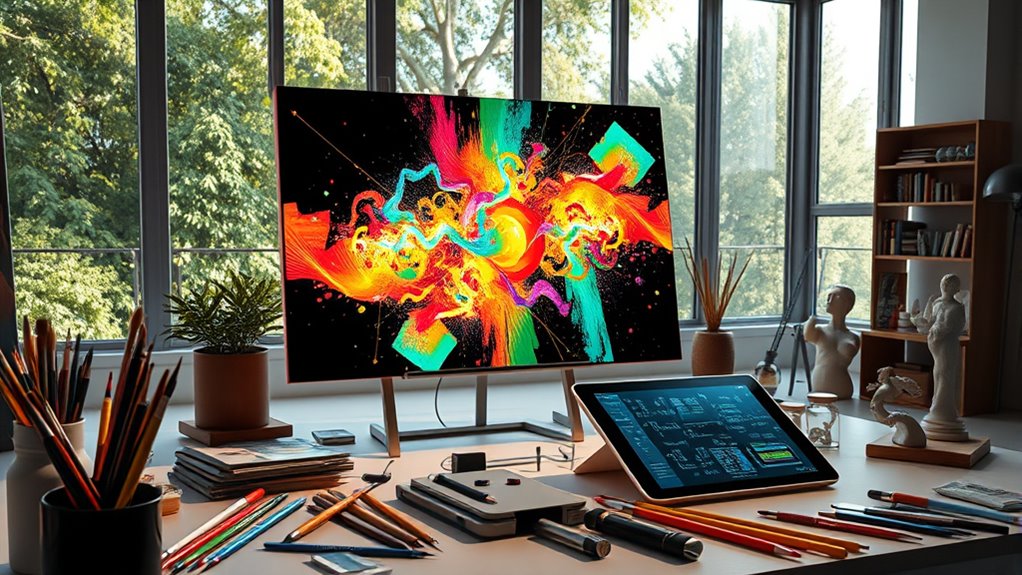
Have you noticed how generative AI is transforming creative industries? It’s a game-changer that’s reshaping the way artists, designers, and content creators approach their work. One of the most exciting developments is AI generated art, which allows you to produce stunning visuals without needing traditional artistic skills. Instead of starting from scratch, you can input prompts or ideas, and the AI generates unique images, paintings, or illustrations that reflect your vision. This not only accelerates the creative process but also pushes the boundaries of what’s possible in visual design. AI generated art blurs the lines between human creativity and machine output, giving you access to a vast palette of styles and aesthetics that were previously hard to achieve manually.
Generative AI transforms creativity by enabling stunning visuals without traditional skills, expanding artistic possibilities effortlessly.
At the same time, creative automation is revolutionizing workflows across the industry. Tasks that used to take hours or days can now be completed in minutes, freeing you to focus on more strategic or inventive aspects of your projects. Automated tools powered by generative AI handle everything from editing and compositing to color correction and animation, making the entire creative process more efficient. This automation doesn’t replace your skills; it enhances them, giving you more time to experiment and refine your ideas. Whether you’re designing a website, producing digital art, or crafting marketing content, creative automation streamlines repetitive tasks, allowing you to iterate faster and with greater confidence.
By integrating AI generated art and creative automation into your projects, you can uncover new creative possibilities that weren’t accessible before. You might generate multiple versions of a visual concept in seconds, compare different styles side by side, or explore entirely new artistic directions without the constraints of traditional tools. The ability to rapidly prototype and test ideas accelerates innovation, ultimately helping you stay ahead in a competitive market. Additionally, these AI tools are becoming more user-friendly, so even if you’re not a tech expert, you can leverage their power to elevate your work.
In essence, generative AI is not just a tool but a partner that amplifies your creative potential. It democratizes access to high-quality art and streamlines production, giving you more control over your creative output. As these technologies continue to evolve, embracing AI generated art and creative automation will become essential for anyone looking to push the boundaries of their craft and stay relevant in a rapidly changing landscape. Furthermore, understanding the capabilities of specialized tools like AI-powered image generators can help you better harness these innovations for your projects.
Frequently Asked Questions
How Does Generative AI Impact Traditional Creative Skill Development?
Generative AI impacts your traditional creative skill development by potentially causing skill erosion if you rely too much on it. It can foster creative dependency, making you less likely to practice core techniques yourself. While AI tools can enhance your work, it’s vital to balance their use with developing your foundational skills, ensuring you don’t lose touch with the essential elements of craftsmanship and originality in your craft.
What Are the Legal Implications of Ai-Generated Content?
You might think AI-generated content isn’t legally complex, but it raises significant issues like intellectual property and liability concerns. When you use AI to create, you could infringe on existing rights or face uncertain ownership claims. You’re responsible for ensuring your work doesn’t violate laws, and liability concerns could arise if the content causes harm. Always check legal guidelines and clarify rights to avoid costly disputes.
Can AI Truly Replace Human Creativity in Art and Design?
AI can’t truly replace human creativity in art and design because it lacks the depth of human emotion and intuition. Instead, it enhances your creative process through AI ethics and creative collaboration, enabling you to experiment and innovate more freely. While AI offers powerful tools, your unique perspective and emotional insight remain essential for authentic, meaningful art. Embrace AI as a partner, not a replacement, to push creative boundaries further.
How Accessible Is Generative AI Technology for Small Studios?
Generative AI technology is becoming increasingly accessible for small studios, despite some cost barriers. Many affordable or free software options now exist, making it easier for you to experiment and incorporate AI into your projects. You can find user-friendly tools that don’t require extensive technical knowledge, helping you stay competitive without huge investments. Overall, software accessibility is improving, enabling small studios to leverage AI’s creative potential without breaking the bank.
What Are Future Trends for AI in the Creative Industry?
You’ll see AI increasingly shaping the creative industry through advanced tools that foster cross-disciplinary collaborations. Future trends include more focus on AI ethical considerations, ensuring responsible use and fairness. As you adopt these innovations, you’ll likely engage in diverse partnerships, blending technology with art, design, and storytelling. This synergy will drive innovation, making creative processes more efficient and inspiring, while addressing ethical challenges to maintain integrity and trust in your projects.
Conclusion
As you embrace generative AI in creative industries, you unseal endless possibilities for innovation and expression. It empowers you to push boundaries and reimagine what’s possible. But ask yourself: are you ready to harness this technology responsibly, blending human creativity with artificial intelligence? The future is yours to shape—will you lead with vision and integrity, or let opportunity slip away? Embrace the change and create a world only you can imagine.