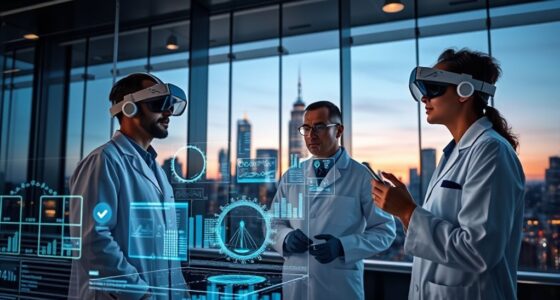
Digital twin technology creates a virtual replica of your physical assets, systems, or processes that updates in real time, giving you a dynamic mirror of their current state. It combines data from sensors and IoT devices to simulate, analyze, and optimize operations without causing disruptions. Using predictive analytics and scenario testing, you can anticipate issues and make smarter decisions. Keep exploring to discover how this innovative approach can transform your operational strategies and boost efficiency.
Key Takeaways
- Digital twins create virtual replicas of physical assets for simulation and analysis without disrupting real operations.
- They integrate real-time sensor data to accurately mirror the current state of physical assets.
- Advanced analytics and machine learning predict future performance and detect potential failures proactively.
- Simulation tools enable testing of operational scenarios to optimize performance and reduce risks.
- Digital twins support strategic decision-making, improve efficiency, and extend asset lifespan through continuous monitoring.

Have you ever wondered how industries achieve real-time monitoring and predictive maintenance with greater accuracy? The secret lies in digital twin technology, which creates a virtual replica of physical assets, processes, or systems. This digital counterpart allows you to simulate, analyze, and optimize operations without interrupting the actual system. At the heart of this technology is seamless data integration. You gather data from sensors, IoT devices, and enterprise systems, feeding this information into the digital twin. This integration ensures the virtual model reflects the real-world asset’s current state, capturing everything from temperature and pressure to operational performance. With accurate data flowing in, the digital twin becomes a reliable mirror of reality, enabling you to monitor conditions continually and identify anomalies early. Additionally, the choice of projector technology can influence the quality and fidelity of the visualizations used in digital twin displays and interfaces.
Digital twins mirror real assets by integrating sensor and system data for continuous monitoring and early anomaly detection.
Predictive analytics plays a vital role in transforming this data into actionable insights. Using advanced algorithms and machine learning, you analyze historical and real-time data to forecast future behavior. This means you can predict when a machine might fail, schedule maintenance proactively, and avoid costly downtimes. Instead of waiting for breakdowns or relying on routine checks, you get alerts based on predictive models that understand the asset’s health. This proactive approach not only improves efficiency but also extends the lifespan of equipment, saving money and reducing risks.
By combining data integration with predictive analytics, digital twins enable a level of operational insight previously unattainable. You can run simulations to test different scenarios, such as how a change in operating conditions might impact performance or wear and tear over time. These virtual experiments help you make informed decisions before implementing changes in the real world, lowering risks and optimizing outcomes. Additionally, you gain a thorough view of complex systems, where interconnected components influence each other. This holistic perspective helps you troubleshoot issues faster and develop strategies for continuous improvement.
Digital twin technology empowers you to shift from reactive to proactive management. It transforms raw data into meaningful intelligence, guiding maintenance, design, and process optimization. As you deepen your understanding through real-time data and predictive insights, you become more agile, reducing downtime and boosting productivity. Essentially, digital twins act as your digital assistant—constantly learning and advising—making your operations smarter and more resilient. With this technology, you’re not just observing your assets; you’re actively controlling and improving them, ensuring peak performance and longevity.
Frequently Asked Questions
How Does Digital Twin Technology Improve Real-Time Decision Making?
Digital twin technology improves your real-time decision making by providing accurate, up-to-date data through predictive analytics. You can monitor system performance continuously, identify issues early, and enhance operations instantly. This proactive approach helps you make informed choices quickly, reducing downtime and increasing efficiency. By simulating different scenarios, digital twins enable you to test solutions virtually, ensuring peak system performance and better strategic planning.
What Industries Benefit Most From Implementing Digital Twin Solutions?
Ironically, industries like manufacturing and healthcare benefit the most from digital twin solutions, as if they weren’t already efficient enough. You’ll see improved manufacturing efficiency and healthcare innovation, reducing costs and enhancing outcomes. Manufacturing firms optimize processes and predictive maintenance, while healthcare providers simulate patient care to personalize treatments. Embracing digital twins positions these industries at the forefront of technological progress, making them smarter, faster, and more responsive in today’s competitive landscape.
How Secure Is Data in Digital Twin Applications?
You should know that data in digital twin applications faces cybersecurity risks, but strong security measures can mitigate these threats. Implementing encryption, access controls, and regular updates helps protect data privacy. While no system is entirely foolproof, staying vigilant and adopting best practices guarantees your digital twin data remains secure. Trustworthy cybersecurity protocols are essential to prevent breaches and safeguard sensitive information in these innovative environments.
What Are the Main Challenges in Developing Digital Twins?
You face challenges like ensuring data integration from diverse sources, which can be complex and time-consuming. Achieving model accuracy is also tough, as it requires precise data and continuous updates. Additionally, managing real-time data streams, addressing security concerns, and balancing computational costs complicate development. Overcoming these hurdles demands robust strategies, advanced technology, and ongoing monitoring to create reliable and effective digital twins that truly mirror their real-world counterparts.
How Cost-Effective Is Deploying Digital Twin Technology at Scale?
Think of digital twin deployment as planting a vast forest—initial costs may seem steep, but the long-term benefits are worth the effort. You’ll see significant cost reduction through improved efficiency and predictive maintenance. While scalability challenges exist, overcoming them unleashes massive value at scale. With careful planning, you can turn these digital forests into thriving ecosystems that boost your operations, making the investment more than just cost-effective—it’s a smart growth strategy.
Conclusion
Imagine having a virtual replica of your entire city that updates in real-time—this is the power of digital twin technology. Did you know that by 2025, over 70% of major industries will use digital twins to optimize operations? As you explore this innovative future, remember that you’re not just observing simulations—you’re actively shaping reality, making processes smarter, safer, and more efficient. Digital twins truly bring the future of simulation to life.